Archivero is in early access — your sources, PDFs and citations in one library.Request early access →
Archivero/guides/
APAMLAHarvardThesis writing
Subscribe
Archivero/guides/Request early access →

Guides

APA styleMLA styleHarvard referencingThesis writing

Compare

APA 6th vs 7thMLA 8th vs 9thHarvard vs APAThesis vs dissertation

Product

FeaturesEarly access

Resources

DocsCheat sheetsNewsletter

Company

ContactStatus ↗
© 2025–2026 Ernesto F. GonzálezGuidesDocsContactPrivacyTerms
Guides

Citations

Learn how to properly cite sources in academic and professional writing using widely recognized citation styles.

2 min read

On this page

1 of 8
Why Citations MatterIntellectual HonestyCredibility and TrustDiscoverabilityMajor Citation StylesChoosing a Citation StyleHow Archivero HelpsNext Steps

Accurate citation is a cornerstone of credible research. Every time you reference someone else's ideas, data, or words, a citation tells your reader exactly where that information came from — making your work transparent, verifiable, and ethical.

Why Citations Matter

Intellectual Honesty

Citing your sources gives credit to the original authors and acknowledges the scholarly conversation you are joining. Omitting citations — intentionally or accidentally — can constitute plagiarism, one of the most serious violations in academic and professional settings.

Credibility and Trust

Well-sourced writing signals rigor. When readers see consistent, properly formatted citations, they gain confidence that your claims are grounded in evidence rather than speculation.

Discoverability

Citations create a trail that other researchers can follow. A strong reference list helps readers explore related work, verify claims, and build on your findings.

Major Citation Styles

Different disciplines favor different citation systems. Here are the most widely used:

StyleTypical DisciplinesKey Feature
APATypical DisciplinesPsychology, Education, Social SciencesKey FeatureAuthor-date in-text system
MLATypical DisciplinesLiterature, Humanities, Cultural StudiesKey FeatureAuthor-page in-text system
Chicago / TurabianTypical DisciplinesHistory, Arts, some Social SciencesKey FeatureNotes-bibliography or author-date
IEEETypical DisciplinesEngineering, Computer ScienceKey FeatureNumbered references in brackets
AMATypical DisciplinesMedicine, Health SciencesKey FeatureSuperscript numbered references
VancouverTypical DisciplinesBiomedical SciencesKey FeatureNumbered references in order of appearance

Choosing a Citation Style

In most cases the choice is made for you: your instructor, journal, or publisher will specify which style to follow. If you have the freedom to choose, pick the style most common in your field — this makes your work feel familiar to your target audience and reduces friction during peer review.

How Archivero Helps

Archivero automatically extracts metadata from the sources you collect — authors, publication dates, titles, DOIs, and URLs — so you always have the raw material needed to build accurate citations. You can:

  • Copy formatted citations in your preferred style directly from any source in your library
  • Generate reference lists for an entire collection with a single click
  • Detect missing metadata and fill in gaps before exporting

Next Steps

Ready to dive deeper? Start with the style most relevant to your work:

  • APA Citation Style — the standard in psychology, education, and the social sciences
  • MLA Citation Style — the standard in literature, humanities, and the arts
  • Harvard Referencing Style — the dominant citation system in the UK, Australia, and many international universities
Next →How to Write a Thesis

Related guide

4 sections·5 min readThesis writingHow to Write a Thesis

Your sources, PDFs and citations in one library

  • Import a Zotero, Mendeley or EndNote library — or a folder of PDFs
  • Highlight and annotate without leaving the source
  • Cite in any CSL style as you write, with one shared library for your lab
Request early accessSee the product →
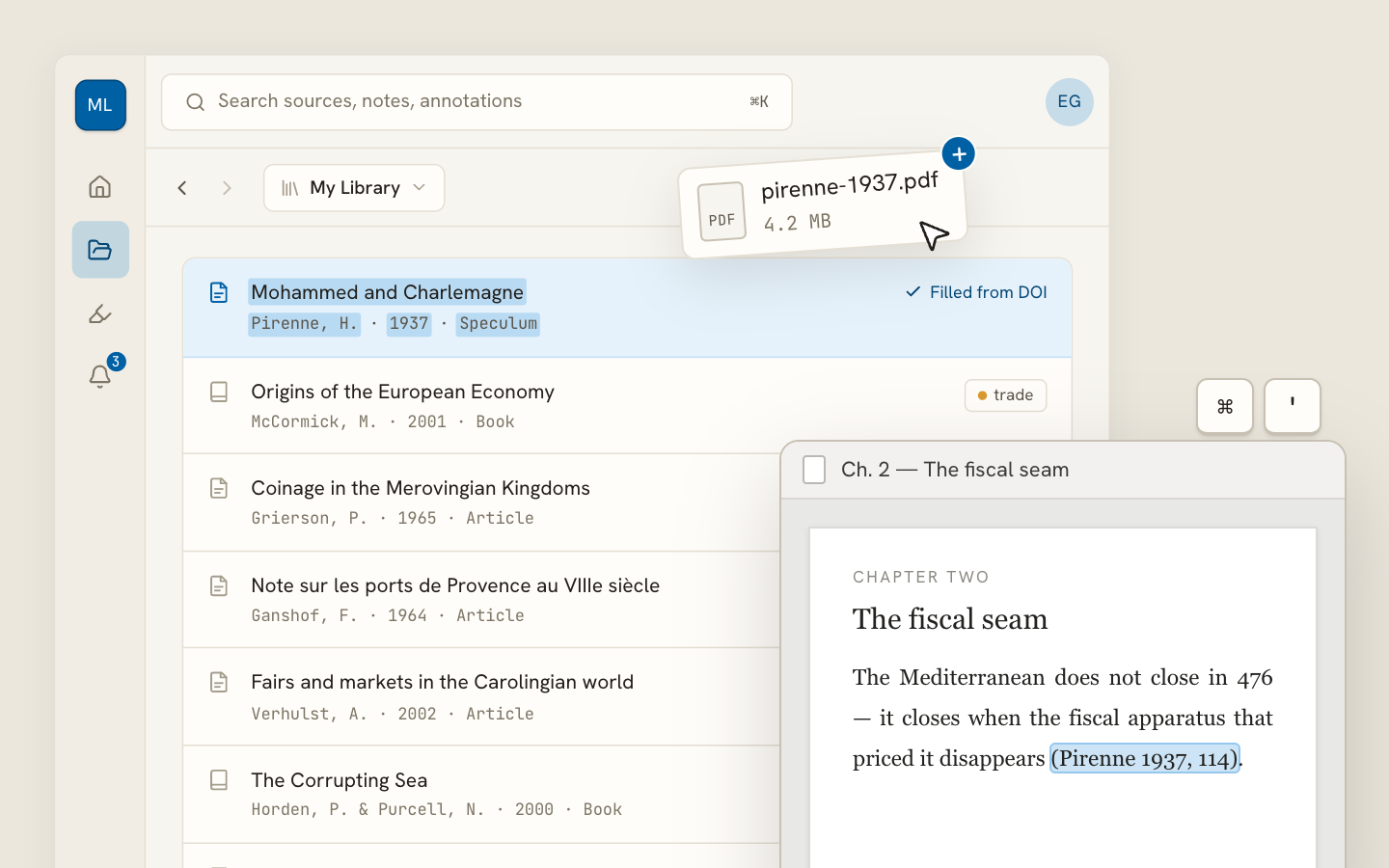
Archivero library view with a source list and an open PDF

Your weekly research workflow, in one email

One tested workflow, three links, no filler — every Tuesday.

Unsubscribe in one click. We never share your address.

Guides

Citations

Learn how to properly cite sources in academic and professional writing using widely recognized citation styles.

2 min read

On this page

1 of 8
Why Citations MatterIntellectual HonestyCredibility and TrustDiscoverabilityMajor Citation StylesChoosing a Citation StyleHow Archivero HelpsNext Steps

Accurate citation is a cornerstone of credible research. Every time you reference someone else's ideas, data, or words, a citation tells your reader exactly where that information came from — making your work transparent, verifiable, and ethical.

Why Citations Matter

Intellectual Honesty

Citing your sources gives credit to the original authors and acknowledges the scholarly conversation you are joining. Omitting citations — intentionally or accidentally — can constitute plagiarism, one of the most serious violations in academic and professional settings.

Credibility and Trust

Well-sourced writing signals rigor. When readers see consistent, properly formatted citations, they gain confidence that your claims are grounded in evidence rather than speculation.

Discoverability

Citations create a trail that other researchers can follow. A strong reference list helps readers explore related work, verify claims, and build on your findings.

Major Citation Styles

Different disciplines favor different citation systems. Here are the most widely used:

StyleTypical DisciplinesKey Feature
APATypical DisciplinesPsychology, Education, Social SciencesKey FeatureAuthor-date in-text system
MLATypical DisciplinesLiterature, Humanities, Cultural StudiesKey FeatureAuthor-page in-text system
Chicago / TurabianTypical DisciplinesHistory, Arts, some Social SciencesKey FeatureNotes-bibliography or author-date
IEEETypical DisciplinesEngineering, Computer ScienceKey FeatureNumbered references in brackets
AMATypical DisciplinesMedicine, Health SciencesKey FeatureSuperscript numbered references
VancouverTypical DisciplinesBiomedical SciencesKey FeatureNumbered references in order of appearance

Choosing a Citation Style

In most cases the choice is made for you: your instructor, journal, or publisher will specify which style to follow. If you have the freedom to choose, pick the style most common in your field — this makes your work feel familiar to your target audience and reduces friction during peer review.

How Archivero Helps

Archivero automatically extracts metadata from the sources you collect — authors, publication dates, titles, DOIs, and URLs — so you always have the raw material needed to build accurate citations. You can:

  • Copy formatted citations in your preferred style directly from any source in your library
  • Generate reference lists for an entire collection with a single click
  • Detect missing metadata and fill in gaps before exporting

Next Steps

Ready to dive deeper? Start with the style most relevant to your work:

  • APA Citation Style — the standard in psychology, education, and the social sciences
  • MLA Citation Style — the standard in literature, humanities, and the arts
  • Harvard Referencing Style — the dominant citation system in the UK, Australia, and many international universities
Next →How to Write a Thesis

Related guide

4 sections·5 min readThesis writingHow to Write a Thesis

Your sources, PDFs and citations in one library

  • Import a Zotero, Mendeley or EndNote library — or a folder of PDFs
  • Highlight and annotate without leaving the source
  • Cite in any CSL style as you write, with one shared library for your lab
Request early accessSee the product →
Archivero library view with a source list and an open PDF

Your weekly research workflow, in one email

One tested workflow, three links, no filler — every Tuesday.

Unsubscribe in one click. We never share your address.