Archivero is in early access — your sources, PDFs and citations in one library.Request early access →
Archivero/guides/
APAMLAHarvardThesis writing
Subscribe
Archivero/guides/Request early access →

Guides

APA styleMLA styleHarvard referencingThesis writing

Compare

APA 6th vs 7thMLA 8th vs 9thHarvard vs APAThesis vs dissertation

Product

FeaturesEarly access

Resources

DocsCheat sheetsNewsletter

Company

ContactStatus ↗
© 2025–2026 Ernesto F. GonzálezGuidesDocsContactPrivacyTerms
Guides/Citations

APA Citation Style

A comprehensive guide to the APA citation format (7th edition), the standard for psychology, education, and social science writing.

4 min readAPA

On this page

1 of 6
Why APA Works the Way It DoesWhat Changed in the 7th EditionWhat This Guide CoversWhen Should You Use APA?Quick-Reference ChecklistA Note on Learning Citation Styles

If you've ever written a research paper for a psychology, education, or social science course, chances are you've encountered APA style. Created by the American Psychological Association back in 1929 as a short set of guidelines for psychology journals, it has since grown into one of the most widely used citation systems in the world. The current version — the 7th edition, released in 2019 — is what we'll cover in this guide.

Don't worry if citation formatting feels intimidating at first. At its core, APA is a set of sensible conventions designed to make academic writing clearer and more consistent. Once you understand the logic behind the rules, they become second nature.

Why APA Works the Way It Does

Before diving into the specifics, it helps to understand the philosophy behind the rules. APA style isn't arbitrary — every guideline serves a purpose:

  • Clarity first — APA's formatting rules exist to get out of the way. Consistent margins, headings, and font choices reduce visual noise so readers can focus on your ideas.
  • Give credit where it's due — The author-date citation system makes it easy to see at a glance who said what and when. This protects you from plagiarism and shows you've done your homework.
  • Make life easier for everyone — When every paper in a journal (or a class) follows the same format, readers don't have to waste mental energy figuring out the layout. They can jump straight to the content.
  • Include all readers — The 7th edition places real emphasis on accessibility — font sizes, line spacing, and color contrast are all designed to ensure your work can be read by the widest possible audience, including people using screen readers and other assistive technology.

What Changed in the 7th Edition

If you learned APA under the older 6th edition (or if a classmate hands you outdated notes), here are the key differences to watch for:

Change6th Edition7th Edition
Running head6th EditionRequired on all papers7th EditionOnly for professional manuscripts — students can skip it
Fonts6th EditionTimes New Roman 12 pt only7th EditionMultiple options: 12 pt Times New Roman, 11 pt Calibri, 11 pt Arial, and others
Author listings6th EditionUp to 7 authors, then ellipsis7th EditionUp to 20 authors before the ellipsis
DOI format6th Editiondoi:10.xxxx/xxxxx7th EditionFull URL: https://doi.org/10.xxxx/xxxxx
"Retrieved from"6th EditionRequired before URLs7th EditionDropped for most sources
Inclusive language6th EditionBrief guidance7th EditionSignificantly expanded — covers age, disability, gender, race, and sexual orientation

The spirit of APA hasn't changed, but the 7th edition is noticeably more practical and flexible. If you're starting fresh, you're actually learning the easier version.

What This Guide Covers

We've organized this guide into three focused sections. You can read them in order or jump to whatever you need right now:

SectionWhat You'll Learn
General FormatPage layout, title pages (student vs. professional), headings, and the overall structure of an APA paper
In-Text CitationsHow to credit sources in the body of your paper — from simple paraphrases to tricky edge cases
Reference ListHow to build and format the alphabetized list of every work you cited

When Should You Use APA?

APA is the expected format in most of these situations:

  • University coursework in psychology, education, sociology, communications, nursing, and business
  • Journal submissions to APA-affiliated and many non-APA social-science journals
  • Research reports and white papers produced by government agencies and nonprofits
  • Graduate theses and dissertations in social-science programs

That said, always defer to your instructor or publisher if they specify a different style. Even in fields where APA is the default, individual assignments or journals sometimes have their own requirements. When in doubt, ask.

Quick-Reference Checklist

Finished your paper and want a final sanity check? Run through this list before you hit submit:

  • Title page includes the paper title, your name, and your institutional affiliation
  • Margins are 1 inch (2.54 cm) on all four sides
  • The entire document is double-spaced — including the reference list
  • Page numbers appear in the top-right corner of every page
  • Heading levels are used consistently (Level 1 through Level 5)
  • Every in-text citation has a matching entry in the reference list (and vice versa)
  • Reference list entries are alphabetized by the first author's surname
  • DOIs are included wherever available, formatted as https://doi.org/...
  • You've used bias-free, inclusive language throughout

A Note on Learning Citation Styles

Nobody memorizes every APA rule — not even the people who wrote the manual. The goal isn't perfection from memory; it's knowing where to look and building good habits over time. Use this guide as a reference you come back to, and before long, the most common patterns will feel automatic.

Ready to start? Head to General Format to learn how to set up your paper from the very first page.
Next →MLA Citation Style

Related guides

Learn how to properly cite sources in academic and professional writing using widely recognized citation styles.

View all 3 guides →
9 sections·6 min readMLAMLA Citation Style10 sections·7 min readHarvardHarvard Referencing Style

Your sources, PDFs and citations in one library

  • Import a Zotero, Mendeley or EndNote library — or a folder of PDFs
  • Highlight and annotate without leaving the source
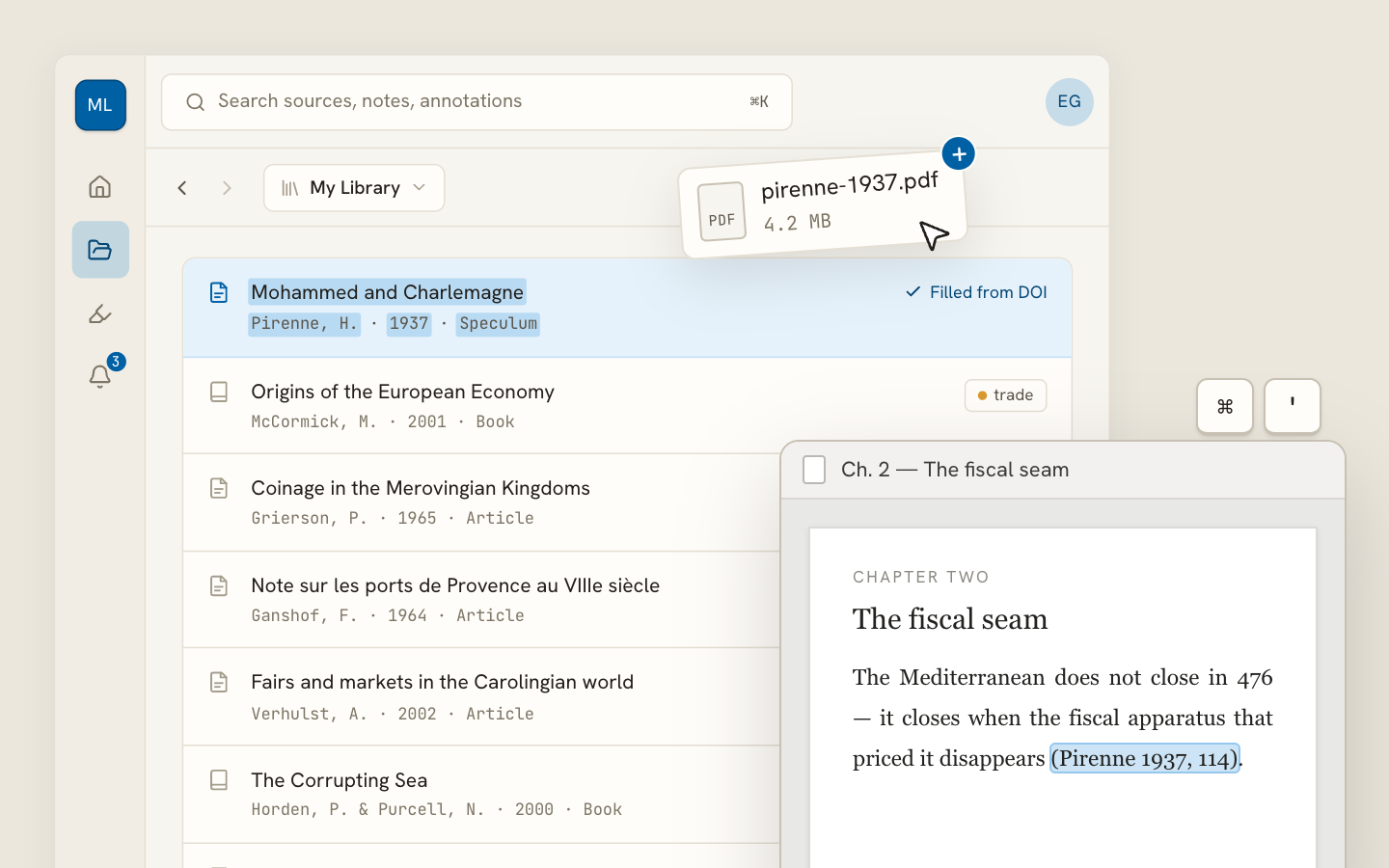
  • Cite in any CSL style as you write, with one shared library for your lab
Request early accessSee the product →
Archivero library view with a source list and an open PDF

Your weekly research workflow, in one email

One tested workflow, three links, no filler — every Tuesday.

Unsubscribe in one click. We never share your address.

Guides/Citations

APA Citation Style

A comprehensive guide to the APA citation format (7th edition), the standard for psychology, education, and social science writing.

4 min readAPA

On this page

1 of 6
Why APA Works the Way It DoesWhat Changed in the 7th EditionWhat This Guide CoversWhen Should You Use APA?Quick-Reference ChecklistA Note on Learning Citation Styles

If you've ever written a research paper for a psychology, education, or social science course, chances are you've encountered APA style. Created by the American Psychological Association back in 1929 as a short set of guidelines for psychology journals, it has since grown into one of the most widely used citation systems in the world. The current version — the 7th edition, released in 2019 — is what we'll cover in this guide.

Don't worry if citation formatting feels intimidating at first. At its core, APA is a set of sensible conventions designed to make academic writing clearer and more consistent. Once you understand the logic behind the rules, they become second nature.

Why APA Works the Way It Does

Before diving into the specifics, it helps to understand the philosophy behind the rules. APA style isn't arbitrary — every guideline serves a purpose:

  • Clarity first — APA's formatting rules exist to get out of the way. Consistent margins, headings, and font choices reduce visual noise so readers can focus on your ideas.
  • Give credit where it's due — The author-date citation system makes it easy to see at a glance who said what and when. This protects you from plagiarism and shows you've done your homework.
  • Make life easier for everyone — When every paper in a journal (or a class) follows the same format, readers don't have to waste mental energy figuring out the layout. They can jump straight to the content.
  • Include all readers — The 7th edition places real emphasis on accessibility — font sizes, line spacing, and color contrast are all designed to ensure your work can be read by the widest possible audience, including people using screen readers and other assistive technology.

What Changed in the 7th Edition

If you learned APA under the older 6th edition (or if a classmate hands you outdated notes), here are the key differences to watch for:

Change6th Edition7th Edition
Running head6th EditionRequired on all papers7th EditionOnly for professional manuscripts — students can skip it
Fonts6th EditionTimes New Roman 12 pt only7th EditionMultiple options: 12 pt Times New Roman, 11 pt Calibri, 11 pt Arial, and others
Author listings6th EditionUp to 7 authors, then ellipsis7th EditionUp to 20 authors before the ellipsis
DOI format6th Editiondoi:10.xxxx/xxxxx7th EditionFull URL: https://doi.org/10.xxxx/xxxxx
"Retrieved from"6th EditionRequired before URLs7th EditionDropped for most sources
Inclusive language6th EditionBrief guidance7th EditionSignificantly expanded — covers age, disability, gender, race, and sexual orientation

The spirit of APA hasn't changed, but the 7th edition is noticeably more practical and flexible. If you're starting fresh, you're actually learning the easier version.

What This Guide Covers

We've organized this guide into three focused sections. You can read them in order or jump to whatever you need right now:

SectionWhat You'll Learn
General FormatPage layout, title pages (student vs. professional), headings, and the overall structure of an APA paper
In-Text CitationsHow to credit sources in the body of your paper — from simple paraphrases to tricky edge cases
Reference ListHow to build and format the alphabetized list of every work you cited

When Should You Use APA?

APA is the expected format in most of these situations:

  • University coursework in psychology, education, sociology, communications, nursing, and business
  • Journal submissions to APA-affiliated and many non-APA social-science journals
  • Research reports and white papers produced by government agencies and nonprofits
  • Graduate theses and dissertations in social-science programs

That said, always defer to your instructor or publisher if they specify a different style. Even in fields where APA is the default, individual assignments or journals sometimes have their own requirements. When in doubt, ask.

Quick-Reference Checklist

Finished your paper and want a final sanity check? Run through this list before you hit submit:

  • Title page includes the paper title, your name, and your institutional affiliation
  • Margins are 1 inch (2.54 cm) on all four sides
  • The entire document is double-spaced — including the reference list
  • Page numbers appear in the top-right corner of every page
  • Heading levels are used consistently (Level 1 through Level 5)
  • Every in-text citation has a matching entry in the reference list (and vice versa)
  • Reference list entries are alphabetized by the first author's surname
  • DOIs are included wherever available, formatted as https://doi.org/...
  • You've used bias-free, inclusive language throughout

A Note on Learning Citation Styles

Nobody memorizes every APA rule — not even the people who wrote the manual. The goal isn't perfection from memory; it's knowing where to look and building good habits over time. Use this guide as a reference you come back to, and before long, the most common patterns will feel automatic.

Ready to start? Head to General Format to learn how to set up your paper from the very first page.

Next →MLA Citation Style

Related guides

Learn how to properly cite sources in academic and professional writing using widely recognized citation styles.

View all 3 guides →
9 sections·6 min readMLAMLA Citation Style10 sections·7 min readHarvardHarvard Referencing Style

Your sources, PDFs and citations in one library

  • Import a Zotero, Mendeley or EndNote library — or a folder of PDFs
  • Highlight and annotate without leaving the source
  • Cite in any CSL style as you write, with one shared library for your lab
Request early accessSee the product →
Archivero library view with a source list and an open PDF

Your weekly research workflow, in one email

One tested workflow, three links, no filler — every Tuesday.

Unsubscribe in one click. We never share your address.