Archivero is in early access — your sources, PDFs and citations in one library.Request early access →
Archivero/guides/
APAMLAHarvardThesis writing
Subscribe
Archivero/guides/Request early access →

Guides

APA styleMLA styleHarvard referencingThesis writing

Compare

APA 6th vs 7thMLA 8th vs 9thHarvard vs APAThesis vs dissertation

Product

FeaturesEarly access

Resources

DocsCheat sheetsNewsletter

Company

ContactStatus ↗
© 2025–2026 Ernesto F. GonzálezGuidesDocsContactPrivacyTerms
Guides/Citations/APA Citation Style

How to Cite a Drawing or Illustration in APA Format

APA 7th edition rules for citing drawings, illustrations, diagrams, and sketches from books, websites, archives, and other sources — with reference list entries, in-text citations, and figure note examples.

5 min readAPA

Key Takeaways

  • Drawings and illustrations are classified as figures in APA with format descriptors like [Drawing], [Illustration], [Diagram], or [Sketch].
  • The basic reference format is: Artist Last Name, Initial. (Year). Title of work [Drawing]. Source. URL
  • For illustrations from books, cite the book and include the page or plate number:
    • Audubon, J. J. (1838). Carolina parakeet [Illustration]. In The birds of America (Plate 26). R. Havell.
  • For illustrations from journals or reports, cite the source document — the illustration is part of it.
  • For illustrations from websites or digital platforms, include the site name and URL.
  • When the artist is unknown, start the reference with the title of the work.
  • When you embed a drawing in your paper, include a copyright note in the figure note.
  • For your own drawings, no copyright note is needed — just label it as a figure with a descriptive title.

On this page

1 of 21
Key TakeawaysReference Format by Source TypeDrawing or Illustration From a BookIllustration From a Journal ArticleDrawing or Illustration From a WebsiteDrawing From a Museum or ArchiveTechnical or Architectural DrawingIllustration From a Digital PlatformDrawing With No Known ArtistDrawing With No DateIn-Text CitationsEmbedding a Drawing as a FigureYour Own DrawingsCopyright NotesReprinted ExactlyAdapted (Redrawn, Modified, Annotated)Creative CommonsPublic DomainFormat Descriptors for Drawings and IllustrationsCommon Drawing Citation MistakesWhat's Next
All APA guides →

Drawings and illustrations in APA are classified as figures and use format descriptors like [Drawing], [Illustration], or [Diagram] in the reference entry. The citation depends on the source — a scientific illustration from a journal article, an architectural drawing from an archive, and a digital illustration from a website each follow different reference structures. The key is identifying the artist or creator, the date, and where the work was accessed.

Reference Format by Source Type

Drawing or Illustration From a Book

Artist Last Name, First Initial. (Year). Title of work [Format]. In A. Author/Editor (Ed.), Title of book (p. Page or Plate). Publisher.

Example:

Audubon, J. J. (1838). Carolina parakeet [Illustration]. In The birds of America (Plate 26). R. Havell.

Illustration From a Journal Article

Cite the article — the illustration is part of it:

Author(s). (Year). Title of article. Title of Journal, Volume(Issue), Page range. https://doi.org/xxxxx

Refer to the specific figure in your in-text citation:

(Ramirez et al., 2023, Figure 2)

Drawing or Illustration From a Website

Artist Last Name, First Initial. (Year, Month Day). Title of work [Format]. Site Name. URL

Example:

Chen, L. (2023, September 4). Human cardiovascular system [Illustration]. Scientific American. https://www.scientificamerican.com/example

Drawing From a Museum or Archive

Artist Last Name, First Initial. (Year). Title of work [Format]. Museum/Archive Name, City, State/Country. URL (if available)

Example:

da Vinci, L. (ca. 1490). Vitruvian Man [Drawing]. Gallerie dell'Accademia, Venice, Italy.

Technical or Architectural Drawing

Creator Last Name, First Initial or Organization. (Year). Title of drawing [Technical drawing]. Source. URL (if available)

Example:

Wright, F. L. (1935). Fallingwater, first floor plan [Architectural drawing]. Frank Lloyd Wright Foundation, Scottsdale, AZ. https://franklloydwright.org/example

Illustration From a Digital Platform

Creator Last Name, First Initial [@username]. (Year, Month Day). Title or description [Digital illustration]. Platform Name. URL

Example:

Park, S. [@soyeon.draws]. (2024, January 20). Conceptual diagram of neural network layers [Digital illustration]. Behance. https://www.behance.net/gallery/example

Drawing With No Known Artist

Title of work [Format]. (Year). Source. URL

Example:

Anatomical diagram of the human ear [Illustration]. (2021). Encyclopaedia Britannica. https://www.britannica.com/example

Drawing With No Date

Use "n.d." or "ca." for approximate dates:

da Vinci, L. (ca. 1510). Studies of the arm showing the movements made by the biceps [Drawing]. Royal Collection Trust, Windsor, United Kingdom.

In-Text Citations

ScenarioParentheticalNarrative
Known artistParenthetical(da Vinci, ca. 1490)Narrativeda Vinci (ca. 1490)
Illustration in journalParenthetical(Ramirez et al., 2023, Figure 2)NarrativeRamirez et al. (2023)
Website illustrationParenthetical(Chen, 2023)NarrativeChen (2023)
Unknown artistParenthetical("Anatomical Diagram," 2021)Narrative"Anatomical Diagram" (2021)

Embedding a Drawing as a Figure

When you include a drawing or illustration in your paper:

Figure 2

Anatomical Illustration of the Human Cardiovascular System

Note. From Human cardiovascular system, by L. Chen, 2023, Scientific American (https://www.scientificamerican.com/example). Copyright 2023 by Springer Nature. Reprinted with permission.

Your Own Drawings

If you created the drawing yourself, no copyright note is needed:

Figure 5

Proposed Model for Information Processing in Bilingual Readers

Copyright Notes

Reprinted Exactly

Note. From "Title of work," by A. Artist, Year, Source (URL). Copyright Year by Copyright Holder. Reprinted with permission.

Adapted (Redrawn, Modified, Annotated)

Note. Adapted from "Title of work," by A. Artist, Year, Source (URL). Copyright Year by Copyright Holder.

Creative Commons

Note. From "Title of work," by A. Artist, Year, Source (URL). CC BY 4.0.

Public Domain

Note. From "Title of work," by A. Artist, Year, Source (URL). In the public domain.

Format Descriptors for Drawings and Illustrations

Choose the most specific descriptor:

  • [Drawing]
  • [Illustration]
  • [Diagram]
  • [Sketch]
  • [Technical drawing]
  • [Architectural drawing]
  • [Digital illustration]
  • [Anatomical illustration]
  • [Botanical illustration]
  • [Scientific illustration]

Common Drawing Citation Mistakes

  1. Using [Image] instead of a specific descriptor. Be precise — [Illustration], [Drawing], or [Diagram] tells readers more than a generic label.
  2. Citing the website that hosts the image, not the creator. Credit the artist or organization that created the illustration.
  3. Forgetting the copyright note for embedded illustrations. Every reproduced or adapted figure needs a source credit in the note.
  4. Not including approximate dates for historical works. Use "ca." for estimated dates: (ca. 1490).
  5. Confusing drawings with paintings. Drawings are typically works in pencil, ink, charcoal, or digital line art. If the work is a painting, see How to Cite a Painting in APA.

What's Next

  • How to Cite a Painting in APA — citing artwork in oil, acrylic, watercolor, and other painted media
  • How to Cite an Image in APA — broader rules for citing visual sources
  • APA Figures — complete figure formatting rules
  • APA Tables — formatting rules for data presented in rows and columns

Archivero helps you focus on your research while keeping the formatting consistent — so you can cite illustrations and technical drawings correctly without second-guessing the format.
All APA guides →
← PreviousHow to Cite a Chart or Graph in APA FormatNext →How to Format Figures in APA

More on APA style

The standard in psychology, education and the social sciences. The author–date system, reference-list formatting and what the 7th edition changed.

View all 34 guides →
11 sections·5 min readAPAHow to Format Figures in APA7 sections·5 min readAPAHow to Cite an Image in APA Format6 sections·4 min readAPAHow to Cite a Map in APA Format7 sections·5 min readAPAHow to Cite a Painting in APA Format

Your sources, PDFs and citations in one library

  • Import a Zotero, Mendeley or EndNote library — or a folder of PDFs
  • Highlight and annotate without leaving the source
  • Cite in any CSL style as you write, with one shared library for your lab
Request early accessSee the product →
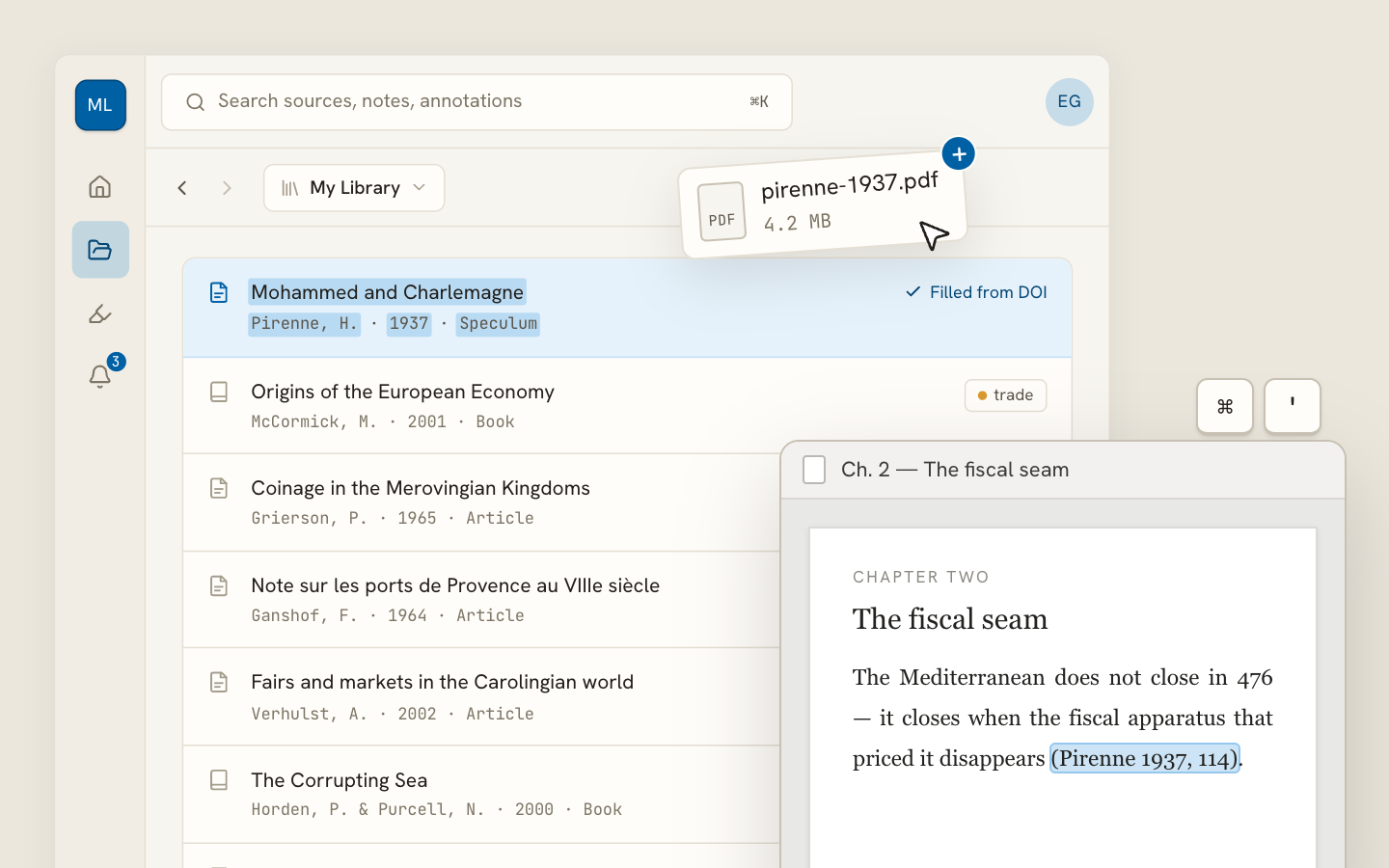
Archivero library view with a source list and an open PDF

Your weekly research workflow, in one email

One tested workflow, three links, no filler — every Tuesday.

Unsubscribe in one click. We never share your address.

Guides/Citations/APA Citation Style

How to Cite a Drawing or Illustration in APA Format

APA 7th edition rules for citing drawings, illustrations, diagrams, and sketches from books, websites, archives, and other sources — with reference list entries, in-text citations, and figure note examples.

5 min readAPA

Key Takeaways

  • Drawings and illustrations are classified as figures in APA with format descriptors like [Drawing], [Illustration], [Diagram], or [Sketch].
  • The basic reference format is: Artist Last Name, Initial. (Year). Title of work [Drawing]. Source. URL
  • For illustrations from books, cite the book and include the page or plate number:
    • Audubon, J. J. (1838). Carolina parakeet [Illustration]. In The birds of America (Plate 26). R. Havell.
  • For illustrations from journals or reports, cite the source document — the illustration is part of it.
  • For illustrations from websites or digital platforms, include the site name and URL.
  • When the artist is unknown, start the reference with the title of the work.
  • When you embed a drawing in your paper, include a copyright note in the figure note.
  • For your own drawings, no copyright note is needed — just label it as a figure with a descriptive title.

On this page

1 of 21
Key TakeawaysReference Format by Source TypeDrawing or Illustration From a BookIllustration From a Journal ArticleDrawing or Illustration From a WebsiteDrawing From a Museum or ArchiveTechnical or Architectural DrawingIllustration From a Digital PlatformDrawing With No Known ArtistDrawing With No DateIn-Text CitationsEmbedding a Drawing as a FigureYour Own DrawingsCopyright NotesReprinted ExactlyAdapted (Redrawn, Modified, Annotated)Creative CommonsPublic DomainFormat Descriptors for Drawings and IllustrationsCommon Drawing Citation MistakesWhat's Next
All APA guides →

Drawings and illustrations in APA are classified as figures and use format descriptors like [Drawing], [Illustration], or [Diagram] in the reference entry. The citation depends on the source — a scientific illustration from a journal article, an architectural drawing from an archive, and a digital illustration from a website each follow different reference structures. The key is identifying the artist or creator, the date, and where the work was accessed.

Reference Format by Source Type

Drawing or Illustration From a Book

Artist Last Name, First Initial. (Year). Title of work [Format]. In A. Author/Editor (Ed.), Title of book (p. Page or Plate). Publisher.

Example:

Audubon, J. J. (1838). Carolina parakeet [Illustration]. In The birds of America (Plate 26). R. Havell.

Illustration From a Journal Article

Cite the article — the illustration is part of it:

Author(s). (Year). Title of article. Title of Journal, Volume(Issue), Page range. https://doi.org/xxxxx

Refer to the specific figure in your in-text citation:

(Ramirez et al., 2023, Figure 2)

Drawing or Illustration From a Website

Artist Last Name, First Initial. (Year, Month Day). Title of work [Format]. Site Name. URL

Example:

Chen, L. (2023, September 4). Human cardiovascular system [Illustration]. Scientific American. https://www.scientificamerican.com/example

Drawing From a Museum or Archive

Artist Last Name, First Initial. (Year). Title of work [Format]. Museum/Archive Name, City, State/Country. URL (if available)

Example:

da Vinci, L. (ca. 1490). Vitruvian Man [Drawing]. Gallerie dell'Accademia, Venice, Italy.

Technical or Architectural Drawing

Creator Last Name, First Initial or Organization. (Year). Title of drawing [Technical drawing]. Source. URL (if available)

Example:

Wright, F. L. (1935). Fallingwater, first floor plan [Architectural drawing]. Frank Lloyd Wright Foundation, Scottsdale, AZ. https://franklloydwright.org/example

Illustration From a Digital Platform

Creator Last Name, First Initial [@username]. (Year, Month Day). Title or description [Digital illustration]. Platform Name. URL

Example:

Park, S. [@soyeon.draws]. (2024, January 20). Conceptual diagram of neural network layers [Digital illustration]. Behance. https://www.behance.net/gallery/example

Drawing With No Known Artist

Title of work [Format]. (Year). Source. URL

Example:

Anatomical diagram of the human ear [Illustration]. (2021). Encyclopaedia Britannica. https://www.britannica.com/example

Drawing With No Date

Use "n.d." or "ca." for approximate dates:

da Vinci, L. (ca. 1510). Studies of the arm showing the movements made by the biceps [Drawing]. Royal Collection Trust, Windsor, United Kingdom.

In-Text Citations

ScenarioParentheticalNarrative
Known artistParenthetical(da Vinci, ca. 1490)Narrativeda Vinci (ca. 1490)
Illustration in journalParenthetical(Ramirez et al., 2023, Figure 2)NarrativeRamirez et al. (2023)
Website illustrationParenthetical(Chen, 2023)NarrativeChen (2023)
Unknown artistParenthetical("Anatomical Diagram," 2021)Narrative"Anatomical Diagram" (2021)

Embedding a Drawing as a Figure

When you include a drawing or illustration in your paper:

Figure 2

Anatomical Illustration of the Human Cardiovascular System

Note. From Human cardiovascular system, by L. Chen, 2023, Scientific American (https://www.scientificamerican.com/example). Copyright 2023 by Springer Nature. Reprinted with permission.

Your Own Drawings

If you created the drawing yourself, no copyright note is needed:

Figure 5

Proposed Model for Information Processing in Bilingual Readers

Copyright Notes

Reprinted Exactly

Note. From "Title of work," by A. Artist, Year, Source (URL). Copyright Year by Copyright Holder. Reprinted with permission.

Adapted (Redrawn, Modified, Annotated)

Note. Adapted from "Title of work," by A. Artist, Year, Source (URL). Copyright Year by Copyright Holder.

Creative Commons

Note. From "Title of work," by A. Artist, Year, Source (URL). CC BY 4.0.

Public Domain

Note. From "Title of work," by A. Artist, Year, Source (URL). In the public domain.

Format Descriptors for Drawings and Illustrations

Choose the most specific descriptor:

  • [Drawing]
  • [Illustration]
  • [Diagram]
  • [Sketch]
  • [Technical drawing]
  • [Architectural drawing]
  • [Digital illustration]
  • [Anatomical illustration]
  • [Botanical illustration]
  • [Scientific illustration]

Common Drawing Citation Mistakes

  1. Using [Image] instead of a specific descriptor. Be precise — [Illustration], [Drawing], or [Diagram] tells readers more than a generic label.
  2. Citing the website that hosts the image, not the creator. Credit the artist or organization that created the illustration.
  3. Forgetting the copyright note for embedded illustrations. Every reproduced or adapted figure needs a source credit in the note.
  4. Not including approximate dates for historical works. Use "ca." for estimated dates: (ca. 1490).
  5. Confusing drawings with paintings. Drawings are typically works in pencil, ink, charcoal, or digital line art. If the work is a painting, see How to Cite a Painting in APA.

What's Next

  • How to Cite a Painting in APA — citing artwork in oil, acrylic, watercolor, and other painted media
  • How to Cite an Image in APA — broader rules for citing visual sources
  • APA Figures — complete figure formatting rules
  • APA Tables — formatting rules for data presented in rows and columns

Archivero helps you focus on your research while keeping the formatting consistent — so you can cite illustrations and technical drawings correctly without second-guessing the format.

All APA guides →
← PreviousHow to Cite a Chart or Graph in APA FormatNext →How to Format Figures in APA

More on APA style

The standard in psychology, education and the social sciences. The author–date system, reference-list formatting and what the 7th edition changed.

View all 34 guides →
11 sections·5 min readAPAHow to Format Figures in APA7 sections·5 min readAPAHow to Cite an Image in APA Format6 sections·4 min readAPAHow to Cite a Map in APA Format7 sections·5 min readAPAHow to Cite a Painting in APA Format

Your sources, PDFs and citations in one library

  • Import a Zotero, Mendeley or EndNote library — or a folder of PDFs
  • Highlight and annotate without leaving the source
  • Cite in any CSL style as you write, with one shared library for your lab
Request early accessSee the product →
Archivero library view with a source list and an open PDF

Your weekly research workflow, in one email

One tested workflow, three links, no filler — every Tuesday.

Unsubscribe in one click. We never share your address.