Archivero is in early access — your sources, PDFs and citations in one library.Request early access →
Archivero/guides/
APAMLAHarvardThesis writing
Subscribe
Archivero/guides/Request early access →

Guides

APA styleMLA styleHarvard referencingThesis writing

Compare

APA 6th vs 7thMLA 8th vs 9thHarvard vs APAThesis vs dissertation

Product

FeaturesEarly access

Resources

DocsCheat sheetsNewsletter

Company

ContactStatus ↗
© 2025–2026 Ernesto F. GonzálezGuidesDocsContactPrivacyTerms
Guides/Citations/APA Citation Style

How to Cite a Conference Paper in APA Format

APA 7th edition formats for conference presentations, posters, symposium contributions, and published proceedings.

6 min readAPA

On this page

1 of 13
Conference Paper PresentationWith a URLPoster PresentationWhen the Poster Is Available as a PDFSymposium ContributionKeynote AddressPublished Conference ProceedingsPublished in a BookPublished in a JournalUnpublished Conference PaperQuick-Reference TableCommon MistakesWhat's Next
All APA guides →

Academic conferences are where new research first sees the light of day — often months or years before it appears in a journal. If you attended a conference, watched a recorded presentation, or found conference proceedings in a database, you may need to cite that work.

APA 7th edition treats conference contributions as a distinct source type, with specific formats depending on the type of presentation and whether it was published. The key distinction: was the work presented at a conference or published in conference proceedings?

Conference Paper Presentation

This is the most common format — a paper that was presented (read aloud or discussed) at a conference but not formally published in proceedings.

Reference list:

Rivera, L. M., & Nguyen, T. H. (2024, April 18–20). Implicit bias in hiring: A longitudinal study of structured interview outcomes [Paper presentation]. Annual Convention of the Society for Industrial and Organizational Psychology, Chicago, IL, United States.

In-text citations:

Parenthetical:(Rivera & Nguyen, 2024)

Narrative:Rivera and Nguyen (2024) presented findings showing that…

Key details:

  • The author(s) are the presenter(s) of the paper.
  • The date includes the specific dates of the conference (use the range if it spans multiple days).
  • The title is italicized and in sentence case, followed by [Paper presentation] in square brackets.
  • The conference name is in title case (capitalize major words).
  • Include the location — city, state (abbreviated), and country.
  • No URL unless the presentation is available online.

With a URL

If the conference paper slides or recording are available online:

Rivera, L. M., & Nguyen, T. H. (2024, April 18–20). Implicit bias in hiring: A longitudinal study of structured interview outcomes [Paper presentation]. Annual Convention of the Society for Industrial and Organizational Psychology, Chicago, IL, United States. https://example.com/conference-paper

Poster Presentation

Poster sessions are a staple of academic conferences. The format is nearly identical to a paper presentation, with a different bracket label.

Reference list:

Okafor, C. N. (2025, May 22–25). Sleep architecture changes in shift workers: A polysomnography study [Poster presentation]. Annual Meeting of the Associated Professional Sleep Societies, Seattle, WA, United States.

In-text citations:

Parenthetical:(Okafor, 2025)

Narrative:Okafor (2025) reported that shift workers exhibited…

Key details:

  • The bracket label is [Poster presentation] instead of [Paper presentation].
  • Everything else follows the same format — authors, date, italicized title, conference name, location.

When the Poster Is Available as a PDF

If the poster file is publicly available (e.g., on the presenter's website or a conference archive):

Okafor, C. N. (2025, May 22–25). Sleep architecture changes in shift workers: A polysomnography study [Poster presentation]. Annual Meeting of the Associated Professional Sleep Societies, Seattle, WA, United States. https://example.com/poster-pdf

Symposium Contribution

A symposium is a curated session at a conference where multiple presenters contribute talks on a related theme. Each individual contribution is cited separately, noting the symposium it was part of.

Reference list:

Tanaka, M. (2024, August 8–11). Cultural variations in parenting self-efficacy among immigrant families [Paper presentation]. In R. K. Desai (Chair), Parenting across cultures: New perspectives on family resilience [Symposium]. Annual Convention of the American Psychological Association, Seattle, WA, United States.

In-text citations:

Parenthetical:(Tanaka, 2024)

Narrative:Tanaka (2024) explored how cultural background shapes…

Key details:

  • The individual presenter is the author.
  • The individual contribution's title is italicized, followed by [Paper presentation].
  • The symposium information follows "In" with the chair's name and the symposium title italicized, followed by [Symposium] in brackets.
  • The overall conference name and location follow.

This format distinguishes the individual contribution from the broader symposium, telling readers exactly where to find the specific presentation.

Keynote Address

Keynote speeches are a single invited presentation, typically by a prominent researcher or public figure.

Reference list:

Dweck, C. S. (2024, March 14). Rethinking talent: Growth mindset in organizational contexts [Keynote address]. Annual Conference of the Association for Talent Development, Denver, CO, United States.

In-text citations:

Parenthetical:(Dweck, 2024)

Narrative:In her keynote address, Dweck (2024) argued that…

Key details:

  • The bracket label is [Keynote address].
  • The date is the specific date of the keynote (not the full conference date range).
  • If the keynote is available as a video, include the URL.

Published Conference Proceedings

When conference papers are collected and published — either as a book or in a journal — use the format for the publication type (book chapter or journal article), not the conference presentation format.

Published in a Book

If the proceedings are published as an edited volume, treat each paper as a chapter in an edited book:

Kim, J., & Patel, S. R. (2023). Machine learning approaches to behavioral sleep data. In A. Morales & C. T. Lin (Eds.), Proceedings of the 12th International Conference on Sleep and Technology (pp. 145–162). Springer. https://doi.org/10.xxxx/978-3-030-12345-6_8

In-text: (Kim & Patel, 2023)

Published in a Journal

If the proceedings are published as a journal issue or supplement, treat each paper as a journal article:

Fernandez, R., & Washington, A. M. (2024). Community-based interventions for food insecurity: A participatory approach. Journal of Community Health, 49(Suppl. 1), S23–S38. https://doi.org/10.xxxx/s10900-024-01234-5

In-text: (Fernandez & Washington, 2024)

The logic:Once a conference paper is published, it's no longer just a presentation — it's a published work. Cite it in the format that matches how it was published.

Unpublished Conference Paper

If you have access to a conference paper that was neither presented at the time you're writing about it nor published in proceedings (e.g., an accepted but not yet presented paper, or a manuscript distributed at a conference):

Reference list:

Hartley, E. (2025). Environmental justice and urban planning: A mixed-methods analysis [Unpublished conference paper]. Department of Urban Studies, Portland State University.

In-text citations:

Parenthetical:(Hartley, 2025)

Narrative:Hartley (2025) proposed a framework for…

Key details:

  • The bracket label is [Unpublished conference paper].
  • Include the department and institution where the author is affiliated.
  • No conference name is included because it hasn't been presented yet.

Quick-Reference Table

Source TypeBracket LabelKey Source Info
Paper presentationBracket Label[Paper presentation]Key Source InfoConference Name, City, State, Country
Poster presentationBracket Label[Poster presentation]Key Source InfoConference Name, City, State, Country
Symposium contributionBracket Label[Paper presentation] + [Symposium]Key Source InfoChair, Symposium Title, Conference Name, Location
Keynote addressBracket Label[Keynote address]Key Source InfoConference Name, City, State, Country
Published proceedings (book)Bracket LabelNone (use book chapter format)Key Source InfoEditors, Book Title, Pages, Publisher, DOI
Published proceedings (journal)Bracket LabelNone (use journal article format)Key Source InfoJournal Name, Volume, Pages, DOI
Unpublished conference paperBracket Label[Unpublished conference paper]Key Source InfoDepartment, Institution

Common Mistakes

These are the conference paper citation errors we see most often:

  1. Using the conference presentation format for published proceedings. If the paper was published in a book or journal, cite it as a book chapter or journal article — not as a conference presentation.

  2. Omitting the conference location. City, state (or province), and country are required for unpublished conference presentations. Don't leave them out.

  3. Forgetting the bracket label. [Paper presentation], [Poster presentation], or [Keynote address] is required — it tells the reader what type of conference contribution this was.

  4. Using the conference date range when citing a specific presentation. For a single presentation, use the specific date if known. For the overall conference, the date range is fine.

  5. Formatting the conference name in sentence case. Conference names are proper nouns — use title case: "Annual Convention of the American Psychological Association," not "Annual convention of the American psychological association."

  6. Including the conference name for published proceedings. When proceedings are published in a book or journal, the publication information replaces the conference information. You don't need to list the conference separately.

What's Next

Now that you know how to cite conference papers, explore these related topics:

  • APA Reference List — how to format and organize all your reference entries
  • How to Cite a Journal Article in APA Format — for conference papers published in journals
  • How to Cite a Book in APA Format — for conference papers published as book chapters

Archivero identifies conference papers and automatically applies the correct format — whether it's an unpublished presentation, a poster session, or published proceedings — so you can cite your conference sources with confidence.
All APA guides →
← PreviousHow to Cite a Government Report in APA FormatNext →How to Cite a Dissertation or Thesis in APA Format

More on APA style

The standard in psychology, education and the social sciences. The author–date system, reference-list formatting and what the 7th edition changed.

View all 34 guides →
9 sections·6 min readAPAHow to Cite a Dissertation or Thesis in APA Format9 sections·8 min readAPAHow to Cite ChatGPT & AI-Generated Content in APA8 sections·9 min readAPAAPA Annotated Bibliography13 sections·8 min readAPAAPA 6th vs. 7th Edition — What Changed

Your sources, PDFs and citations in one library

  • Import a Zotero, Mendeley or EndNote library — or a folder of PDFs
  • Highlight and annotate without leaving the source
  • Cite in any CSL style as you write, with one shared library for your lab
Request early accessSee the product →
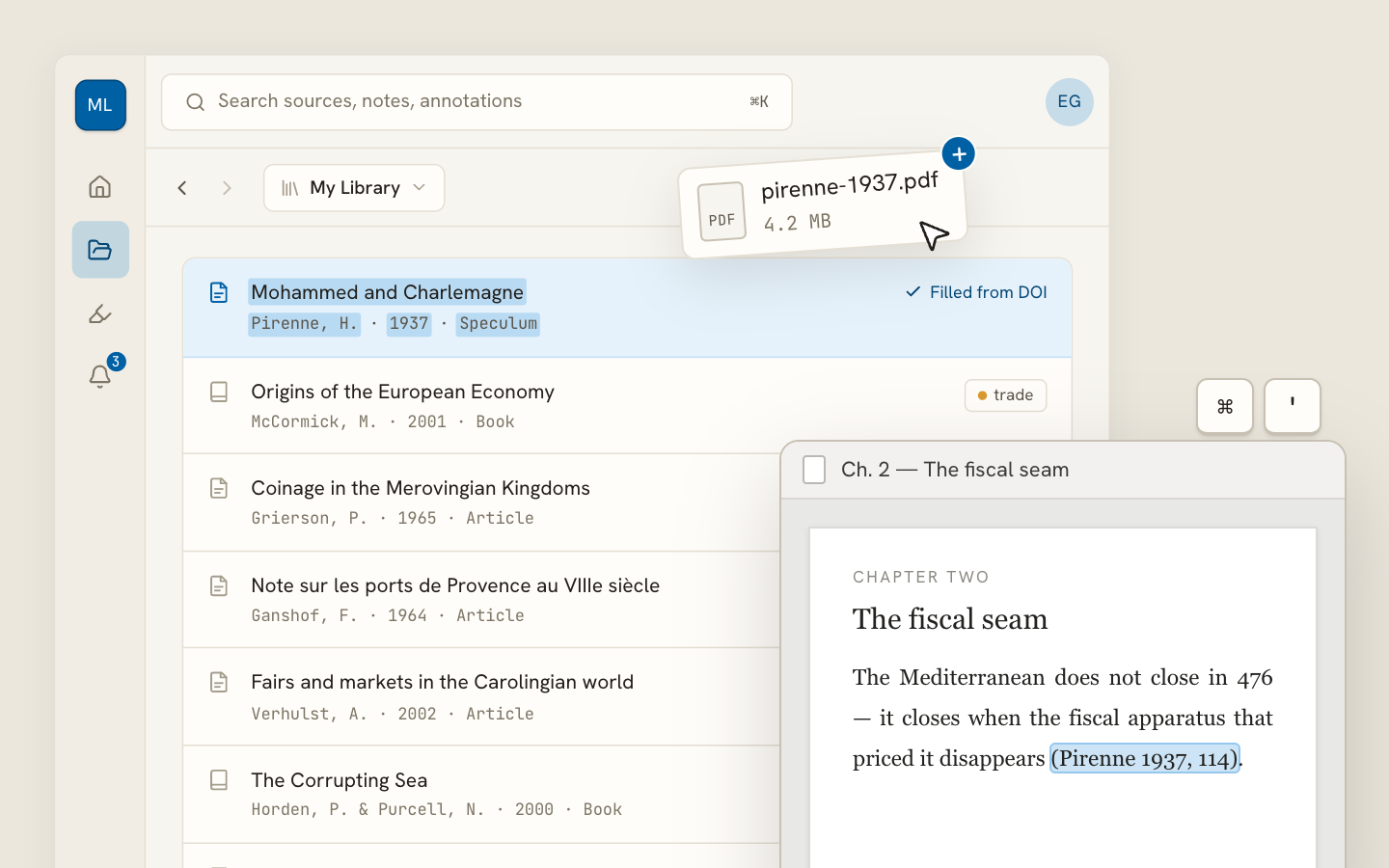
Archivero library view with a source list and an open PDF

Your weekly research workflow, in one email

One tested workflow, three links, no filler — every Tuesday.

Unsubscribe in one click. We never share your address.

Guides/Citations/APA Citation Style

How to Cite a Conference Paper in APA Format

APA 7th edition formats for conference presentations, posters, symposium contributions, and published proceedings.

6 min readAPA

On this page

1 of 13
Conference Paper PresentationWith a URLPoster PresentationWhen the Poster Is Available as a PDFSymposium ContributionKeynote AddressPublished Conference ProceedingsPublished in a BookPublished in a JournalUnpublished Conference PaperQuick-Reference TableCommon MistakesWhat's Next
All APA guides →

Academic conferences are where new research first sees the light of day — often months or years before it appears in a journal. If you attended a conference, watched a recorded presentation, or found conference proceedings in a database, you may need to cite that work.

APA 7th edition treats conference contributions as a distinct source type, with specific formats depending on the type of presentation and whether it was published. The key distinction: was the work presented at a conference or published in conference proceedings?

Conference Paper Presentation

This is the most common format — a paper that was presented (read aloud or discussed) at a conference but not formally published in proceedings.

Reference list:

Rivera, L. M., & Nguyen, T. H. (2024, April 18–20). Implicit bias in hiring: A longitudinal study of structured interview outcomes [Paper presentation]. Annual Convention of the Society for Industrial and Organizational Psychology, Chicago, IL, United States.

In-text citations:

Parenthetical:(Rivera & Nguyen, 2024)

Narrative:Rivera and Nguyen (2024) presented findings showing that…

Key details:

  • The author(s) are the presenter(s) of the paper.
  • The date includes the specific dates of the conference (use the range if it spans multiple days).
  • The title is italicized and in sentence case, followed by [Paper presentation] in square brackets.
  • The conference name is in title case (capitalize major words).
  • Include the location — city, state (abbreviated), and country.
  • No URL unless the presentation is available online.

With a URL

If the conference paper slides or recording are available online:

Rivera, L. M., & Nguyen, T. H. (2024, April 18–20). Implicit bias in hiring: A longitudinal study of structured interview outcomes [Paper presentation]. Annual Convention of the Society for Industrial and Organizational Psychology, Chicago, IL, United States. https://example.com/conference-paper

Poster Presentation

Poster sessions are a staple of academic conferences. The format is nearly identical to a paper presentation, with a different bracket label.

Reference list:

Okafor, C. N. (2025, May 22–25). Sleep architecture changes in shift workers: A polysomnography study [Poster presentation]. Annual Meeting of the Associated Professional Sleep Societies, Seattle, WA, United States.

In-text citations:

Parenthetical:(Okafor, 2025)

Narrative:Okafor (2025) reported that shift workers exhibited…

Key details:

  • The bracket label is [Poster presentation] instead of [Paper presentation].
  • Everything else follows the same format — authors, date, italicized title, conference name, location.

When the Poster Is Available as a PDF

If the poster file is publicly available (e.g., on the presenter's website or a conference archive):

Okafor, C. N. (2025, May 22–25). Sleep architecture changes in shift workers: A polysomnography study [Poster presentation]. Annual Meeting of the Associated Professional Sleep Societies, Seattle, WA, United States. https://example.com/poster-pdf

Symposium Contribution

A symposium is a curated session at a conference where multiple presenters contribute talks on a related theme. Each individual contribution is cited separately, noting the symposium it was part of.

Reference list:

Tanaka, M. (2024, August 8–11). Cultural variations in parenting self-efficacy among immigrant families [Paper presentation]. In R. K. Desai (Chair), Parenting across cultures: New perspectives on family resilience [Symposium]. Annual Convention of the American Psychological Association, Seattle, WA, United States.

In-text citations:

Parenthetical:(Tanaka, 2024)

Narrative:Tanaka (2024) explored how cultural background shapes…

Key details:

  • The individual presenter is the author.
  • The individual contribution's title is italicized, followed by [Paper presentation].
  • The symposium information follows "In" with the chair's name and the symposium title italicized, followed by [Symposium] in brackets.
  • The overall conference name and location follow.

This format distinguishes the individual contribution from the broader symposium, telling readers exactly where to find the specific presentation.

Keynote Address

Keynote speeches are a single invited presentation, typically by a prominent researcher or public figure.

Reference list:

Dweck, C. S. (2024, March 14). Rethinking talent: Growth mindset in organizational contexts [Keynote address]. Annual Conference of the Association for Talent Development, Denver, CO, United States.

In-text citations:

Parenthetical:(Dweck, 2024)

Narrative:In her keynote address, Dweck (2024) argued that…

Key details:

  • The bracket label is [Keynote address].
  • The date is the specific date of the keynote (not the full conference date range).
  • If the keynote is available as a video, include the URL.

Published Conference Proceedings

When conference papers are collected and published — either as a book or in a journal — use the format for the publication type (book chapter or journal article), not the conference presentation format.

Published in a Book

If the proceedings are published as an edited volume, treat each paper as a chapter in an edited book:

Kim, J., & Patel, S. R. (2023). Machine learning approaches to behavioral sleep data. In A. Morales & C. T. Lin (Eds.), Proceedings of the 12th International Conference on Sleep and Technology (pp. 145–162). Springer. https://doi.org/10.xxxx/978-3-030-12345-6_8

In-text: (Kim & Patel, 2023)

Published in a Journal

If the proceedings are published as a journal issue or supplement, treat each paper as a journal article:

Fernandez, R., & Washington, A. M. (2024). Community-based interventions for food insecurity: A participatory approach. Journal of Community Health, 49(Suppl. 1), S23–S38. https://doi.org/10.xxxx/s10900-024-01234-5

In-text: (Fernandez & Washington, 2024)

The logic:Once a conference paper is published, it's no longer just a presentation — it's a published work. Cite it in the format that matches how it was published.

Unpublished Conference Paper

If you have access to a conference paper that was neither presented at the time you're writing about it nor published in proceedings (e.g., an accepted but not yet presented paper, or a manuscript distributed at a conference):

Reference list:

Hartley, E. (2025). Environmental justice and urban planning: A mixed-methods analysis [Unpublished conference paper]. Department of Urban Studies, Portland State University.

In-text citations:

Parenthetical:(Hartley, 2025)

Narrative:Hartley (2025) proposed a framework for…

Key details:

  • The bracket label is [Unpublished conference paper].
  • Include the department and institution where the author is affiliated.
  • No conference name is included because it hasn't been presented yet.

Quick-Reference Table

Source TypeBracket LabelKey Source Info
Paper presentationBracket Label[Paper presentation]Key Source InfoConference Name, City, State, Country
Poster presentationBracket Label[Poster presentation]Key Source InfoConference Name, City, State, Country
Symposium contributionBracket Label[Paper presentation] + [Symposium]Key Source InfoChair, Symposium Title, Conference Name, Location
Keynote addressBracket Label[Keynote address]Key Source InfoConference Name, City, State, Country
Published proceedings (book)Bracket LabelNone (use book chapter format)Key Source InfoEditors, Book Title, Pages, Publisher, DOI
Published proceedings (journal)Bracket LabelNone (use journal article format)Key Source InfoJournal Name, Volume, Pages, DOI
Unpublished conference paperBracket Label[Unpublished conference paper]Key Source InfoDepartment, Institution

Common Mistakes

These are the conference paper citation errors we see most often:

  1. Using the conference presentation format for published proceedings. If the paper was published in a book or journal, cite it as a book chapter or journal article — not as a conference presentation.

  2. Omitting the conference location. City, state (or province), and country are required for unpublished conference presentations. Don't leave them out.

  3. Forgetting the bracket label. [Paper presentation], [Poster presentation], or [Keynote address] is required — it tells the reader what type of conference contribution this was.

  4. Using the conference date range when citing a specific presentation. For a single presentation, use the specific date if known. For the overall conference, the date range is fine.

  5. Formatting the conference name in sentence case. Conference names are proper nouns — use title case: "Annual Convention of the American Psychological Association," not "Annual convention of the American psychological association."

  6. Including the conference name for published proceedings. When proceedings are published in a book or journal, the publication information replaces the conference information. You don't need to list the conference separately.

What's Next

Now that you know how to cite conference papers, explore these related topics:

  • APA Reference List — how to format and organize all your reference entries
  • How to Cite a Journal Article in APA Format — for conference papers published in journals
  • How to Cite a Book in APA Format — for conference papers published as book chapters

Archivero identifies conference papers and automatically applies the correct format — whether it's an unpublished presentation, a poster session, or published proceedings — so you can cite your conference sources with confidence.

All APA guides →
← PreviousHow to Cite a Government Report in APA FormatNext →How to Cite a Dissertation or Thesis in APA Format

More on APA style

The standard in psychology, education and the social sciences. The author–date system, reference-list formatting and what the 7th edition changed.

View all 34 guides →
9 sections·6 min readAPAHow to Cite a Dissertation or Thesis in APA Format9 sections·8 min readAPAHow to Cite ChatGPT & AI-Generated Content in APA8 sections·9 min readAPAAPA Annotated Bibliography13 sections·8 min readAPAAPA 6th vs. 7th Edition — What Changed

Your sources, PDFs and citations in one library

  • Import a Zotero, Mendeley or EndNote library — or a folder of PDFs
  • Highlight and annotate without leaving the source
  • Cite in any CSL style as you write, with one shared library for your lab
Request early accessSee the product →
Archivero library view with a source list and an open PDF

Your weekly research workflow, in one email

One tested workflow, three links, no filler — every Tuesday.

Unsubscribe in one click. We never share your address.