Archivero is in early access — your sources, PDFs and citations in one library.Request early access →
Archivero/guides/
APAMLAHarvardThesis writing
Subscribe
Archivero/guides/Request early access →

Guides

APA styleMLA styleHarvard referencingThesis writing

Compare

APA 6th vs 7thMLA 8th vs 9thHarvard vs APAThesis vs dissertation

Product

FeaturesEarly access

Resources

DocsCheat sheetsNewsletter

Company

ContactStatus ↗
© 2025–2026 Ernesto F. GonzálezGuidesDocsContactPrivacyTerms
Guides/Citations/APA Citation Style

APA Annotated Bibliography

How to write and format an annotated bibliography in APA 7th edition, with examples for different annotation types.

9 min readAPA

On this page

1 of 12
What Is an Annotated Bibliography?Annotated Bibliography vs. Reference List vs. Literature ReviewFormatting RulesImportant: Check Your Assignment GuidelinesTypes of AnnotationsSummary AnnotationsEvaluative AnnotationsReflective AnnotationsHow Long Should Each Annotation Be?Full-Page ExampleCommon MistakesWhat's Next
All APA guides →

An annotated bibliography looks like a regular reference list — but with a twist. After each reference entry, you add a short paragraph (the "annotation") that summarizes, evaluates, or reflects on the source. It's a way to show your reader (and yourself) that you've actually engaged with the material, not just collected a pile of citations.

If your instructor has assigned an annotated bibliography, this page will show you exactly how to format it in APA 7th edition, what to write in each annotation, and how to avoid the most common mistakes.

What Is an Annotated Bibliography?

An annotated bibliography is a list of references where each entry is followed by a brief paragraph — typically 100–200 words — that describes and often evaluates the source. Think of it as a reference list with commentary.

Annotated bibliographies serve several purposes:

  • Demonstrate your research: Show that you've read and understood your sources
  • Organize your thinking: Force you to articulate what each source contributes before you start writing
  • Help your reader: Give a quick overview of the available literature on a topic
  • Prepare for a larger project: Many instructors assign annotated bibliographies as a stepping stone toward a research paper or literature review

Annotated Bibliography vs. Reference List vs. Literature Review

These three things are often confused. Here's how they're different:

FormatWhat It IncludesPurpose
Reference listWhat It IncludesFull citation for each sourcePurposeTells readers where to find your sources
Annotated bibliographyWhat It IncludesFull citation + summary paragraph for each sourcePurposeShows you've engaged with each source individually
Literature reviewWhat It IncludesSynthesized discussion of multiple sources woven into paragraphs organized by themePurposeAnalyzes how sources relate to each other and to your research question

The key difference: In an annotated bibliography, you discuss sources one at a time. In a literature review, you discuss them in conversation with each other. An annotated bibliography is a list; a literature review is an essay.

Formatting Rules

APA doesn't have a dedicated section in the Publication Manual for annotated bibliographies (they're primarily an academic assignment, not a manuscript component). However, the standard practice follows APA formatting conventions:

  1. Title: Center the words Annotated Bibliography in bold at the top of the page — just like you would center "References."
  2. Reference entries: Format each citation exactly as you would in a standard APA reference list — hanging indent, double-spaced, sentence case for titles, etc.
  3. Annotations: Begin the annotation as a new paragraph directly below its reference entry. Indent it 0.5 inches from the left margin (matching the hanging indent lines). Double-space it, just like everything else.
  4. Order: Alphabetize entries by the first author's last name, the same way you would a reference list.
  5. Spacing: Double-space within and between entries. No extra space between the reference and its annotation or between entries.

Important: Check Your Assignment Guidelines

Since APA doesn't prescribe a single "official" format for annotated bibliographies, your instructor may have specific expectations about:

  • Whether the title should be "Annotated Bibliography" or "References"
  • How long each annotation should be
  • Whether annotations should be indented or flush left
  • Whether to use a specific annotation type (summary, evaluative, etc.)

Always follow your instructor's guidelines when they differ from the general conventions described here.

Types of Annotations

There are three main types of annotations, and your assignment might ask for one specifically or allow you to choose.

Summary Annotations

The most common type. You describe what the source is about — its purpose, methods, and key findings — without adding your own opinion.

What to include:

  • What is the source's main argument or purpose?
  • What methods did the authors use? (for empirical studies)
  • What were the key findings or conclusions?
  • What topic or population does it focus on?

Example:

Lund, H. G., Reider, B. D., Whiting, A. B., & Prichard, J. R. (2010). Sleep patterns and predictors of disturbed sleep in a large population of college students. Journal of Adolescent Health, 46(2), 124–132. https://doi.org/10.1016/j.jadohealth.2009.06.016

    This study surveyed 1,125 college students at a mid-sized southeastern university to examine sleep patterns and factors associated with poor sleep quality. Using the Pittsburgh Sleep Quality Index (PSQI) and a supplemental questionnaire, the researchers found that 60% of students qualified as poor-quality sleepers. Academic stress, electronics use before bed, and inconsistent sleep schedules were the strongest predictors of disturbed sleep. The study also found that students who reported worse sleep quality had lower GPAs, though the authors noted that this correlation does not establish causation. The large sample size and validated measures strengthen the study's findings, although the cross-sectional design limits the ability to determine directionality.

Evaluative Annotations

Go beyond summary to assess the source's quality, reliability, and usefulness for your research. This is where you add your critical perspective.

What to include (in addition to summary):

  • Is the methodology sound?
  • Are there limitations or biases?
  • How does this source compare to others on the same topic?
  • How useful is it for your specific research question?

Example:

Walker, M. (2017). Why we sleep: Unlocking the power of sleep and dreams. Scribner.

    Walker, a neuroscience professor at UC Berkeley, presents a comprehensive overview of sleep research, arguing that sleep deprivation has far-reaching consequences for health, cognition, and emotional regulation. The book synthesizes decades of laboratory and epidemiological research into an accessible narrative aimed at a general audience. Walker's discussion of how sleep affects memory consolidation (particularly Chapters 6 and 7) is directly relevant to research on academic performance. However, the book has been criticized by some researchers for occasionally overstating findings and presenting correlational evidence as causal. As a secondary source, it provides a useful introduction to the field but should be supplemented with primary research articles for specific claims. Despite these limitations, the book is valuable for establishing the broader context of sleep's impact on cognitive functioning.

Reflective Annotations

Focus on how the source relates to your specific project. These are the most personal and project-specific type.

What to include:

  • How will you use this source in your paper?
  • What gap does it fill in your research?
  • How does it connect to your thesis or research question?
  • Did it change your thinking about the topic?

Example:

National Sleep Foundation. (2024, March 15). How much sleep do you really need? https://www.sleepfoundation.org/how-sleep-works/how-much-sleep-do-we-really-need

    This web page from the National Sleep Foundation provides evidence-based sleep duration recommendations organized by age group, noting that young adults (18–25) need 7–9 hours of sleep per night. The recommendations are based on a systematic review conducted by an expert panel. I plan to use this source in my introduction to establish the baseline sleep needs for my population of interest (undergraduate students aged 18–24). It provides a useful reference point for discussing whether the students in my study are meeting recommended sleep durations. While the source is credible, it does not discuss the academic implications of insufficient sleep, so I will pair it with empirical studies that directly examine the sleep-performance relationship.

How Long Should Each Annotation Be?

This depends on your assignment, but here are general guidelines:

Annotation TypeTypical LengthFocus
SummaryTypical Length100–150 wordsFocusWhat the source says
EvaluativeTypical Length150–200 wordsFocusWhat the source says + how good it is
ReflectiveTypical Length100–200 wordsFocusWhat the source says + how you'll use it
Combined (summary + evaluation + reflection)Typical Length200–300 wordsFocusAll of the above

When in doubt, aim for 150–200 words per annotation — enough to show genuine engagement without turning into a mini-essay.

Full-Page Example

Here's a complete annotated bibliography with four entries, using a mix of annotation approaches:

Annotated Bibliography

Buysse, D. J., Reynolds, C. F., Monk, T. H., Berman, S. R., & Kupfer, D. J. (1989). The Pittsburgh Sleep Quality Index: A new instrument for psychiatric practice and research. Psychiatry Research, 28(2), 193–213. https://doi.org/10.1016/0165-1781(89)90047-4

    This article introduces the Pittsburgh Sleep Quality Index (PSQI), a 19-item self-report questionnaire designed to measure sleep quality over the previous month. The authors validated the instrument across clinical and non-clinical populations, demonstrating high internal consistency and the ability to distinguish "good" from "poor" sleepers using a cutoff score of 5. This source is essential for my study because the PSQI is the primary instrument I am using to measure sleep quality among undergraduate students. Understanding the measure's psychometric properties and scoring procedures will strengthen my methodology section.

Lund, H. G., Reider, B. D., Whiting, A. B., & Prichard, J. R. (2010). Sleep patterns and predictors of disturbed sleep in a large population of college students. Journal of Adolescent Health, 46(2), 124–132. https://doi.org/10.1016/j.jadohealth.2009.06.016

    This study surveyed 1,125 college students to examine sleep patterns and factors associated with poor sleep quality. Using the PSQI and a supplemental questionnaire, the researchers found that 60% of students qualified as poor-quality sleepers. Academic stress, electronics use before bed, and inconsistent sleep schedules were the strongest predictors of disturbed sleep. The large sample size and validated measures are strengths. However, the cross-sectional design limits causal claims, and the single-institution sample may not generalize to other populations.

National Sleep Foundation. (2024, March 15). How much sleep do you really need? https://www.sleepfoundation.org/how-sleep-works/how-much-sleep-do-we-really-need

    This web page provides evidence-based sleep duration recommendations organized by age group, noting that young adults (18–25) need 7–9 hours per night. The recommendations are based on a systematic review by an expert panel. As an organizational source, it provides a credible reference point for establishing baseline sleep needs but does not directly address academic outcomes. I will use it to contextualize sleep insufficiency in my study's population.

Walker, M. (2017). Why we sleep: Unlocking the power of sleep and dreams. Scribner.

    Walker presents a comprehensive overview of sleep research, arguing that sleep deprivation has consequences for health, cognition, and emotional regulation. Chapters 6 and 7 are particularly relevant to my research, as they discuss sleep's role in memory consolidation and learning. The book has been critiqued for occasionally overstating findings, and as a secondary source, it should be supplemented with primary research. Nonetheless, it provides an accessible and thorough introduction to the broader context of sleep science that will inform my literature review.

Common Mistakes

These are the annotated bibliography errors we see most often:

  1. Writing a literature review instead of an annotated bibliography. Each annotation discusses one source independently. Don't compare sources to each other within a single annotation — save that for the literature review.
  2. Making the annotation too short. "This article is about sleep" isn't an annotation — it's a sentence. Aim for at least 100 words that show genuine engagement.
  3. Forgetting to format the reference entry correctly. The annotation is the focus, but the reference still needs to follow all standard APA rules — hanging indent, sentence case, DOI, etc.
  4. Writing only summary, no evaluation. Unless your assignment specifically asks for summary-only annotations, include at least a sentence about the source's quality, relevance, or limitations.
  5. Using first person when it's not appropriate. Some instructors prefer third person. Others welcome "I" statements in reflective annotations. Check your assignment guidelines.
  6. Alphabetizing incorrectly. Same rules as a reference list — alphabetize by the first author's last name (or by title if there's no author).

What's Next

Now that you know how to write an annotated bibliography, explore these related topics:

  • APA Reference List — the complete guide to formatting standard reference entries
  • APA Citation Style — the full APA pillar page with links to every topic

Archivero makes building annotated bibliographies faster — save your sources to your library, and Archivero generates the perfectly formatted reference entry for each one. All you need to add is your annotation.
All APA guides →
← PreviousHow to Cite ChatGPT & AI-Generated Content in APANext →APA 6th vs. 7th Edition — What Changed

More on APA style

The standard in psychology, education and the social sciences. The author–date system, reference-list formatting and what the 7th edition changed.

View all 34 guides →
13 sections·8 min readAPAAPA 6th vs. 7th Edition — What Changed6 sections·8 min readAPACommon APA Format Mistakes (and How to Fix Them)8 sections·5 min readAPAHow to Cite a Chart or Graph in APA Format7 sections·5 min readAPAHow to Cite a Drawing or Illustration in APA Format

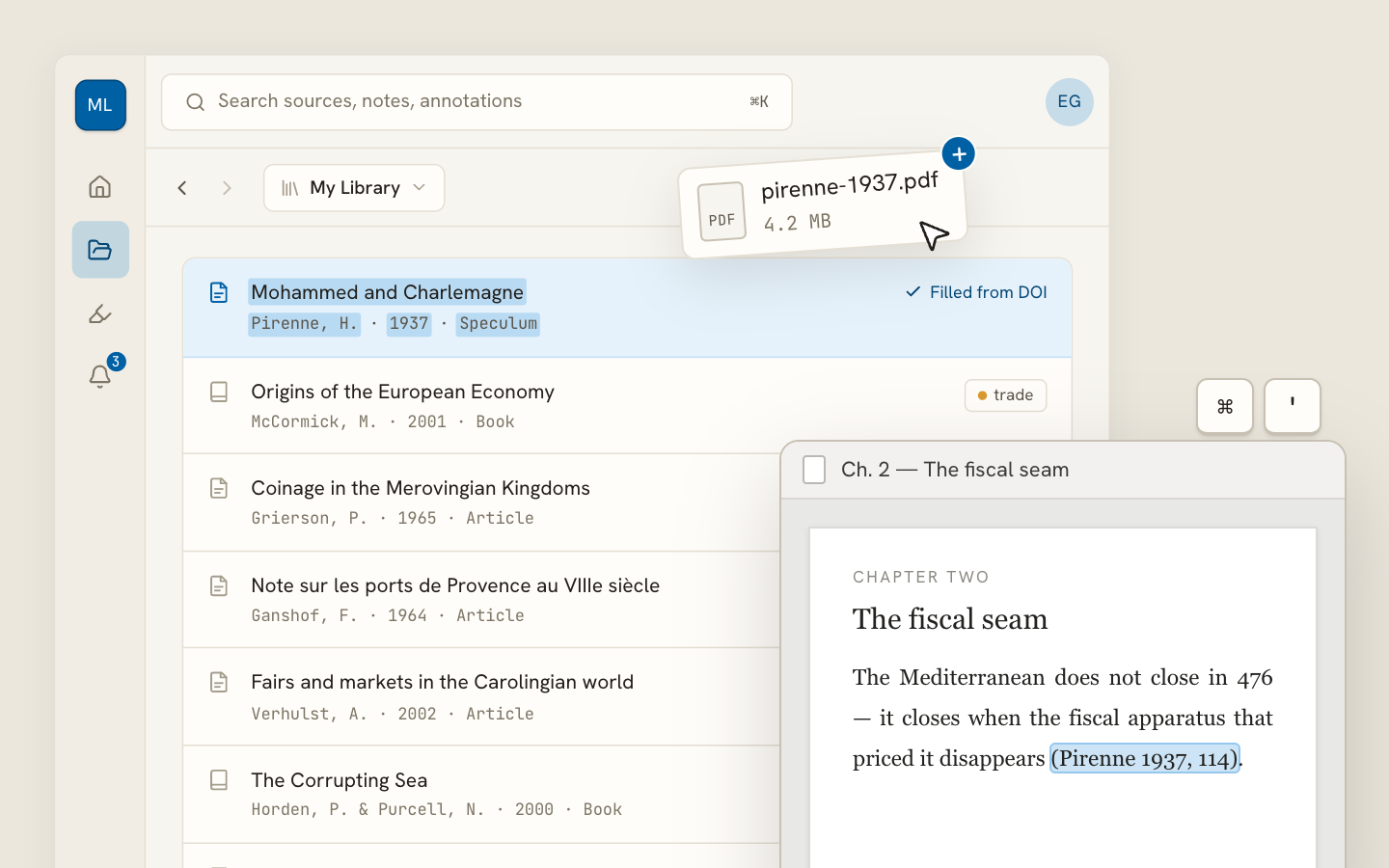
Your sources, PDFs and citations in one library

  • Import a Zotero, Mendeley or EndNote library — or a folder of PDFs
  • Highlight and annotate without leaving the source
  • Cite in any CSL style as you write, with one shared library for your lab
Request early accessSee the product →
Archivero library view with a source list and an open PDF

Your weekly research workflow, in one email

One tested workflow, three links, no filler — every Tuesday.

Unsubscribe in one click. We never share your address.

Guides/Citations/APA Citation Style

APA Annotated Bibliography

How to write and format an annotated bibliography in APA 7th edition, with examples for different annotation types.

9 min readAPA

On this page

1 of 12
What Is an Annotated Bibliography?Annotated Bibliography vs. Reference List vs. Literature ReviewFormatting RulesImportant: Check Your Assignment GuidelinesTypes of AnnotationsSummary AnnotationsEvaluative AnnotationsReflective AnnotationsHow Long Should Each Annotation Be?Full-Page ExampleCommon MistakesWhat's Next
All APA guides →

An annotated bibliography looks like a regular reference list — but with a twist. After each reference entry, you add a short paragraph (the "annotation") that summarizes, evaluates, or reflects on the source. It's a way to show your reader (and yourself) that you've actually engaged with the material, not just collected a pile of citations.

If your instructor has assigned an annotated bibliography, this page will show you exactly how to format it in APA 7th edition, what to write in each annotation, and how to avoid the most common mistakes.

What Is an Annotated Bibliography?

An annotated bibliography is a list of references where each entry is followed by a brief paragraph — typically 100–200 words — that describes and often evaluates the source. Think of it as a reference list with commentary.

Annotated bibliographies serve several purposes:

  • Demonstrate your research: Show that you've read and understood your sources
  • Organize your thinking: Force you to articulate what each source contributes before you start writing
  • Help your reader: Give a quick overview of the available literature on a topic
  • Prepare for a larger project: Many instructors assign annotated bibliographies as a stepping stone toward a research paper or literature review

Annotated Bibliography vs. Reference List vs. Literature Review

These three things are often confused. Here's how they're different:

FormatWhat It IncludesPurpose
Reference listWhat It IncludesFull citation for each sourcePurposeTells readers where to find your sources
Annotated bibliographyWhat It IncludesFull citation + summary paragraph for each sourcePurposeShows you've engaged with each source individually
Literature reviewWhat It IncludesSynthesized discussion of multiple sources woven into paragraphs organized by themePurposeAnalyzes how sources relate to each other and to your research question

The key difference: In an annotated bibliography, you discuss sources one at a time. In a literature review, you discuss them in conversation with each other. An annotated bibliography is a list; a literature review is an essay.

Formatting Rules

APA doesn't have a dedicated section in the Publication Manual for annotated bibliographies (they're primarily an academic assignment, not a manuscript component). However, the standard practice follows APA formatting conventions:

  1. Title: Center the words Annotated Bibliography in bold at the top of the page — just like you would center "References."
  2. Reference entries: Format each citation exactly as you would in a standard APA reference list — hanging indent, double-spaced, sentence case for titles, etc.
  3. Annotations: Begin the annotation as a new paragraph directly below its reference entry. Indent it 0.5 inches from the left margin (matching the hanging indent lines). Double-space it, just like everything else.
  4. Order: Alphabetize entries by the first author's last name, the same way you would a reference list.
  5. Spacing: Double-space within and between entries. No extra space between the reference and its annotation or between entries.

Important: Check Your Assignment Guidelines

Since APA doesn't prescribe a single "official" format for annotated bibliographies, your instructor may have specific expectations about:

  • Whether the title should be "Annotated Bibliography" or "References"
  • How long each annotation should be
  • Whether annotations should be indented or flush left
  • Whether to use a specific annotation type (summary, evaluative, etc.)

Always follow your instructor's guidelines when they differ from the general conventions described here.

Types of Annotations

There are three main types of annotations, and your assignment might ask for one specifically or allow you to choose.

Summary Annotations

The most common type. You describe what the source is about — its purpose, methods, and key findings — without adding your own opinion.

What to include:

  • What is the source's main argument or purpose?
  • What methods did the authors use? (for empirical studies)
  • What were the key findings or conclusions?
  • What topic or population does it focus on?

Example:

Lund, H. G., Reider, B. D., Whiting, A. B., & Prichard, J. R. (2010). Sleep patterns and predictors of disturbed sleep in a large population of college students. Journal of Adolescent Health, 46(2), 124–132. https://doi.org/10.1016/j.jadohealth.2009.06.016

    This study surveyed 1,125 college students at a mid-sized southeastern university to examine sleep patterns and factors associated with poor sleep quality. Using the Pittsburgh Sleep Quality Index (PSQI) and a supplemental questionnaire, the researchers found that 60% of students qualified as poor-quality sleepers. Academic stress, electronics use before bed, and inconsistent sleep schedules were the strongest predictors of disturbed sleep. The study also found that students who reported worse sleep quality had lower GPAs, though the authors noted that this correlation does not establish causation. The large sample size and validated measures strengthen the study's findings, although the cross-sectional design limits the ability to determine directionality.

Evaluative Annotations

Go beyond summary to assess the source's quality, reliability, and usefulness for your research. This is where you add your critical perspective.

What to include (in addition to summary):

  • Is the methodology sound?
  • Are there limitations or biases?
  • How does this source compare to others on the same topic?
  • How useful is it for your specific research question?

Example:

Walker, M. (2017). Why we sleep: Unlocking the power of sleep and dreams. Scribner.

    Walker, a neuroscience professor at UC Berkeley, presents a comprehensive overview of sleep research, arguing that sleep deprivation has far-reaching consequences for health, cognition, and emotional regulation. The book synthesizes decades of laboratory and epidemiological research into an accessible narrative aimed at a general audience. Walker's discussion of how sleep affects memory consolidation (particularly Chapters 6 and 7) is directly relevant to research on academic performance. However, the book has been criticized by some researchers for occasionally overstating findings and presenting correlational evidence as causal. As a secondary source, it provides a useful introduction to the field but should be supplemented with primary research articles for specific claims. Despite these limitations, the book is valuable for establishing the broader context of sleep's impact on cognitive functioning.

Reflective Annotations

Focus on how the source relates to your specific project. These are the most personal and project-specific type.

What to include:

  • How will you use this source in your paper?
  • What gap does it fill in your research?
  • How does it connect to your thesis or research question?
  • Did it change your thinking about the topic?

Example:

National Sleep Foundation. (2024, March 15). How much sleep do you really need? https://www.sleepfoundation.org/how-sleep-works/how-much-sleep-do-we-really-need

    This web page from the National Sleep Foundation provides evidence-based sleep duration recommendations organized by age group, noting that young adults (18–25) need 7–9 hours of sleep per night. The recommendations are based on a systematic review conducted by an expert panel. I plan to use this source in my introduction to establish the baseline sleep needs for my population of interest (undergraduate students aged 18–24). It provides a useful reference point for discussing whether the students in my study are meeting recommended sleep durations. While the source is credible, it does not discuss the academic implications of insufficient sleep, so I will pair it with empirical studies that directly examine the sleep-performance relationship.

How Long Should Each Annotation Be?

This depends on your assignment, but here are general guidelines:

Annotation TypeTypical LengthFocus
SummaryTypical Length100–150 wordsFocusWhat the source says
EvaluativeTypical Length150–200 wordsFocusWhat the source says + how good it is
ReflectiveTypical Length100–200 wordsFocusWhat the source says + how you'll use it
Combined (summary + evaluation + reflection)Typical Length200–300 wordsFocusAll of the above

When in doubt, aim for 150–200 words per annotation — enough to show genuine engagement without turning into a mini-essay.

Full-Page Example

Here's a complete annotated bibliography with four entries, using a mix of annotation approaches:

Annotated Bibliography

Buysse, D. J., Reynolds, C. F., Monk, T. H., Berman, S. R., & Kupfer, D. J. (1989). The Pittsburgh Sleep Quality Index: A new instrument for psychiatric practice and research. Psychiatry Research, 28(2), 193–213. https://doi.org/10.1016/0165-1781(89)90047-4

    This article introduces the Pittsburgh Sleep Quality Index (PSQI), a 19-item self-report questionnaire designed to measure sleep quality over the previous month. The authors validated the instrument across clinical and non-clinical populations, demonstrating high internal consistency and the ability to distinguish "good" from "poor" sleepers using a cutoff score of 5. This source is essential for my study because the PSQI is the primary instrument I am using to measure sleep quality among undergraduate students. Understanding the measure's psychometric properties and scoring procedures will strengthen my methodology section.

Lund, H. G., Reider, B. D., Whiting, A. B., & Prichard, J. R. (2010). Sleep patterns and predictors of disturbed sleep in a large population of college students. Journal of Adolescent Health, 46(2), 124–132. https://doi.org/10.1016/j.jadohealth.2009.06.016

    This study surveyed 1,125 college students to examine sleep patterns and factors associated with poor sleep quality. Using the PSQI and a supplemental questionnaire, the researchers found that 60% of students qualified as poor-quality sleepers. Academic stress, electronics use before bed, and inconsistent sleep schedules were the strongest predictors of disturbed sleep. The large sample size and validated measures are strengths. However, the cross-sectional design limits causal claims, and the single-institution sample may not generalize to other populations.

National Sleep Foundation. (2024, March 15). How much sleep do you really need? https://www.sleepfoundation.org/how-sleep-works/how-much-sleep-do-we-really-need

    This web page provides evidence-based sleep duration recommendations organized by age group, noting that young adults (18–25) need 7–9 hours per night. The recommendations are based on a systematic review by an expert panel. As an organizational source, it provides a credible reference point for establishing baseline sleep needs but does not directly address academic outcomes. I will use it to contextualize sleep insufficiency in my study's population.

Walker, M. (2017). Why we sleep: Unlocking the power of sleep and dreams. Scribner.

    Walker presents a comprehensive overview of sleep research, arguing that sleep deprivation has consequences for health, cognition, and emotional regulation. Chapters 6 and 7 are particularly relevant to my research, as they discuss sleep's role in memory consolidation and learning. The book has been critiqued for occasionally overstating findings, and as a secondary source, it should be supplemented with primary research. Nonetheless, it provides an accessible and thorough introduction to the broader context of sleep science that will inform my literature review.

Common Mistakes

These are the annotated bibliography errors we see most often:

  1. Writing a literature review instead of an annotated bibliography. Each annotation discusses one source independently. Don't compare sources to each other within a single annotation — save that for the literature review.
  2. Making the annotation too short. "This article is about sleep" isn't an annotation — it's a sentence. Aim for at least 100 words that show genuine engagement.
  3. Forgetting to format the reference entry correctly. The annotation is the focus, but the reference still needs to follow all standard APA rules — hanging indent, sentence case, DOI, etc.
  4. Writing only summary, no evaluation. Unless your assignment specifically asks for summary-only annotations, include at least a sentence about the source's quality, relevance, or limitations.
  5. Using first person when it's not appropriate. Some instructors prefer third person. Others welcome "I" statements in reflective annotations. Check your assignment guidelines.
  6. Alphabetizing incorrectly. Same rules as a reference list — alphabetize by the first author's last name (or by title if there's no author).

What's Next

Now that you know how to write an annotated bibliography, explore these related topics:

  • APA Reference List — the complete guide to formatting standard reference entries
  • APA Citation Style — the full APA pillar page with links to every topic

Archivero makes building annotated bibliographies faster — save your sources to your library, and Archivero generates the perfectly formatted reference entry for each one. All you need to add is your annotation.

All APA guides →
← PreviousHow to Cite ChatGPT & AI-Generated Content in APANext →APA 6th vs. 7th Edition — What Changed

More on APA style

The standard in psychology, education and the social sciences. The author–date system, reference-list formatting and what the 7th edition changed.

View all 34 guides →
13 sections·8 min readAPAAPA 6th vs. 7th Edition — What Changed6 sections·8 min readAPACommon APA Format Mistakes (and How to Fix Them)8 sections·5 min readAPAHow to Cite a Chart or Graph in APA Format7 sections·5 min readAPAHow to Cite a Drawing or Illustration in APA Format

Your sources, PDFs and citations in one library

  • Import a Zotero, Mendeley or EndNote library — or a folder of PDFs
  • Highlight and annotate without leaving the source
  • Cite in any CSL style as you write, with one shared library for your lab
Request early accessSee the product →
Archivero library view with a source list and an open PDF

Your weekly research workflow, in one email

One tested workflow, three links, no filler — every Tuesday.

Unsubscribe in one click. We never share your address.