Archivero is in early access — your sources, PDFs and citations in one library.Request early access →
Archivero/guides/
APAMLAHarvardThesis writing
Subscribe
Archivero/guides/Request early access →

Guides

APA styleMLA styleHarvard referencingThesis writing

Compare

APA 6th vs 7thMLA 8th vs 9thHarvard vs APAThesis vs dissertation

Product

FeaturesEarly access

Resources

DocsCheat sheetsNewsletter

Company

ContactStatus ↗
© 2025–2026 Ernesto F. GonzálezGuidesDocsContactPrivacyTerms
Guides/Citations/APA Citation Style

APA Heading Levels

How to format all five APA 7th edition heading levels, with examples showing when and why to use each one.

6 min readAPA

On this page

1 of 11
The Five Heading LevelsWhen to Use Each LevelReal Paper Example Using Levels 1–3How Many Heading Levels Do You Need?The Introduction ExceptionHeadings in Different Paper TypesLiterature ReviewCase StudyTheoretical PaperCommon Heading MistakesWhat's Next
All APA guides →

Headings are the skeleton of your paper. They tell readers where one section ends and another begins, signal the hierarchy of ideas, and make long papers navigable instead of overwhelming. APA 7th edition defines five heading levels — each with its own formatting rules.

Most student papers only need two or three levels. But knowing all five gives you the flexibility to organize even the most complex research papers clearly.

The Five Heading Levels

Each heading level has a distinct combination of boldface, italics, alignment, and indentation. Here they are, from broadest (Level 1) to most specific (Level 5):

LevelFormatExample
1FormatCentered, Bold, Title CaseExampleMethod
2FormatFlush Left, Bold, Title CaseExampleParticipants
3FormatFlush Left, Bold Italic, Title CaseExampleRecruitment Procedures
4FormatIndented (0.5 in.), Bold, Title Case, Ending With a Period**.** Text begins on the same line.Example    Inclusion Criteria. Participants were…
5FormatIndented (0.5 in.), Bold Italic, Title Case, Ending With a Period**.** Text begins on the same line.Example    Age Requirements. Participants aged…

Key details:

  • Levels 1–3 each start on their own line, with the body text beginning on the next line.
  • Levels 4–5 are "run-in" headings — the heading and the paragraph text sit on the same line, separated by a period and a space.
  • All heading levels use title case: capitalize the first word, the first word after a colon, and all major words (four or more letters). Lowercase minor words like "and," "of," "in," "the."
  • All headings are double-spaced, just like the rest of the paper. No extra space above or below.
  • Never add numbers or letters to your headings (1.0, 1.1, A, B) unless your instructor specifically requires it.

When to Use Each Level

The number of heading levels you need depends on the complexity of your paper:

Paper TypeTypical Levels Used
Short essay (5–8 pages)Level 1 only (or none)
Standard research paper (10–20 pages)Levels 1 and 2
Complex research paper or thesisLevels 1, 2, and 3
Dissertation or book-length workLevels 1 through 4 (sometimes 5)

Real Paper Example Using Levels 1–3

Here's how headings might look in a psychology research paper:

Method ← Level 1

Participants ← Level 2

    A convenience sample of 142 undergraduate students…

Materials ← Level 2

Sleep Quality Measure ← Level 3

    Sleep quality was assessed using the Pittsburgh Sleep Quality Index (PSQI; Buysse et al., 1989)…

Academic Performance Measure ← Level 3

    Academic performance was operationalized as cumulative GPA…

Procedure ← Level 2

    Participants completed the PSQI online during the first two weeks of the semester…

Results ← Level 1

    A Pearson correlation revealed a statistically significant negative relationship…

Notice how the heading levels create a clear visual hierarchy: Method is a major section (Level 1), Participants, Materials, and Procedure are subsections within it (Level 2), and the individual measures are sub-subsections within Materials (Level 3).

How Many Heading Levels Do You Need?

Start with Level 1 and add levels only when you need to divide a section into subsections. Follow these guidelines:

  1. If your entire paper is a single argument without distinct sections, you might not need headings at all (short essays, reflection papers).

  2. If you have 2–4 main sections (e.g., Introduction, Method, Results, Discussion), use Level 1 headings for each.

  3. If a section has subsections, introduce Level 2 headings within that section.

  4. If a subsection has its own subsections, use Level 3.

  5. Keep going only as deep as needed. Most papers never need Levels 4 or 5.

Important rule:If you use a heading level within a section, you must have at least two headings at that level. A section can't have just one Level 2 heading — if there's only one subsection, it doesn't need its own heading. Think of it like an outline: you wouldn't have an A without a B.

The Introduction Exception

APA has a specific — and frequently misunderstood — rule about the introduction:

Do not label the introduction with the heading "Introduction."

Instead, your paper title serves as the Level 1 heading for the introduction. After the title page (and abstract, if applicable), your paper's first page starts with the paper title — centered and bold — and the introductory paragraphs follow immediately. No "Introduction" heading is needed because readers already know the opening section is the introduction.

This is one of the most common APA heading mistakes. The first labeled Level 1 heading in your paper should typically be "Method" (or "Literature Review" or whatever comes after the introduction).

Headings in Different Paper Types

The research paper structure (Introduction → Method → Results → Discussion) is the most common, but other paper types have their own heading conventions:

Literature Review

Title of Paper ← Paper title as Level 1

(Introductory paragraphs — no heading)

Theme or Topic Area 1 ← Level 1

    (Discussion of the first thematic cluster)

Theme or Topic Area 2 ← Level 1

Subtopic 2a ← Level 2

Subtopic 2b ← Level 2

Conclusions and Future Directions ← Level 1

Case Study

Title of Paper ← Paper title as Level 1

(Introduction)

Background ← Level 1

Assessment ← Level 1

Intervention ← Level 1

Outcomes ← Level 1

Discussion ← Level 1

Theoretical Paper

Title of Paper ← Paper title as Level 1

(Introduction)

Existing Theoretical Framework ← Level 1

Limitations of Current Models ← Level 1

Proposed Model ← Level 1

Implications and Applications ← Level 1

The specific headings vary by paper — these are illustrative, not prescribed. The point is that APA heading levels work the same way regardless of paper type.

Common Heading Mistakes

These are the heading errors we see most frequently:

  1. Labeling the introduction "Introduction." The paper title already serves as the heading for the introduction. Adding a separate "Introduction" heading is redundant and violates APA style.

  2. Numbering headings. APA does not use numbered headings (1.0, 1.1, 2.0). Unless your instructor or discipline explicitly requires numbering, leave it out.

  3. Skipping heading levels. Don't jump from Level 1 to Level 3 without using Level 2 in between. Heading levels must be used in order — just like you wouldn't have an outline with I, then a, then (1) without the intermediate levels.

  4. Having only one subsection. If you break a section into subsections, you need at least two. A single Level 2 heading under a Level 1 heading suggests the content doesn't actually need to be subdivided.

  5. Using headings as paragraph labels. A heading should introduce a section, not serve as a sentence. Don't write "Participants" and then immediately say "The participants were…" Instead, let the heading introduce the topic and then write a complete opening sentence.

  6. Changing font size for different levels. All heading levels use the same font and size as the body text. The distinction comes from bold, italic, alignment, and indentation — never from font size.

  7. Adding extra blank lines above or below headings. Headings are double-spaced with the text, just like everything else. No extra spacing.

What's Next

Now that you know how to structure your paper with headings, explore these related topics:

  • APA Format Example Paper — see heading levels in action in a complete paper
  • APA General Format — margins, fonts, spacing, and overall page layout
  • APA Figures — formatting visual elements that sit alongside your headings

Archivero can help you focus on organizing your ideas clearly — while the formatting details take care of themselves. Structure your paper with confidence, knowing every heading level is correct.
All APA guides →
← PreviousAPA Title Page FormatNext →How to Write an APA Abstract

More on APA style

The standard in psychology, education and the social sciences. The author–date system, reference-list formatting and what the 7th edition changed.

View all 34 guides →
7 sections·6 min readAPAHow to Write an APA Abstract7 sections·6 min readAPAAPA Running Head6 sections·8 min readAPAAPA Format Example Paper10 sections·7 min readAPAAPA In-Text Citations

Your sources, PDFs and citations in one library

  • Import a Zotero, Mendeley or EndNote library — or a folder of PDFs
  • Highlight and annotate without leaving the source
  • Cite in any CSL style as you write, with one shared library for your lab
Request early accessSee the product →
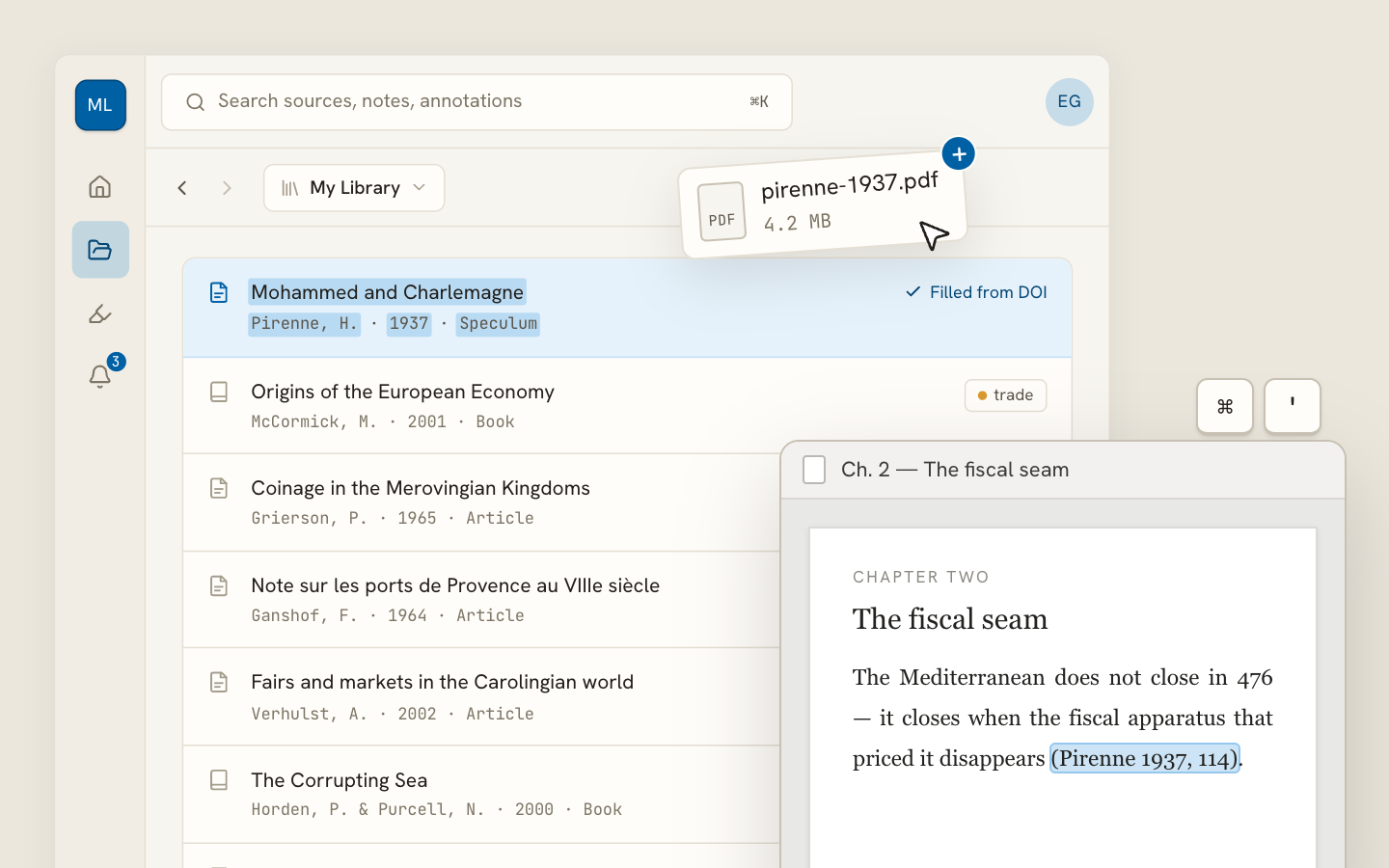
Archivero library view with a source list and an open PDF

Your weekly research workflow, in one email

One tested workflow, three links, no filler — every Tuesday.

Unsubscribe in one click. We never share your address.

Guides/Citations/APA Citation Style

APA Heading Levels

How to format all five APA 7th edition heading levels, with examples showing when and why to use each one.

6 min readAPA

On this page

1 of 11
The Five Heading LevelsWhen to Use Each LevelReal Paper Example Using Levels 1–3How Many Heading Levels Do You Need?The Introduction ExceptionHeadings in Different Paper TypesLiterature ReviewCase StudyTheoretical PaperCommon Heading MistakesWhat's Next
All APA guides →

Headings are the skeleton of your paper. They tell readers where one section ends and another begins, signal the hierarchy of ideas, and make long papers navigable instead of overwhelming. APA 7th edition defines five heading levels — each with its own formatting rules.

Most student papers only need two or three levels. But knowing all five gives you the flexibility to organize even the most complex research papers clearly.

The Five Heading Levels

Each heading level has a distinct combination of boldface, italics, alignment, and indentation. Here they are, from broadest (Level 1) to most specific (Level 5):

LevelFormatExample
1FormatCentered, Bold, Title CaseExampleMethod
2FormatFlush Left, Bold, Title CaseExampleParticipants
3FormatFlush Left, Bold Italic, Title CaseExampleRecruitment Procedures
4FormatIndented (0.5 in.), Bold, Title Case, Ending With a Period**.** Text begins on the same line.Example    Inclusion Criteria. Participants were…
5FormatIndented (0.5 in.), Bold Italic, Title Case, Ending With a Period**.** Text begins on the same line.Example    Age Requirements. Participants aged…

Key details:

  • Levels 1–3 each start on their own line, with the body text beginning on the next line.
  • Levels 4–5 are "run-in" headings — the heading and the paragraph text sit on the same line, separated by a period and a space.
  • All heading levels use title case: capitalize the first word, the first word after a colon, and all major words (four or more letters). Lowercase minor words like "and," "of," "in," "the."
  • All headings are double-spaced, just like the rest of the paper. No extra space above or below.
  • Never add numbers or letters to your headings (1.0, 1.1, A, B) unless your instructor specifically requires it.

When to Use Each Level

The number of heading levels you need depends on the complexity of your paper:

Paper TypeTypical Levels Used
Short essay (5–8 pages)Level 1 only (or none)
Standard research paper (10–20 pages)Levels 1 and 2
Complex research paper or thesisLevels 1, 2, and 3
Dissertation or book-length workLevels 1 through 4 (sometimes 5)

Real Paper Example Using Levels 1–3

Here's how headings might look in a psychology research paper:

Method ← Level 1

Participants ← Level 2

    A convenience sample of 142 undergraduate students…

Materials ← Level 2

Sleep Quality Measure ← Level 3

    Sleep quality was assessed using the Pittsburgh Sleep Quality Index (PSQI; Buysse et al., 1989)…

Academic Performance Measure ← Level 3

    Academic performance was operationalized as cumulative GPA…

Procedure ← Level 2

    Participants completed the PSQI online during the first two weeks of the semester…

Results ← Level 1

    A Pearson correlation revealed a statistically significant negative relationship…

Notice how the heading levels create a clear visual hierarchy: Method is a major section (Level 1), Participants, Materials, and Procedure are subsections within it (Level 2), and the individual measures are sub-subsections within Materials (Level 3).

How Many Heading Levels Do You Need?

Start with Level 1 and add levels only when you need to divide a section into subsections. Follow these guidelines:

  1. If your entire paper is a single argument without distinct sections, you might not need headings at all (short essays, reflection papers).

  2. If you have 2–4 main sections (e.g., Introduction, Method, Results, Discussion), use Level 1 headings for each.

  3. If a section has subsections, introduce Level 2 headings within that section.

  4. If a subsection has its own subsections, use Level 3.

  5. Keep going only as deep as needed. Most papers never need Levels 4 or 5.

Important rule:If you use a heading level within a section, you must have at least two headings at that level. A section can't have just one Level 2 heading — if there's only one subsection, it doesn't need its own heading. Think of it like an outline: you wouldn't have an A without a B.

The Introduction Exception

APA has a specific — and frequently misunderstood — rule about the introduction:

Do not label the introduction with the heading "Introduction."

Instead, your paper title serves as the Level 1 heading for the introduction. After the title page (and abstract, if applicable), your paper's first page starts with the paper title — centered and bold — and the introductory paragraphs follow immediately. No "Introduction" heading is needed because readers already know the opening section is the introduction.

This is one of the most common APA heading mistakes. The first labeled Level 1 heading in your paper should typically be "Method" (or "Literature Review" or whatever comes after the introduction).

Headings in Different Paper Types

The research paper structure (Introduction → Method → Results → Discussion) is the most common, but other paper types have their own heading conventions:

Literature Review

Title of Paper ← Paper title as Level 1

(Introductory paragraphs — no heading)

Theme or Topic Area 1 ← Level 1

    (Discussion of the first thematic cluster)

Theme or Topic Area 2 ← Level 1

Subtopic 2a ← Level 2

Subtopic 2b ← Level 2

Conclusions and Future Directions ← Level 1

Case Study

Title of Paper ← Paper title as Level 1

(Introduction)

Background ← Level 1

Assessment ← Level 1

Intervention ← Level 1

Outcomes ← Level 1

Discussion ← Level 1

Theoretical Paper

Title of Paper ← Paper title as Level 1

(Introduction)

Existing Theoretical Framework ← Level 1

Limitations of Current Models ← Level 1

Proposed Model ← Level 1

Implications and Applications ← Level 1

The specific headings vary by paper — these are illustrative, not prescribed. The point is that APA heading levels work the same way regardless of paper type.

Common Heading Mistakes

These are the heading errors we see most frequently:

  1. Labeling the introduction "Introduction." The paper title already serves as the heading for the introduction. Adding a separate "Introduction" heading is redundant and violates APA style.

  2. Numbering headings. APA does not use numbered headings (1.0, 1.1, 2.0). Unless your instructor or discipline explicitly requires numbering, leave it out.

  3. Skipping heading levels. Don't jump from Level 1 to Level 3 without using Level 2 in between. Heading levels must be used in order — just like you wouldn't have an outline with I, then a, then (1) without the intermediate levels.

  4. Having only one subsection. If you break a section into subsections, you need at least two. A single Level 2 heading under a Level 1 heading suggests the content doesn't actually need to be subdivided.

  5. Using headings as paragraph labels. A heading should introduce a section, not serve as a sentence. Don't write "Participants" and then immediately say "The participants were…" Instead, let the heading introduce the topic and then write a complete opening sentence.

  6. Changing font size for different levels. All heading levels use the same font and size as the body text. The distinction comes from bold, italic, alignment, and indentation — never from font size.

  7. Adding extra blank lines above or below headings. Headings are double-spaced with the text, just like everything else. No extra spacing.

What's Next

Now that you know how to structure your paper with headings, explore these related topics:

  • APA Format Example Paper — see heading levels in action in a complete paper
  • APA General Format — margins, fonts, spacing, and overall page layout
  • APA Figures — formatting visual elements that sit alongside your headings

Archivero can help you focus on organizing your ideas clearly — while the formatting details take care of themselves. Structure your paper with confidence, knowing every heading level is correct.

All APA guides →
← PreviousAPA Title Page FormatNext →How to Write an APA Abstract

More on APA style

The standard in psychology, education and the social sciences. The author–date system, reference-list formatting and what the 7th edition changed.

View all 34 guides →
7 sections·6 min readAPAHow to Write an APA Abstract7 sections·6 min readAPAAPA Running Head6 sections·8 min readAPAAPA Format Example Paper10 sections·7 min readAPAAPA In-Text Citations

Your sources, PDFs and citations in one library

  • Import a Zotero, Mendeley or EndNote library — or a folder of PDFs
  • Highlight and annotate without leaving the source
  • Cite in any CSL style as you write, with one shared library for your lab
Request early accessSee the product →
Archivero library view with a source list and an open PDF

Your weekly research workflow, in one email

One tested workflow, three links, no filler — every Tuesday.

Unsubscribe in one click. We never share your address.