Archivero is in early access — your sources, PDFs and citations in one library.Request early access →
Archivero/guides/
APAMLAHarvardThesis writing
Subscribe
Archivero/guides/Request early access →

Guides

APA styleMLA styleHarvard referencingThesis writing

Compare

APA 6th vs 7thMLA 8th vs 9thHarvard vs APAThesis vs dissertation

Product

FeaturesEarly access

Resources

DocsCheat sheetsNewsletter

Company

ContactStatus ↗
© 2025–2026 Ernesto F. GonzálezGuidesDocsContactPrivacyTerms
Guides/Citations/APA Citation Style

APA Format Example Paper

A fully annotated APA 7th edition sample paper you can use as a template for your own assignments.

8 min readAPA

On this page

1 of 17
What This Sample Paper DemonstratesAnnotated Student PaperSection 1: Title PageSection 2: Abstract (If Required)Section 3: Body TextSection 4: Headings in the BodySection 5: Reference ListAnnotated Professional PaperProfessional Title PageKey Formatting Details at a GlancePre-Submission ChecklistTitle PageAbstractBody TextReference ListGeneralWhat's Next
All APA guides →

Sometimes the best way to learn APA formatting is to see the whole thing put together. Reading individual rules about margins, headings, and citations is helpful — but nothing clicks quite like looking at a complete paper and seeing how every piece fits into place.

This page walks you through a fully annotated APA 7th edition sample paper, section by section. We'll cover both student and professional versions, call out the formatting details that matter most, and give you a checklist to compare your own paper against before you hit submit.

What This Sample Paper Demonstrates

The sample paper below covers every structural element of an APA paper:

  • Title page — formatted for a student paper (the most common case)
  • Abstract — a single paragraph summarizing the paper
  • Body text — with APA heading levels, in-text citations, and properly formatted paragraphs
  • Reference list — with a mix of source types (book, journal article, website)

If you need to format a professional paper instead (for journal submission), the differences are noted in a separate section below.

Annotated Student Paper

Here's the complete structure of a student paper, section by section. Each part includes the formatting rules you need to follow and an example showing what it looks like in practice.

Section 1: Title Page

The title page is page 1. Everything is centered and double-spaced in the upper half of the page:

The Effects of Sleep Quality on Academic Performance in Undergraduate Students

Jenna R. Molinari

Department of Psychology, University of Colorado Denver

PSY 3500: Health Psychology

Dr. Tomás Herrera

October 28, 2025

Key formatting details:

  • The title is bold and in title case.
  • No running head is required for student papers (unless your instructor asks for one).
  • Page number 1 sits in the top-right corner of the header.
  • No "by" before the author name. No degree titles. Just your name.

For the full breakdown of title page rules, see APA Title Page Format.

Section 2: Abstract (If Required)

The abstract starts on page 2. Not all student papers require one — check your assignment guidelines. If you do need an abstract:

Abstract

This study examined the relationship between self-reported sleep quality and GPA among 142 undergraduate students at a mid-sized public university. Participants completed the Pittsburgh Sleep Quality Index (PSQI) and provided consent to release their cumulative GPA. Results indicated a statistically significant negative correlation between poor sleep quality and GPA (r = −.34, p < .001), suggesting that students who reported worse sleep tended to have lower academic performance. These findings support existing literature linking sleep hygiene to cognitive functioning and highlight the need for sleep education programs on college campuses.

Keywords: sleep quality, academic performance, undergraduate students, PSQI

Key formatting details:

  • The word "Abstract" is centered and bold at the top of the page (Level 1 heading).
  • The abstract is a single paragraph with no indentation.
  • Keep it between 150–250 words.
  • Keywords are optional. If included, indent the word "Keywords:" (italicized) on the line below the abstract, followed by your keywords in lowercase, separated by commas.

Section 3: Body Text

The body of your paper starts on the page after the abstract (or page 2 if you don't have one). Repeat your paper title — centered and bold — at the top of this page as a Level 1 heading. Then begin writing.

The Effects of Sleep Quality on Academic Performance in Undergraduate Students

    Sleep is a biological necessity, yet it is one of the first things college students sacrifice when juggling coursework, social obligations, and employment. Walker (2017) argued that chronic sleep deprivation impairs nearly every cognitive function relevant to academic success, including memory consolidation, attention, and emotional regulation. Despite growing evidence linking sleep to cognitive performance, relatively few studies have examined this relationship specifically within undergraduate populations at teaching-focused institutions.

    The present study aimed to address this gap by examining the correlation between self-reported sleep quality, measured by the Pittsburgh Sleep Quality Index (PSQI), and cumulative GPA among 142 undergraduates at a mid-sized public university.

Key formatting details:

  • The paper title appears again at the top of this page — not a new title, but the same one from the title page.
  • Every paragraph has a 0.5-inch first-line indent.
  • The text is double-spaced throughout, with no extra spacing between paragraphs.
  • In-text citations follow the author-date format: (Walker, 2017) for parenthetical, Walker (2017) for narrative.

Section 4: Headings in the Body

Use APA heading levels to organize your paper's sections. Most student papers use Levels 1 and 2. Here's how they look in context:

Method

Participants

    A convenience sample of 142 undergraduate students (98 female, 38 male, 6 nonbinary) was recruited from introductory psychology courses at the University of Colorado Denver during the Fall 2024 semester. Participants ranged in age from 18 to 24 (M = 19.8, SD = 1.3).

Measures

    Pittsburgh Sleep Quality Index (PSQI). The PSQI is a 19-item self-report instrument that measures sleep quality over the preceding month (Buysse et al., 1989). Global scores range from 0 to 21, with higher scores indicating poorer sleep quality. A cutoff score of 5 distinguishes "good" from "poor" sleepers.

What's happening here:

  • "Method" is a Level 1 heading — bold, centered, on its own line.
  • "Participants" and "Measures" are Level 2 headings — bold, left-aligned, on their own lines.
  • The PSQI description uses a Level 3 heading — bold italic, left-aligned, ending with a period, with the text continuing on the same line.

For the complete guide to all five heading levels, see APA Heading Levels.

Section 5: Reference List

The reference list starts on a new page. Center the word References in bold at the top.

References

Buysse, D. J., Reynolds, C. F., Monk, T. H., Berman, S. R., & Kupfer, D. J. (1989). The Pittsburgh Sleep Quality Index: A new instrument for psychiatric practice and research. Psychiatry Research, 28(2), 193–213. https://doi.org/10.1016/0165-1781(89)90047-4

Lund, H. G., Reider, B. D., Whiting, A. B., & Prichard, J. R. (2010). Sleep patterns and predictors of disturbed sleep in a large population of college students. Journal of Adolescent Health, 46(2), 124–132. https://doi.org/10.1016/j.jadohealth.2009.06.016

National Sleep Foundation. (2024, March 15). How much sleep do you really need? https://www.sleepfoundation.org/how-sleep-works/how-much-sleep-do-we-really-need

Walker, M. (2017). Why we sleep: Unlocking the power of sleep and dreams. Scribner.

Key formatting details:

  • Each entry uses a hanging indent — the first line is flush left, subsequent lines are indented 0.5 inches.
  • Entries are alphabetized by the first author's last name.
  • Double-spaced throughout, with no extra space between entries.
  • DOIs are formatted as full URLs (https://doi.org/...) with no period at the end.

For the full reference list guide, see APA Reference List.

Annotated Professional Paper

A professional paper — the kind submitted to a journal for publication — includes a few additional elements and omits some student-specific ones. Here are the key differences:

ElementStudent PaperProfessional Paper
Running headStudent PaperNot requiredProfessional PaperRequired (ALL CAPS, left-aligned, ≤50 characters)
Author noteStudent PaperNot includedProfessional PaperIncluded on title page (bottom half)
Course/instructor infoStudent PaperIncluded on title pageProfessional PaperNot included
ORCID iDStudent PaperNot includedProfessional PaperIncluded in author note
AbstractStudent PaperOnly if required by instructorProfessional PaperTypically required

Professional Title Page

The professional title page replaces the course, instructor, and due date with an author note in the bottom half of the page. It also adds a running head in the header:

Running head: SLEEP QUALITY AND ACADEMIC PERFORMANCE                1


Sleep Quality and Academic Performance in Undergraduate Students: A Correlational Analysis

Jenna R. Molinari¹ and David K. Osei²

¹ Department of Psychology, University of Colorado Denver

² Department of Neuroscience, Emory University


Author Note

Jenna R. Molinari https://orcid.org/0000-0001-2345-6789

We have no conflicts of interest to disclose.

Correspondence concerning this article should be addressed to Jenna R. Molinari, Department of Psychology, University of Colorado Denver, Denver, CO 80217. Email: jenna.molinari@ucdenver.edu

For full title page formatting details, see APA Title Page Format.

Key Formatting Details at a Glance

Here's a quick checklist of the formatting settings that apply to the entire paper:

SettingValue
Margins1 inch (2.54 cm) on all sides
FontTimes New Roman 12pt, Calibri 11pt, Arial 11pt, or Georgia 11pt
Line spacingDouble-spaced throughout
Paragraph indent0.5 inches (1.27 cm) first-line indent
Page numbersTop-right corner, starting on the title page
AlignmentLeft-aligned (ragged right edge) — do not use full justification
HeaderRunning head (professional) or just page number (student)

Pre-Submission Checklist

Before you hand in your paper, run through this list. These are the formatting issues instructors catch most often:

Title Page

  • Title is bold and centered in the upper half of the page
  • Author name has no title or degree
  • Affiliation includes both department and institution
  • Course, instructor, and due date are included (student papers)
  • Page number is in the top-right corner

Abstract

  • Starts on a new page (page 2)
  • "Abstract" is centered and bold
  • Single unindented paragraph, 150–250 words
  • Keywords line is indented and italicized (if included)

Body Text

  • Paper title is repeated at the top of the first body page
  • All paragraphs have a 0.5-inch first-line indent
  • Double-spaced throughout, no extra spacing
  • Headings follow APA's five-level system
  • Every in-text citation has a matching reference list entry

Reference List

  • Starts on a new page
  • "References" is centered and bold
  • Hanging indent on every entry
  • Alphabetized by first author's last name
  • DOIs formatted as full URLs, no period at the end
  • No database names (JSTOR, PsycINFO, etc.)

General

  • 1-inch margins on all sides
  • Consistent font throughout
  • Page numbers in the top-right corner on every page
  • Left-aligned text (not fully justified)
  • No extra line breaks between sections or paragraphs

What's Next

Now that you've seen a complete APA paper from start to finish, dive deeper into the individual sections:

  • APA Title Page Format — detailed rules for student and professional title pages
  • APA Heading Levels — how to format all five heading levels
  • APA General Format — page layout, fonts, spacing, and structure
  • APA Reference List — building and formatting your reference list

Archivero takes the guesswork out of formatting — save your sources to your library, and Archivero generates correctly formatted citations so you can focus on writing your paper instead of worrying about hanging indents.
All APA guides →
← PreviousAPA Running HeadNext →APA In-Text Citations

More on APA style

The standard in psychology, education and the social sciences. The author–date system, reference-list formatting and what the 7th edition changed.

View all 34 guides →
10 sections·7 min readAPAAPA In-Text Citations9 sections·8 min readAPAHow to Quote in APA Format10 sections·7 min readAPAAPA Citation With Multiple Authors8 sections·7 min readAPAHow to Paraphrase in APA

Your sources, PDFs and citations in one library

  • Import a Zotero, Mendeley or EndNote library — or a folder of PDFs
  • Highlight and annotate without leaving the source
  • Cite in any CSL style as you write, with one shared library for your lab
Request early accessSee the product →
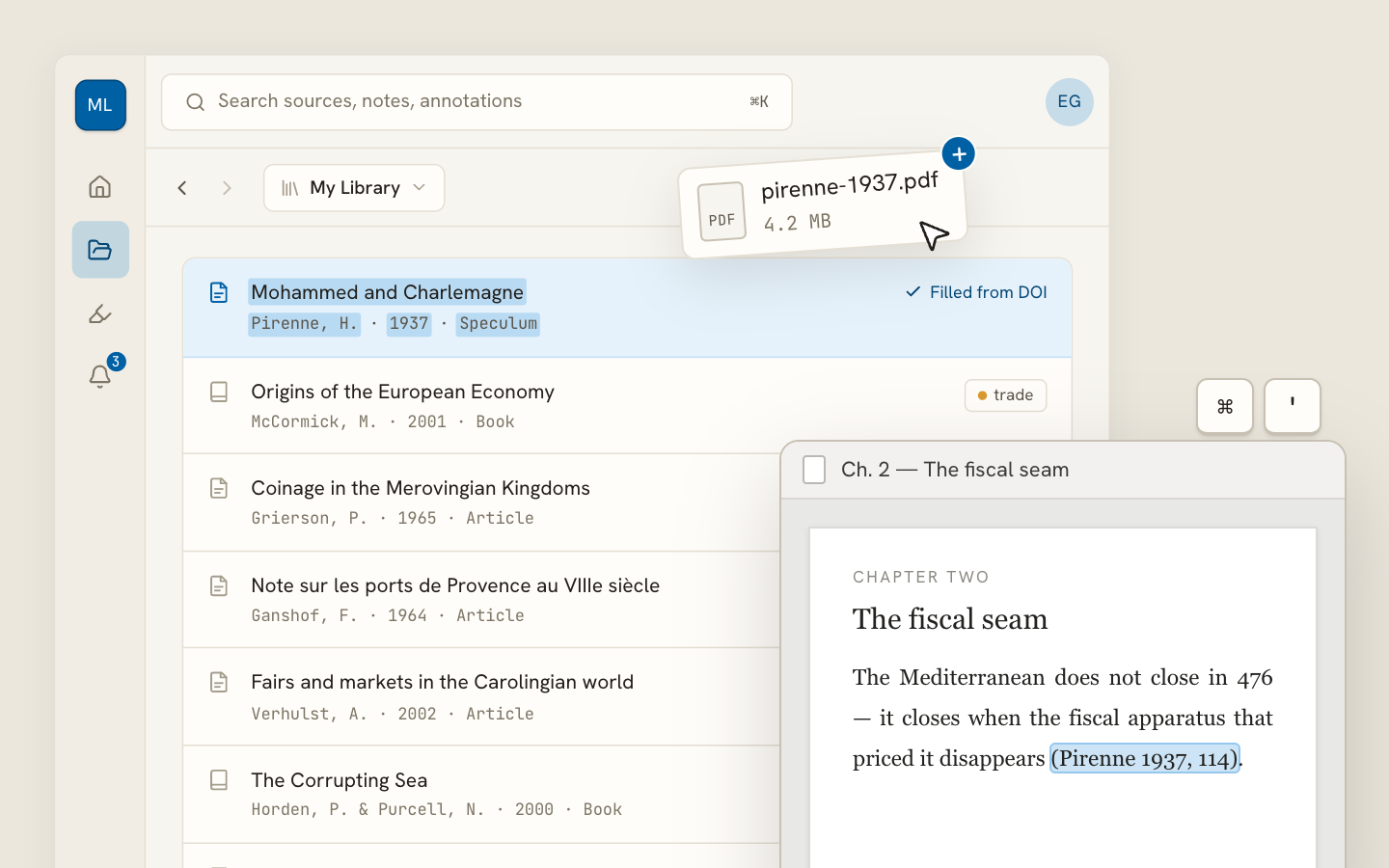
Archivero library view with a source list and an open PDF

Your weekly research workflow, in one email

One tested workflow, three links, no filler — every Tuesday.

Unsubscribe in one click. We never share your address.

Guides/Citations/APA Citation Style

APA Format Example Paper

A fully annotated APA 7th edition sample paper you can use as a template for your own assignments.

8 min readAPA

On this page

1 of 17
What This Sample Paper DemonstratesAnnotated Student PaperSection 1: Title PageSection 2: Abstract (If Required)Section 3: Body TextSection 4: Headings in the BodySection 5: Reference ListAnnotated Professional PaperProfessional Title PageKey Formatting Details at a GlancePre-Submission ChecklistTitle PageAbstractBody TextReference ListGeneralWhat's Next
All APA guides →

Sometimes the best way to learn APA formatting is to see the whole thing put together. Reading individual rules about margins, headings, and citations is helpful — but nothing clicks quite like looking at a complete paper and seeing how every piece fits into place.

This page walks you through a fully annotated APA 7th edition sample paper, section by section. We'll cover both student and professional versions, call out the formatting details that matter most, and give you a checklist to compare your own paper against before you hit submit.

What This Sample Paper Demonstrates

The sample paper below covers every structural element of an APA paper:

  • Title page — formatted for a student paper (the most common case)
  • Abstract — a single paragraph summarizing the paper
  • Body text — with APA heading levels, in-text citations, and properly formatted paragraphs
  • Reference list — with a mix of source types (book, journal article, website)

If you need to format a professional paper instead (for journal submission), the differences are noted in a separate section below.

Annotated Student Paper

Here's the complete structure of a student paper, section by section. Each part includes the formatting rules you need to follow and an example showing what it looks like in practice.

Section 1: Title Page

The title page is page 1. Everything is centered and double-spaced in the upper half of the page:

The Effects of Sleep Quality on Academic Performance in Undergraduate Students

Jenna R. Molinari

Department of Psychology, University of Colorado Denver

PSY 3500: Health Psychology

Dr. Tomás Herrera

October 28, 2025

Key formatting details:

  • The title is bold and in title case.
  • No running head is required for student papers (unless your instructor asks for one).
  • Page number 1 sits in the top-right corner of the header.
  • No "by" before the author name. No degree titles. Just your name.

For the full breakdown of title page rules, see APA Title Page Format.

Section 2: Abstract (If Required)

The abstract starts on page 2. Not all student papers require one — check your assignment guidelines. If you do need an abstract:

Abstract

This study examined the relationship between self-reported sleep quality and GPA among 142 undergraduate students at a mid-sized public university. Participants completed the Pittsburgh Sleep Quality Index (PSQI) and provided consent to release their cumulative GPA. Results indicated a statistically significant negative correlation between poor sleep quality and GPA (r = −.34, p < .001), suggesting that students who reported worse sleep tended to have lower academic performance. These findings support existing literature linking sleep hygiene to cognitive functioning and highlight the need for sleep education programs on college campuses.

Keywords: sleep quality, academic performance, undergraduate students, PSQI

Key formatting details:

  • The word "Abstract" is centered and bold at the top of the page (Level 1 heading).
  • The abstract is a single paragraph with no indentation.
  • Keep it between 150–250 words.
  • Keywords are optional. If included, indent the word "Keywords:" (italicized) on the line below the abstract, followed by your keywords in lowercase, separated by commas.

Section 3: Body Text

The body of your paper starts on the page after the abstract (or page 2 if you don't have one). Repeat your paper title — centered and bold — at the top of this page as a Level 1 heading. Then begin writing.

The Effects of Sleep Quality on Academic Performance in Undergraduate Students

    Sleep is a biological necessity, yet it is one of the first things college students sacrifice when juggling coursework, social obligations, and employment. Walker (2017) argued that chronic sleep deprivation impairs nearly every cognitive function relevant to academic success, including memory consolidation, attention, and emotional regulation. Despite growing evidence linking sleep to cognitive performance, relatively few studies have examined this relationship specifically within undergraduate populations at teaching-focused institutions.

    The present study aimed to address this gap by examining the correlation between self-reported sleep quality, measured by the Pittsburgh Sleep Quality Index (PSQI), and cumulative GPA among 142 undergraduates at a mid-sized public university.

Key formatting details:

  • The paper title appears again at the top of this page — not a new title, but the same one from the title page.
  • Every paragraph has a 0.5-inch first-line indent.
  • The text is double-spaced throughout, with no extra spacing between paragraphs.
  • In-text citations follow the author-date format: (Walker, 2017) for parenthetical, Walker (2017) for narrative.

Section 4: Headings in the Body

Use APA heading levels to organize your paper's sections. Most student papers use Levels 1 and 2. Here's how they look in context:

Method

Participants

    A convenience sample of 142 undergraduate students (98 female, 38 male, 6 nonbinary) was recruited from introductory psychology courses at the University of Colorado Denver during the Fall 2024 semester. Participants ranged in age from 18 to 24 (M = 19.8, SD = 1.3).

Measures

    Pittsburgh Sleep Quality Index (PSQI). The PSQI is a 19-item self-report instrument that measures sleep quality over the preceding month (Buysse et al., 1989). Global scores range from 0 to 21, with higher scores indicating poorer sleep quality. A cutoff score of 5 distinguishes "good" from "poor" sleepers.

What's happening here:

  • "Method" is a Level 1 heading — bold, centered, on its own line.
  • "Participants" and "Measures" are Level 2 headings — bold, left-aligned, on their own lines.
  • The PSQI description uses a Level 3 heading — bold italic, left-aligned, ending with a period, with the text continuing on the same line.

For the complete guide to all five heading levels, see APA Heading Levels.

Section 5: Reference List

The reference list starts on a new page. Center the word References in bold at the top.

References

Buysse, D. J., Reynolds, C. F., Monk, T. H., Berman, S. R., & Kupfer, D. J. (1989). The Pittsburgh Sleep Quality Index: A new instrument for psychiatric practice and research. Psychiatry Research, 28(2), 193–213. https://doi.org/10.1016/0165-1781(89)90047-4

Lund, H. G., Reider, B. D., Whiting, A. B., & Prichard, J. R. (2010). Sleep patterns and predictors of disturbed sleep in a large population of college students. Journal of Adolescent Health, 46(2), 124–132. https://doi.org/10.1016/j.jadohealth.2009.06.016

National Sleep Foundation. (2024, March 15). How much sleep do you really need? https://www.sleepfoundation.org/how-sleep-works/how-much-sleep-do-we-really-need

Walker, M. (2017). Why we sleep: Unlocking the power of sleep and dreams. Scribner.

Key formatting details:

  • Each entry uses a hanging indent — the first line is flush left, subsequent lines are indented 0.5 inches.
  • Entries are alphabetized by the first author's last name.
  • Double-spaced throughout, with no extra space between entries.
  • DOIs are formatted as full URLs (https://doi.org/...) with no period at the end.

For the full reference list guide, see APA Reference List.

Annotated Professional Paper

A professional paper — the kind submitted to a journal for publication — includes a few additional elements and omits some student-specific ones. Here are the key differences:

ElementStudent PaperProfessional Paper
Running headStudent PaperNot requiredProfessional PaperRequired (ALL CAPS, left-aligned, ≤50 characters)
Author noteStudent PaperNot includedProfessional PaperIncluded on title page (bottom half)
Course/instructor infoStudent PaperIncluded on title pageProfessional PaperNot included
ORCID iDStudent PaperNot includedProfessional PaperIncluded in author note
AbstractStudent PaperOnly if required by instructorProfessional PaperTypically required

Professional Title Page

The professional title page replaces the course, instructor, and due date with an author note in the bottom half of the page. It also adds a running head in the header:

Running head: SLEEP QUALITY AND ACADEMIC PERFORMANCE                1


Sleep Quality and Academic Performance in Undergraduate Students: A Correlational Analysis

Jenna R. Molinari¹ and David K. Osei²

¹ Department of Psychology, University of Colorado Denver

² Department of Neuroscience, Emory University


Author Note

Jenna R. Molinari https://orcid.org/0000-0001-2345-6789

We have no conflicts of interest to disclose.

Correspondence concerning this article should be addressed to Jenna R. Molinari, Department of Psychology, University of Colorado Denver, Denver, CO 80217. Email: jenna.molinari@ucdenver.edu

For full title page formatting details, see APA Title Page Format.

Key Formatting Details at a Glance

Here's a quick checklist of the formatting settings that apply to the entire paper:

SettingValue
Margins1 inch (2.54 cm) on all sides
FontTimes New Roman 12pt, Calibri 11pt, Arial 11pt, or Georgia 11pt
Line spacingDouble-spaced throughout
Paragraph indent0.5 inches (1.27 cm) first-line indent
Page numbersTop-right corner, starting on the title page
AlignmentLeft-aligned (ragged right edge) — do not use full justification
HeaderRunning head (professional) or just page number (student)

Pre-Submission Checklist

Before you hand in your paper, run through this list. These are the formatting issues instructors catch most often:

Title Page

  • Title is bold and centered in the upper half of the page
  • Author name has no title or degree
  • Affiliation includes both department and institution
  • Course, instructor, and due date are included (student papers)
  • Page number is in the top-right corner

Abstract

  • Starts on a new page (page 2)
  • "Abstract" is centered and bold
  • Single unindented paragraph, 150–250 words
  • Keywords line is indented and italicized (if included)

Body Text

  • Paper title is repeated at the top of the first body page
  • All paragraphs have a 0.5-inch first-line indent
  • Double-spaced throughout, no extra spacing
  • Headings follow APA's five-level system
  • Every in-text citation has a matching reference list entry

Reference List

  • Starts on a new page
  • "References" is centered and bold
  • Hanging indent on every entry
  • Alphabetized by first author's last name
  • DOIs formatted as full URLs, no period at the end
  • No database names (JSTOR, PsycINFO, etc.)

General

  • 1-inch margins on all sides
  • Consistent font throughout
  • Page numbers in the top-right corner on every page
  • Left-aligned text (not fully justified)
  • No extra line breaks between sections or paragraphs

What's Next

Now that you've seen a complete APA paper from start to finish, dive deeper into the individual sections:

  • APA Title Page Format — detailed rules for student and professional title pages
  • APA Heading Levels — how to format all five heading levels
  • APA General Format — page layout, fonts, spacing, and structure
  • APA Reference List — building and formatting your reference list

Archivero takes the guesswork out of formatting — save your sources to your library, and Archivero generates correctly formatted citations so you can focus on writing your paper instead of worrying about hanging indents.

All APA guides →
← PreviousAPA Running HeadNext →APA In-Text Citations

More on APA style

The standard in psychology, education and the social sciences. The author–date system, reference-list formatting and what the 7th edition changed.

View all 34 guides →
10 sections·7 min readAPAAPA In-Text Citations9 sections·8 min readAPAHow to Quote in APA Format10 sections·7 min readAPAAPA Citation With Multiple Authors8 sections·7 min readAPAHow to Paraphrase in APA

Your sources, PDFs and citations in one library

  • Import a Zotero, Mendeley or EndNote library — or a folder of PDFs
  • Highlight and annotate without leaving the source
  • Cite in any CSL style as you write, with one shared library for your lab
Request early accessSee the product →
Archivero library view with a source list and an open PDF

Your weekly research workflow, in one email

One tested workflow, three links, no filler — every Tuesday.

Unsubscribe in one click. We never share your address.