Archivero is in early access — your sources, PDFs and citations in one library.Request early access →
Archivero/guides/
APAMLAHarvardThesis writing
Subscribe
Archivero/guides/Request early access →

Guides

APA styleMLA styleHarvard referencingThesis writing

Compare

APA 6th vs 7thMLA 8th vs 9thHarvard vs APAThesis vs dissertation

Product

FeaturesEarly access

Resources

DocsCheat sheetsNewsletter

Company

ContactStatus ↗
© 2025–2026 Ernesto F. GonzálezGuidesDocsContactPrivacyTerms
Guides/Citations/Harvard Referencing Style

Harvard Annotated Bibliography

How to write and format an annotated bibliography in Harvard style, with examples for summary, evaluative, and critical annotations.

8 min readHarvard

Key Takeaways

  • An annotated bibliography is a reference list with a short paragraph (the annotation) beneath each entry.
  • Each annotation typically runs 100–200 words (check your assignment brief for specific requirements).
  • The reference entry itself follows standard Harvard formatting — same rules as a normal reference list.
  • There are three main annotation types: summary (what the source says), evaluative (how useful or reliable it is), and critical (how it relates to your argument or research question).
  • Many assignments ask for a combination annotation — summarise the source and evaluate its relevance.
  • The annotation is not indented further than the hanging indent of the reference entry — it continues as a new paragraph beneath the entry, maintaining the same indent.
  • An annotated bibliography is not the same as a reference list (which has no annotations) or a literature review (which synthesises sources into a flowing argument).
  • Entries are arranged in alphabetical order by author surname, just like a standard reference list.

On this page

1 of 16
Key TakeawaysWhat Is an Annotated Bibliography?Annotated Bibliography vs. Reference List vs. Literature ReviewFormatting RulesReference EntryAnnotationOverall LayoutTypes of Annotations1. Summary Annotation2. Evaluative Annotation3. Critical AnnotationCombination AnnotationFull-Page ExampleHow Long Should Each Annotation Be?Common MistakesWhat's Next?
All Harvard guides →

An annotated bibliography is a list of sources formatted like a standard Harvard reference list, but with a short paragraph — the annotation — added beneath each entry. The annotation describes, evaluates, or critically analyses the source. Lecturers assign annotated bibliographies to test whether you can find relevant sources, understand them, and explain their value to your research question.

What Is an Annotated Bibliography?

Think of it as a reference list with commentary. For each source, you write the standard Harvard reference entry — author, year, title, publication information — and then add a paragraph that tells your reader what the source says and why it matters.

Annotated bibliographies are commonly assigned as:

  • Standalone assessments — to demonstrate your ability to find and evaluate sources
  • Preliminary assignments — before a dissertation, thesis, or research essay
  • Literature survey exercises — to map out the landscape of research on a topic

They are not just busywork. Writing an annotation forces you to read critically and decide whether a source actually supports your argument — a skill that improves every essay you write afterwards.

Annotated Bibliography vs. Reference List vs. Literature Review

These three formats are often confused. Here's how they differ:

FormatWhat It IncludesPurpose
Reference listWhat It IncludesHarvard reference entries only — no commentaryPurposeLists every source you cited in your paper
Annotated bibliographyWhat It IncludesReference entries + a short annotation for eachPurposeDemonstrates your evaluation of each source individually
Literature reviewWhat It IncludesFlowing prose that synthesises multiple sourcesPurposeAnalyses how sources relate to each other and to your research question

An annotated bibliography evaluates sources one at a time. A literature review weaves them together into an argument. If your assignment says "annotated bibliography," write individual annotations — don't connect them into a continuous narrative.

Formatting Rules

Reference Entry

The reference entry follows exactly the same rules as a standard Harvard reference list:

  • Alphabetical order by author surname
  • Hanging indent (1.27 cm / 0.5 inches)
  • Double spacing throughout
  • Same title formatting (italics for standalone works, single quotation marks for parts of larger works)
  • Same author–year–title–publication structure

For full reference formatting guidance, see Harvard Reference List.

Annotation

The annotation appears as a new paragraph directly beneath the reference entry:

  • Same hanging indent as the reference entry (continue the indented block)
  • Double-spaced (unless your institution specifies 1.5 spacing)
  • No additional heading — the annotation simply follows the entry
  • Length: typically 100–200 words per annotation (check your brief — some assignments specify a different word count)
  • No quotation marks around the annotation — it's your own writing

Overall Layout

  • Start on a new page with the heading "Annotated Bibliography" centred at the top
  • Maintain the same margins and font as the rest of your paper
  • If you're submitting the annotated bibliography as a standalone assignment, include a title page (following your institution's requirements)

Types of Annotations

Most annotations fall into one of three categories — or combine elements of all three.

1. Summary Annotation

A summary annotation describes what the source says. It condenses the main argument, findings, or purpose of the work in your own words.

When to use it: When the assignment asks you to "describe" or "summarise" your sources.

What it includes:

  • The source's main argument or thesis
  • Key findings or conclusions
  • The methodology (if relevant)

What it does not include:

  • Your opinion on the source's quality
  • How the source relates to your research question

2. Evaluative Annotation

An evaluative annotation assesses how useful or reliable the source is. It goes beyond summary to judge the source's strengths, weaknesses, and credibility.

When to use it: When the assignment asks you to "evaluate" or "assess" your sources.

What it includes:

  • A brief summary (1–2 sentences)
  • The source's strengths (methodology, evidence, authority)
  • The source's limitations (bias, scope, outdated data)
  • The author's credentials or expertise

3. Critical Annotation

A critical annotation analyses how the source relates to your specific research question or argument. It positions the source within the broader scholarly conversation.

When to use it: When the assignment asks you to "critically analyse" your sources or explain their relevance to your research.

What it includes:

  • A brief summary (1–2 sentences)
  • How the source supports, challenges, or adds nuance to your argument
  • How it compares with other sources in your bibliography
  • Gaps or questions the source raises

Combination Annotation

Many assignments ask for a combination — summarise the source, evaluate its quality, and explain its relevance. This is the most common type in practice. A typical structure:

  1. Sentences 1–2: What the source argues or finds
  2. Sentences 3–4: How reliable or useful the source is
  3. Sentences 5–6: How it connects to your research question

Full-Page Example

Here is a sample annotated bibliography with four entries, using combination annotations:


Annotated Bibliography

Curcio, G., Ferrara, M. and De Gennaro, L. (2006) 'Sleep loss, learning capacity and academic performance', Sleep Medicine Reviews, 10(5), pp. 323–337. doi:10.1016/j.smrv.2005.11.001.

This systematic review examines the relationship between sleep deprivation and cognitive performance in students, drawing on experimental and observational studies published between 1990 and 2005. The authors conclude that even moderate sleep restriction significantly impairs attention, working memory, and long-term recall — all of which directly affect academic outcomes. The review's strength lies in its rigorous inclusion criteria and its clear distinction between total sleep deprivation and partial sleep restriction. However, the studies reviewed are now nearly two decades old, and the rise of smartphone use and social media since 2005 may have changed student sleep patterns substantially. This source provides foundational evidence for the claim that sleep loss harms academic performance, and it complements more recent experimental work by Walker (2017).

Diekelmann, S. and Born, J. (2010) 'The memory function of sleep', Nature Reviews Neuroscience, 11(2), pp. 114–126. doi:10.1038/nrn2762.

Diekelmann and Born synthesise evidence from neuroscience to argue that sleep plays an active role in memory consolidation — it is not merely a passive period of rest. They identify two key mechanisms: the reactivation of newly encoded memories during slow-wave sleep and the synaptic homeostasis that occurs overnight. The article is published in a high-impact peer-reviewed journal and draws on a large body of experimental evidence, making it a highly credible source. Its main limitation for this research is that it focuses on laboratory conditions rather than real-world academic settings. Nevertheless, it provides the theoretical framework for understanding why sleep deprivation impairs student learning.

Lund, H.G., Reider, B.D., Whiting, A.B. and Prichard, J.R. (2010) 'Sleep patterns and predictors of disturbed sleep in a large population of college students', Journal of Adolescent Health, 46(2), pp. 124–132. doi:10.1016/j.jadohealth.2009.06.016.

This study surveys over 1,100 American college students to identify sleep patterns and the factors that predict poor sleep quality. The authors find that irregular sleep schedules, high caffeine intake, and evening technology use are the strongest predictors of disturbed sleep, while students with later class start times report better sleep quality. The large sample size and validated sleep questionnaire (PSQI) strengthen the study's reliability. A limitation is that the data are self-reported, which may introduce recall bias. This source is directly relevant to understanding the behavioural factors that contribute to sleep deprivation in university students.

Walker, M. (2017) Why we sleep: the new science of sleep and dreams. London: Penguin Books.

Walker, a neuroscientist at the University of California, Berkeley, presents a comprehensive overview of sleep science for a general audience. He argues that sleep deprivation is a widespread public health crisis with measurable effects on memory, emotional regulation, immune function, and academic performance. The book synthesises decades of laboratory research into an accessible narrative, making it an effective introductory source. Critics have noted that Walker occasionally overstates the certainty of findings and underrepresents conflicting evidence. Despite this, the book's breadth makes it useful for framing the topic and identifying key studies to investigate further.


How Long Should Each Annotation Be?

This depends on your assignment, but here are common ranges:

Assignment LevelTypical Annotation Length
Undergraduate (first year)80–120 words
Undergraduate (final year)120–200 words
Postgraduate / dissertation150–250 words
Short exercise (5–8 sources)50–100 words

When in doubt, aim for 150 words — long enough to summarise and evaluate, short enough to stay focused. If your assignment brief specifies a word count, follow it exactly.

Common Mistakes

MistakeWhy It's WrongCorrect Approach
Writing a summary without evaluationWhy It's WrongMost assignments want both — a summary alone doesn't show critical thinkingCorrect ApproachInclude at least one sentence on the source's relevance, strengths, or limitations
Copying the abstractWhy It's WrongThe annotation must be in your own wordsCorrect ApproachRead the source, close it, and write from understanding
Forgetting to format the reference entry properlyWhy It's WrongThe annotation doesn't replace proper Harvard formattingCorrect ApproachUse the same formatting rules as a standard Harvard reference list
Making the annotation too longWhy It's WrongAnnotations should be concise — they're not mini-essaysCorrect ApproachStick to 100–200 words unless your brief says otherwise
Listing sources in random orderWhy It's WrongAnnotated bibliographies follow alphabetical orderCorrect ApproachOrder by author surname, same as a reference list
Including sources you didn't actually readWhy It's WrongYour annotation should demonstrate genuine engagementCorrect ApproachOnly include sources you've read thoroughly enough to evaluate
Using first person excessivelyWhy It's Wrong'I think this source is useful because…' sounds informalCorrect ApproachWrite in the third person or use phrases like 'This source provides…'

What's Next?

Now that you understand annotated bibliographies, explore these related guides:

  • Harvard Reference List — the formatting rules that underpin every annotated bibliography entry
  • Harvard Referencing Style — the full overview of Harvard referencing
  • How to Reference a Book in Harvard Style — detailed formats for the most commonly annotated source type
All Harvard guides →
← PreviousHow to Reference ChatGPT & AI-Generated Content in HarvardNext →Common Harvard Referencing Mistakes (and How to Fix Them)

More on Harvard referencing

The dominant system in British, Australian and international universities. In-text citations, reference lists and the local conventions that vary by department.

View all 26 guides →
12 sections·9 min readHarvardCommon Harvard Referencing Mistakes (and How to Fix Them)9 sections·7 min readHarvardHow to Paraphrase in Harvard Referencing8 sections·6 min readHarvardHow to Cite a Source With No Author in Harvard8 sections·8 min readHarvardHarvard vs. APA — What's the Difference?

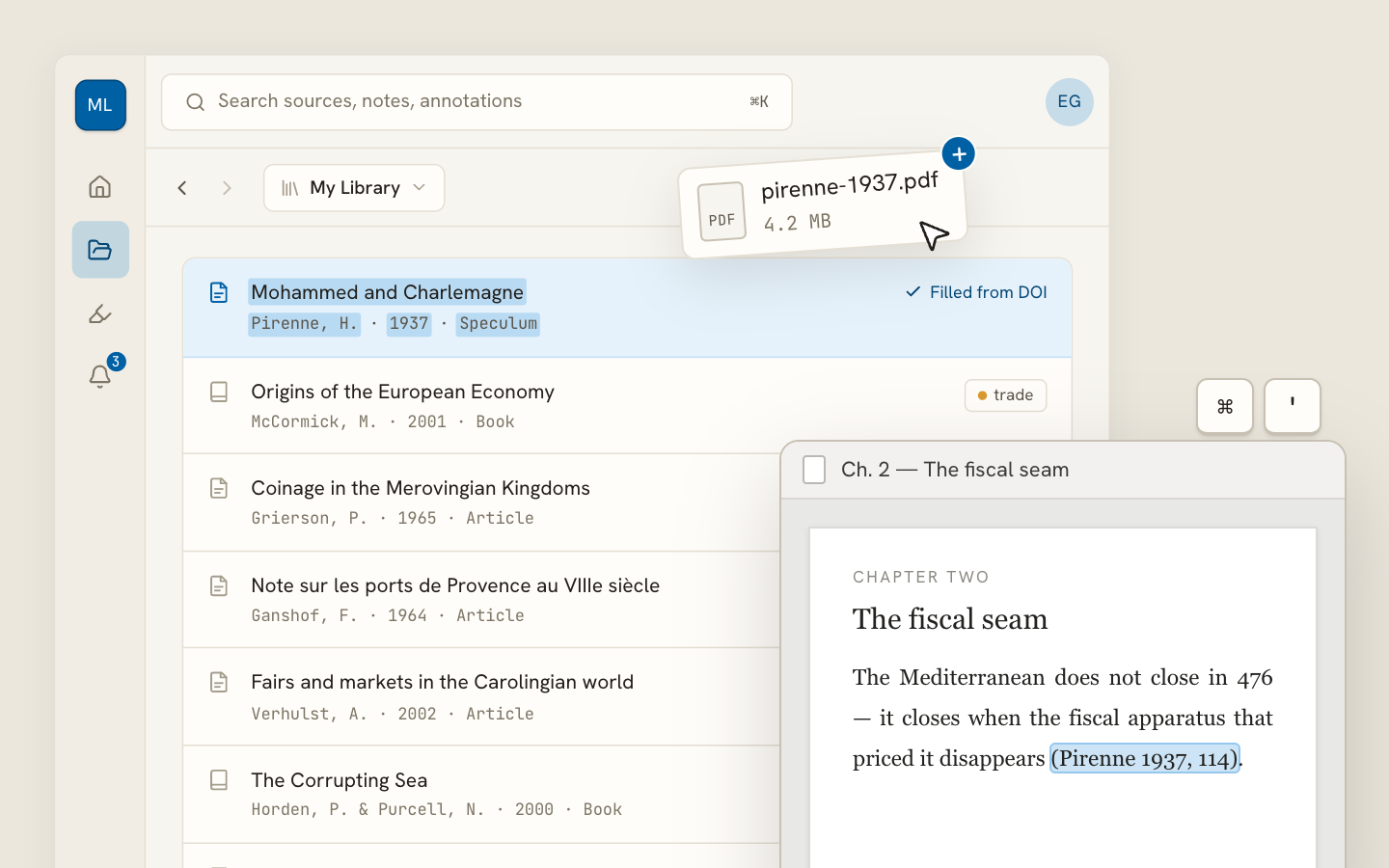
Your sources, PDFs and citations in one library

  • Import a Zotero, Mendeley or EndNote library — or a folder of PDFs
  • Highlight and annotate without leaving the source
  • Cite in any CSL style as you write, with one shared library for your lab
Request early accessSee the product →
Archivero library view with a source list and an open PDF

Your weekly research workflow, in one email

One tested workflow, three links, no filler — every Tuesday.

Unsubscribe in one click. We never share your address.

Guides/Citations/Harvard Referencing Style

Harvard Annotated Bibliography

How to write and format an annotated bibliography in Harvard style, with examples for summary, evaluative, and critical annotations.

8 min readHarvard

Key Takeaways

  • An annotated bibliography is a reference list with a short paragraph (the annotation) beneath each entry.
  • Each annotation typically runs 100–200 words (check your assignment brief for specific requirements).
  • The reference entry itself follows standard Harvard formatting — same rules as a normal reference list.
  • There are three main annotation types: summary (what the source says), evaluative (how useful or reliable it is), and critical (how it relates to your argument or research question).
  • Many assignments ask for a combination annotation — summarise the source and evaluate its relevance.
  • The annotation is not indented further than the hanging indent of the reference entry — it continues as a new paragraph beneath the entry, maintaining the same indent.
  • An annotated bibliography is not the same as a reference list (which has no annotations) or a literature review (which synthesises sources into a flowing argument).
  • Entries are arranged in alphabetical order by author surname, just like a standard reference list.

On this page

1 of 16
Key TakeawaysWhat Is an Annotated Bibliography?Annotated Bibliography vs. Reference List vs. Literature ReviewFormatting RulesReference EntryAnnotationOverall LayoutTypes of Annotations1. Summary Annotation2. Evaluative Annotation3. Critical AnnotationCombination AnnotationFull-Page ExampleHow Long Should Each Annotation Be?Common MistakesWhat's Next?
All Harvard guides →

An annotated bibliography is a list of sources formatted like a standard Harvard reference list, but with a short paragraph — the annotation — added beneath each entry. The annotation describes, evaluates, or critically analyses the source. Lecturers assign annotated bibliographies to test whether you can find relevant sources, understand them, and explain their value to your research question.

What Is an Annotated Bibliography?

Think of it as a reference list with commentary. For each source, you write the standard Harvard reference entry — author, year, title, publication information — and then add a paragraph that tells your reader what the source says and why it matters.

Annotated bibliographies are commonly assigned as:

  • Standalone assessments — to demonstrate your ability to find and evaluate sources
  • Preliminary assignments — before a dissertation, thesis, or research essay
  • Literature survey exercises — to map out the landscape of research on a topic

They are not just busywork. Writing an annotation forces you to read critically and decide whether a source actually supports your argument — a skill that improves every essay you write afterwards.

Annotated Bibliography vs. Reference List vs. Literature Review

These three formats are often confused. Here's how they differ:

FormatWhat It IncludesPurpose
Reference listWhat It IncludesHarvard reference entries only — no commentaryPurposeLists every source you cited in your paper
Annotated bibliographyWhat It IncludesReference entries + a short annotation for eachPurposeDemonstrates your evaluation of each source individually
Literature reviewWhat It IncludesFlowing prose that synthesises multiple sourcesPurposeAnalyses how sources relate to each other and to your research question

An annotated bibliography evaluates sources one at a time. A literature review weaves them together into an argument. If your assignment says "annotated bibliography," write individual annotations — don't connect them into a continuous narrative.

Formatting Rules

Reference Entry

The reference entry follows exactly the same rules as a standard Harvard reference list:

  • Alphabetical order by author surname
  • Hanging indent (1.27 cm / 0.5 inches)
  • Double spacing throughout
  • Same title formatting (italics for standalone works, single quotation marks for parts of larger works)
  • Same author–year–title–publication structure

For full reference formatting guidance, see Harvard Reference List.

Annotation

The annotation appears as a new paragraph directly beneath the reference entry:

  • Same hanging indent as the reference entry (continue the indented block)
  • Double-spaced (unless your institution specifies 1.5 spacing)
  • No additional heading — the annotation simply follows the entry
  • Length: typically 100–200 words per annotation (check your brief — some assignments specify a different word count)
  • No quotation marks around the annotation — it's your own writing

Overall Layout

  • Start on a new page with the heading "Annotated Bibliography" centred at the top
  • Maintain the same margins and font as the rest of your paper
  • If you're submitting the annotated bibliography as a standalone assignment, include a title page (following your institution's requirements)

Types of Annotations

Most annotations fall into one of three categories — or combine elements of all three.

1. Summary Annotation

A summary annotation describes what the source says. It condenses the main argument, findings, or purpose of the work in your own words.

When to use it: When the assignment asks you to "describe" or "summarise" your sources.

What it includes:

  • The source's main argument or thesis
  • Key findings or conclusions
  • The methodology (if relevant)

What it does not include:

  • Your opinion on the source's quality
  • How the source relates to your research question

2. Evaluative Annotation

An evaluative annotation assesses how useful or reliable the source is. It goes beyond summary to judge the source's strengths, weaknesses, and credibility.

When to use it: When the assignment asks you to "evaluate" or "assess" your sources.

What it includes:

  • A brief summary (1–2 sentences)
  • The source's strengths (methodology, evidence, authority)
  • The source's limitations (bias, scope, outdated data)
  • The author's credentials or expertise

3. Critical Annotation

A critical annotation analyses how the source relates to your specific research question or argument. It positions the source within the broader scholarly conversation.

When to use it: When the assignment asks you to "critically analyse" your sources or explain their relevance to your research.

What it includes:

  • A brief summary (1–2 sentences)
  • How the source supports, challenges, or adds nuance to your argument
  • How it compares with other sources in your bibliography
  • Gaps or questions the source raises

Combination Annotation

Many assignments ask for a combination — summarise the source, evaluate its quality, and explain its relevance. This is the most common type in practice. A typical structure:

  1. Sentences 1–2: What the source argues or finds
  2. Sentences 3–4: How reliable or useful the source is
  3. Sentences 5–6: How it connects to your research question

Full-Page Example

Here is a sample annotated bibliography with four entries, using combination annotations:


Annotated Bibliography

Curcio, G., Ferrara, M. and De Gennaro, L. (2006) 'Sleep loss, learning capacity and academic performance', Sleep Medicine Reviews, 10(5), pp. 323–337. doi:10.1016/j.smrv.2005.11.001.

This systematic review examines the relationship between sleep deprivation and cognitive performance in students, drawing on experimental and observational studies published between 1990 and 2005. The authors conclude that even moderate sleep restriction significantly impairs attention, working memory, and long-term recall — all of which directly affect academic outcomes. The review's strength lies in its rigorous inclusion criteria and its clear distinction between total sleep deprivation and partial sleep restriction. However, the studies reviewed are now nearly two decades old, and the rise of smartphone use and social media since 2005 may have changed student sleep patterns substantially. This source provides foundational evidence for the claim that sleep loss harms academic performance, and it complements more recent experimental work by Walker (2017).

Diekelmann, S. and Born, J. (2010) 'The memory function of sleep', Nature Reviews Neuroscience, 11(2), pp. 114–126. doi:10.1038/nrn2762.

Diekelmann and Born synthesise evidence from neuroscience to argue that sleep plays an active role in memory consolidation — it is not merely a passive period of rest. They identify two key mechanisms: the reactivation of newly encoded memories during slow-wave sleep and the synaptic homeostasis that occurs overnight. The article is published in a high-impact peer-reviewed journal and draws on a large body of experimental evidence, making it a highly credible source. Its main limitation for this research is that it focuses on laboratory conditions rather than real-world academic settings. Nevertheless, it provides the theoretical framework for understanding why sleep deprivation impairs student learning.

Lund, H.G., Reider, B.D., Whiting, A.B. and Prichard, J.R. (2010) 'Sleep patterns and predictors of disturbed sleep in a large population of college students', Journal of Adolescent Health, 46(2), pp. 124–132. doi:10.1016/j.jadohealth.2009.06.016.

This study surveys over 1,100 American college students to identify sleep patterns and the factors that predict poor sleep quality. The authors find that irregular sleep schedules, high caffeine intake, and evening technology use are the strongest predictors of disturbed sleep, while students with later class start times report better sleep quality. The large sample size and validated sleep questionnaire (PSQI) strengthen the study's reliability. A limitation is that the data are self-reported, which may introduce recall bias. This source is directly relevant to understanding the behavioural factors that contribute to sleep deprivation in university students.

Walker, M. (2017) Why we sleep: the new science of sleep and dreams. London: Penguin Books.

Walker, a neuroscientist at the University of California, Berkeley, presents a comprehensive overview of sleep science for a general audience. He argues that sleep deprivation is a widespread public health crisis with measurable effects on memory, emotional regulation, immune function, and academic performance. The book synthesises decades of laboratory research into an accessible narrative, making it an effective introductory source. Critics have noted that Walker occasionally overstates the certainty of findings and underrepresents conflicting evidence. Despite this, the book's breadth makes it useful for framing the topic and identifying key studies to investigate further.


How Long Should Each Annotation Be?

This depends on your assignment, but here are common ranges:

Assignment LevelTypical Annotation Length
Undergraduate (first year)80–120 words
Undergraduate (final year)120–200 words
Postgraduate / dissertation150–250 words
Short exercise (5–8 sources)50–100 words

When in doubt, aim for 150 words — long enough to summarise and evaluate, short enough to stay focused. If your assignment brief specifies a word count, follow it exactly.

Common Mistakes

MistakeWhy It's WrongCorrect Approach
Writing a summary without evaluationWhy It's WrongMost assignments want both — a summary alone doesn't show critical thinkingCorrect ApproachInclude at least one sentence on the source's relevance, strengths, or limitations
Copying the abstractWhy It's WrongThe annotation must be in your own wordsCorrect ApproachRead the source, close it, and write from understanding
Forgetting to format the reference entry properlyWhy It's WrongThe annotation doesn't replace proper Harvard formattingCorrect ApproachUse the same formatting rules as a standard Harvard reference list
Making the annotation too longWhy It's WrongAnnotations should be concise — they're not mini-essaysCorrect ApproachStick to 100–200 words unless your brief says otherwise
Listing sources in random orderWhy It's WrongAnnotated bibliographies follow alphabetical orderCorrect ApproachOrder by author surname, same as a reference list
Including sources you didn't actually readWhy It's WrongYour annotation should demonstrate genuine engagementCorrect ApproachOnly include sources you've read thoroughly enough to evaluate
Using first person excessivelyWhy It's Wrong'I think this source is useful because…' sounds informalCorrect ApproachWrite in the third person or use phrases like 'This source provides…'

What's Next?

Now that you understand annotated bibliographies, explore these related guides:

  • Harvard Reference List — the formatting rules that underpin every annotated bibliography entry
  • Harvard Referencing Style — the full overview of Harvard referencing
  • How to Reference a Book in Harvard Style — detailed formats for the most commonly annotated source type
All Harvard guides →
← PreviousHow to Reference ChatGPT & AI-Generated Content in HarvardNext →Common Harvard Referencing Mistakes (and How to Fix Them)

More on Harvard referencing

The dominant system in British, Australian and international universities. In-text citations, reference lists and the local conventions that vary by department.

View all 26 guides →
12 sections·9 min readHarvardCommon Harvard Referencing Mistakes (and How to Fix Them)9 sections·7 min readHarvardHow to Paraphrase in Harvard Referencing8 sections·6 min readHarvardHow to Cite a Source With No Author in Harvard8 sections·8 min readHarvardHarvard vs. APA — What's the Difference?

Your sources, PDFs and citations in one library

  • Import a Zotero, Mendeley or EndNote library — or a folder of PDFs
  • Highlight and annotate without leaving the source
  • Cite in any CSL style as you write, with one shared library for your lab
Request early accessSee the product →
Archivero library view with a source list and an open PDF

Your weekly research workflow, in one email

One tested workflow, three links, no filler — every Tuesday.

Unsubscribe in one click. We never share your address.