Archivero is in early access — your sources, PDFs and citations in one library.Request early access →
Archivero/guides/
APAMLAHarvardThesis writing
Subscribe
Archivero/guides/Request early access →

Guides

APA styleMLA styleHarvard referencingThesis writing

Compare

APA 6th vs 7thMLA 8th vs 9thHarvard vs APAThesis vs dissertation

Product

FeaturesEarly access

Resources

DocsCheat sheetsNewsletter

Company

ContactStatus ↗
© 2025–2026 Ernesto F. GonzálezGuidesDocsContactPrivacyTerms
Guides/Citations/Harvard Referencing Style

How to Paraphrase in Harvard Referencing

Rules and examples for paraphrasing sources in Harvard style, including when to add page numbers and how to avoid patchwriting.

7 min readHarvard

Key Takeaways

  • A paraphrase restates a source's ideas in your own words and sentence structure — no quotation marks needed.
  • Every paraphrase must include an in-text citation with the author and year:
    • (Walker, 2017)
  • Page numbers are optional for paraphrases but recommended when you're referring to a specific passage:
    • (Walker, 2017, p. 40)
  • Patchwriting — swapping a few words while keeping the original structure — is not paraphrasing and can be treated as plagiarism.
  • A good paraphrase changes both the vocabulary and the sentence structure of the original.
  • When you paraphrase the same source multiple times in a paragraph, cite it at least once — ideally on first mention — and make the attribution clear throughout.
  • Paraphrasing should make up the majority of your academic writing. Reserve direct quotes for language that is particularly precise or memorable.

On this page

1 of 18
Key TakeawaysParaphrasing vs. Quoting vs. SummarisingCitation Format for ParaphrasesParenthetical CitationNarrative CitationWith a Page NumberGood Paraphrase vs. PatchwritingOriginal SourcePatchwritten Version (Incorrect)Genuine Paraphrase (Correct)Tips for Effective ParaphrasingMultiple Paraphrases From the Same Source in One ParagraphApproach 1 — Cite on First Mention and Use Signal PhrasesApproach 2 — Cite at the End of the ParagraphNarrative vs. Parenthetical Paraphrase CitationsCommon Paraphrasing MistakesSummary: Paraphrase Citation Formats at a GlanceWhat's Next?
All Harvard guides →

Paraphrasing means restating a source's ideas in your own words and sentence structure. In Harvard referencing, a paraphrase still requires an in-text citation — the author and year — but including a page number is optional for paraphrases (though many lecturers recommend it). Unlike direct quoting, paraphrasing does not use quotation marks, because the words are entirely yours.

Paraphrasing vs. Quoting vs. Summarising

These three techniques all use other people's ideas — but they do so differently:

TechniqueWhat It DoesQuotation Marks?Citation Required?
ParaphrasingWhat It DoesRestates a specific passage in your own words and structureQuotation Marks?NoCitation Required?Yes — (Author, Year) with optional page number
Direct quotingWhat It DoesReproduces the source's exact wordsQuotation Marks?Yes (single quotes for short; indent for block)Citation Required?Yes — (Author, Year, p. X) with page number required
SummarisingWhat It DoesCondenses the main argument of a whole work or large sectionQuotation Marks?NoCitation Required?Yes — (Author, Year)

Paraphrasing targets a specific idea or passage. Summarising covers a broad argument across many pages or an entire work. Direct quoting copies the exact words.

Most of your academic writing should be paraphrasing and summarising, with direct quotes used sparingly.

For quoting rules, see How to Use Direct Quotes in Harvard Referencing.

Citation Format for Paraphrases

Parenthetical Citation

Place the author and year in parentheses at the end of the sentence:

Sleep deprivation has a measurable impact on nearly every cognitive process, from attention to decision-making (Walker, 2017).

Narrative Citation

Name the author in the sentence, with the year in parentheses:

Walker (2017) argues that sleep deprivation affects nearly every measurable cognitive function.

Both formats are standard Harvard. Use whichever fits more naturally into your sentence.

With a Page Number

Including a page number is optional for paraphrases, but it helps your reader locate the specific passage you're restating. Many lecturers prefer it.

Sleep deprivation has a measurable impact on nearly every cognitive process (Walker, 2017, p. 40).

Walker (2017, p. 40) argues that sleep deprivation affects nearly every measurable cognitive function.

When to include page numbers:

  • You're restating a specific claim from a particular page or passage
  • Your lecturer or institution requires them for all citations
  • The source is long (a whole book rather than a short article)

When you can omit them:

  • You're summarising the source's overall argument rather than a specific passage
  • The source is short (a brief web page or one-page article) and the claim is easy to find

Good Paraphrase vs. Patchwriting

Patchwriting is the most common paraphrasing mistake. It happens when you keep the original sentence structure and swap out individual words with synonyms — producing something that looks different on the surface but mirrors the source too closely. Most universities treat patchwriting as a form of plagiarism.

Original Source

'Sleep has been identified as a state that optimises the consolidation of newly acquired information in memory, depending on the specific conditions of learning and the timing of sleep within the consolidation period.' (Diekelmann and Born, 2010, p. 114)

Patchwritten Version (Incorrect)

✗ Sleep has been recognised as a condition that improves the consolidation of recently obtained information in memory, based on the particular conditions of learning and the timing of rest within the consolidation period (Diekelmann and Born, 2010).

This mirrors the original's sentence structure word for word — only swapping "identified" → "recognised," "optimises" → "improves," "newly acquired" → "recently obtained," and "sleep" → "rest." This is patchwriting, not paraphrasing.

Genuine Paraphrase (Correct)

✓ According to Diekelmann and Born (2010), how well new memories are consolidated during sleep depends on the learning context and when sleep occurs relative to the initial learning event.

This version:

  • Changes the sentence structure — the original is passive ("has been identified as"); the paraphrase is active
  • Uses different vocabulary — without simply swapping synonyms
  • Keeps the meaning intact — the core idea is the same
  • Includes a citation — attributing the idea to its source

Tips for Effective Paraphrasing

  1. Read the passage, then close the source. Write the idea from memory in your own words. Then compare your version with the original to make sure the meaning is accurate and the wording is genuinely different.

  2. Change the sentence structure first, then the vocabulary. If you start by swapping words, you'll almost certainly end up patchwriting. Restructure the sentence — change the order of clauses, switch from passive to active voice, or break one long sentence into two short ones.

  3. Use your own voice. If your paraphrase sounds like something you'd never naturally write, it's probably too close to the original.

  4. Don't paraphrase single sentences in isolation. Read the surrounding paragraph for context. Paraphrasing without understanding the broader argument often leads to distortion.

  5. Check your paraphrase against the original. If more than three consecutive words match (excluding common phrases), rewrite those sections.

Multiple Paraphrases From the Same Source in One Paragraph

When you draw on the same source repeatedly within a paragraph, you don't need to cite it after every single sentence — but you do need to make the attribution clear. There are two common approaches:

Approach 1 — Cite on First Mention and Use Signal Phrases

Walker (2017) argues that sleep deprivation impairs nearly every cognitive function. He notes that even moderate sleep loss — six hours a night for two weeks — produces the same cognitive deficit as going without sleep entirely for two days. The effect is cumulative, and most people fail to notice how impaired they have become.

The citation appears on the first sentence. The pronoun "he" and the signal phrase "he notes" make it clear the entire paragraph still refers to Walker.

Approach 2 — Cite at the End of the Paragraph

Sleep deprivation impairs nearly every cognitive function. Even moderate sleep loss — six hours a night for two weeks — produces the same cognitive deficit as going without sleep entirely for two days. The effect is cumulative, and most people fail to notice how impaired they have become (Walker, 2017).

This works when the entire paragraph clearly paraphrases a single source. But be careful — if it's ambiguous whether certain sentences are your own analysis or the source's ideas, a marker may question which claims are supported.

The safer option: Cite on first mention (Approach 1) and use signal phrases throughout.

Narrative vs. Parenthetical Paraphrase Citations

Both formats are equally valid. The choice depends on what you want to emphasise:

FormatWhen to UseExample
ParentheticalWhen to UseWhen the idea matters more than the authorExampleSleep deprivation impairs cognitive function (Walker, 2017).
NarrativeWhen to UseWhen the author's identity or expertise mattersExampleWalker (2017), a neuroscience professor, argues that sleep deprivation impairs cognitive function.

In practice, most paragraphs use a mix of both. Avoid using the same format for every citation — it creates a monotonous reading experience.

Common Paraphrasing Mistakes

MistakeWhy It's WrongHow to Fix It
PatchwritingWhy It's WrongMirrors the original structure with swapped synonymsHow to Fix ItChange sentence structure first, then vocabulary
No citationWhy It's WrongParaphrasing without attribution is plagiarism — even if you changed the wordingHow to Fix ItAlways include (Author, Year)
Distorting the meaningWhy It's WrongChanging the words so much that the idea becomes inaccurateHow to Fix ItCompare your paraphrase with the original to check accuracy
Over-paraphrasing a single sourceWhy It's WrongRelying on one source for an entire section suggests limited researchHow to Fix ItIntegrate multiple sources to show breadth
Paraphrasing when you should quoteWhy It's WrongSome language — definitions, technical terms, striking phrases — should be quoted directlyHow to Fix ItIf the exact words matter, use a direct quote with quotation marks and a page number

Summary: Paraphrase Citation Formats at a Glance

FormatCitation
Parenthetical (no page number)…idea expressed in your own words (Author, Year).
Parenthetical (with page number)…idea expressed in your own words (Author, Year, p. X).
Narrative (no page number)Author (Year) argues that…idea expressed in your own words.
Narrative (with page number)Author (Year, p. X) argues that…idea expressed in your own words.

What's Next?

Now that you understand how to paraphrase in Harvard style, explore these related guides:

  • How to Use Direct Quotes in Harvard Referencing — formatting rules for short quotes, block quotes, and page locators
  • Harvard In-Text Citations — the complete guide to parenthetical and narrative citations
  • Common Harvard Referencing Mistakes — the most frequent errors and how to avoid them
All Harvard guides →
← PreviousCommon Harvard Referencing Mistakes (and How to Fix Them)Next →How to Cite a Source With No Author in Harvard

More on Harvard referencing

The dominant system in British, Australian and international universities. In-text citations, reference lists and the local conventions that vary by department.

View all 26 guides →
8 sections·6 min readHarvardHow to Cite a Source With No Author in Harvard8 sections·8 min readHarvardHarvard vs. APA — What's the Difference?10 sections·6 min readHarvardHow to Reference a Video in Harvard Style12 sections·8 min readHarvardHow to Reference Social Media in Harvard Style

Your sources, PDFs and citations in one library

  • Import a Zotero, Mendeley or EndNote library — or a folder of PDFs
  • Highlight and annotate without leaving the source
  • Cite in any CSL style as you write, with one shared library for your lab
Request early accessSee the product →
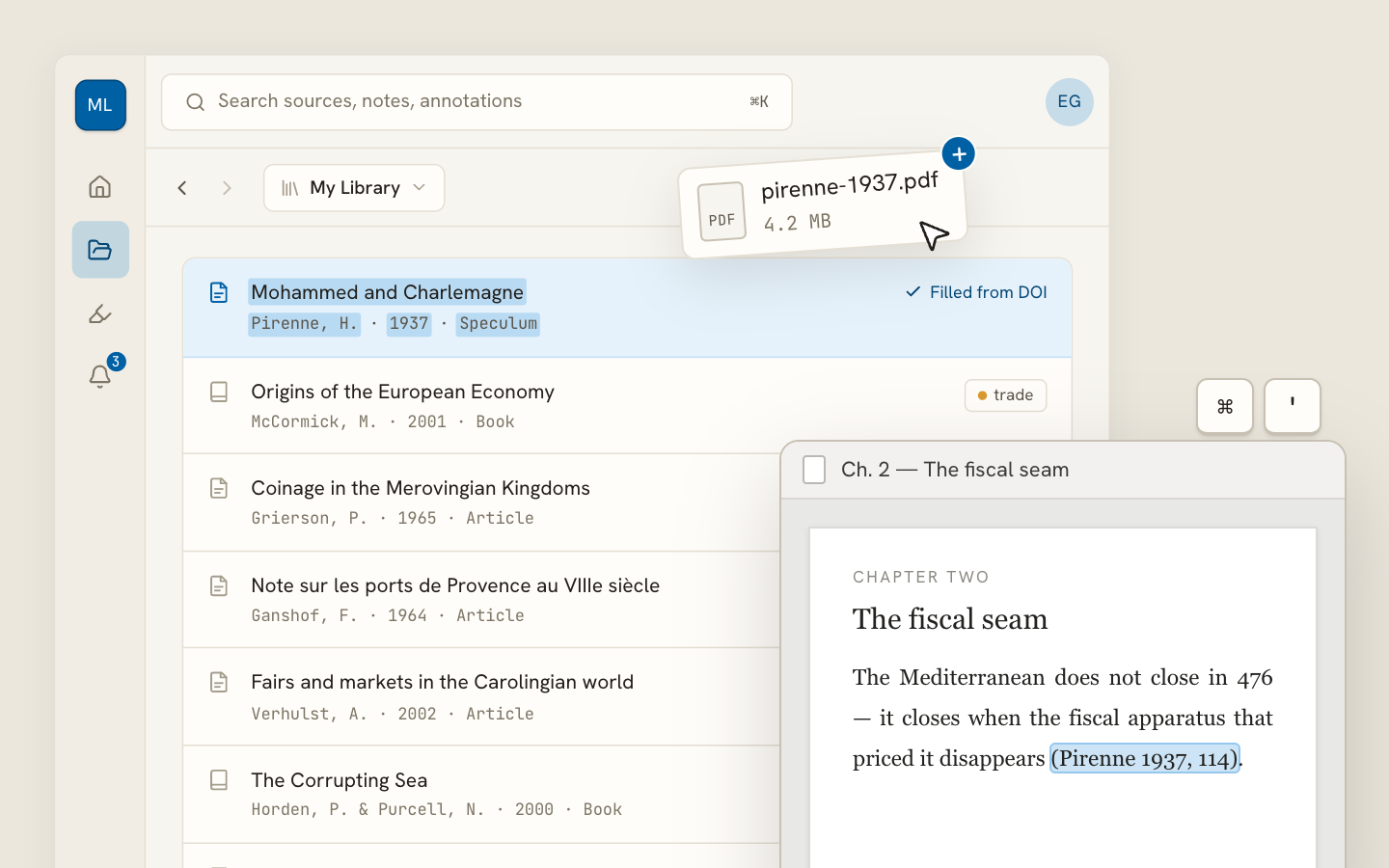
Archivero library view with a source list and an open PDF

Your weekly research workflow, in one email

One tested workflow, three links, no filler — every Tuesday.

Unsubscribe in one click. We never share your address.

Guides/Citations/Harvard Referencing Style

How to Paraphrase in Harvard Referencing

Rules and examples for paraphrasing sources in Harvard style, including when to add page numbers and how to avoid patchwriting.

7 min readHarvard

Key Takeaways

  • A paraphrase restates a source's ideas in your own words and sentence structure — no quotation marks needed.
  • Every paraphrase must include an in-text citation with the author and year:
    • (Walker, 2017)
  • Page numbers are optional for paraphrases but recommended when you're referring to a specific passage:
    • (Walker, 2017, p. 40)
  • Patchwriting — swapping a few words while keeping the original structure — is not paraphrasing and can be treated as plagiarism.
  • A good paraphrase changes both the vocabulary and the sentence structure of the original.
  • When you paraphrase the same source multiple times in a paragraph, cite it at least once — ideally on first mention — and make the attribution clear throughout.
  • Paraphrasing should make up the majority of your academic writing. Reserve direct quotes for language that is particularly precise or memorable.

On this page

1 of 18
Key TakeawaysParaphrasing vs. Quoting vs. SummarisingCitation Format for ParaphrasesParenthetical CitationNarrative CitationWith a Page NumberGood Paraphrase vs. PatchwritingOriginal SourcePatchwritten Version (Incorrect)Genuine Paraphrase (Correct)Tips for Effective ParaphrasingMultiple Paraphrases From the Same Source in One ParagraphApproach 1 — Cite on First Mention and Use Signal PhrasesApproach 2 — Cite at the End of the ParagraphNarrative vs. Parenthetical Paraphrase CitationsCommon Paraphrasing MistakesSummary: Paraphrase Citation Formats at a GlanceWhat's Next?
All Harvard guides →

Paraphrasing means restating a source's ideas in your own words and sentence structure. In Harvard referencing, a paraphrase still requires an in-text citation — the author and year — but including a page number is optional for paraphrases (though many lecturers recommend it). Unlike direct quoting, paraphrasing does not use quotation marks, because the words are entirely yours.

Paraphrasing vs. Quoting vs. Summarising

These three techniques all use other people's ideas — but they do so differently:

TechniqueWhat It DoesQuotation Marks?Citation Required?
ParaphrasingWhat It DoesRestates a specific passage in your own words and structureQuotation Marks?NoCitation Required?Yes — (Author, Year) with optional page number
Direct quotingWhat It DoesReproduces the source's exact wordsQuotation Marks?Yes (single quotes for short; indent for block)Citation Required?Yes — (Author, Year, p. X) with page number required
SummarisingWhat It DoesCondenses the main argument of a whole work or large sectionQuotation Marks?NoCitation Required?Yes — (Author, Year)

Paraphrasing targets a specific idea or passage. Summarising covers a broad argument across many pages or an entire work. Direct quoting copies the exact words.

Most of your academic writing should be paraphrasing and summarising, with direct quotes used sparingly.

For quoting rules, see How to Use Direct Quotes in Harvard Referencing.

Citation Format for Paraphrases

Parenthetical Citation

Place the author and year in parentheses at the end of the sentence:

Sleep deprivation has a measurable impact on nearly every cognitive process, from attention to decision-making (Walker, 2017).

Narrative Citation

Name the author in the sentence, with the year in parentheses:

Walker (2017) argues that sleep deprivation affects nearly every measurable cognitive function.

Both formats are standard Harvard. Use whichever fits more naturally into your sentence.

With a Page Number

Including a page number is optional for paraphrases, but it helps your reader locate the specific passage you're restating. Many lecturers prefer it.

Sleep deprivation has a measurable impact on nearly every cognitive process (Walker, 2017, p. 40).

Walker (2017, p. 40) argues that sleep deprivation affects nearly every measurable cognitive function.

When to include page numbers:

  • You're restating a specific claim from a particular page or passage
  • Your lecturer or institution requires them for all citations
  • The source is long (a whole book rather than a short article)

When you can omit them:

  • You're summarising the source's overall argument rather than a specific passage
  • The source is short (a brief web page or one-page article) and the claim is easy to find

Good Paraphrase vs. Patchwriting

Patchwriting is the most common paraphrasing mistake. It happens when you keep the original sentence structure and swap out individual words with synonyms — producing something that looks different on the surface but mirrors the source too closely. Most universities treat patchwriting as a form of plagiarism.

Original Source

'Sleep has been identified as a state that optimises the consolidation of newly acquired information in memory, depending on the specific conditions of learning and the timing of sleep within the consolidation period.' (Diekelmann and Born, 2010, p. 114)

Patchwritten Version (Incorrect)

✗ Sleep has been recognised as a condition that improves the consolidation of recently obtained information in memory, based on the particular conditions of learning and the timing of rest within the consolidation period (Diekelmann and Born, 2010).

This mirrors the original's sentence structure word for word — only swapping "identified" → "recognised," "optimises" → "improves," "newly acquired" → "recently obtained," and "sleep" → "rest." This is patchwriting, not paraphrasing.

Genuine Paraphrase (Correct)

✓ According to Diekelmann and Born (2010), how well new memories are consolidated during sleep depends on the learning context and when sleep occurs relative to the initial learning event.

This version:

  • Changes the sentence structure — the original is passive ("has been identified as"); the paraphrase is active
  • Uses different vocabulary — without simply swapping synonyms
  • Keeps the meaning intact — the core idea is the same
  • Includes a citation — attributing the idea to its source

Tips for Effective Paraphrasing

  1. Read the passage, then close the source. Write the idea from memory in your own words. Then compare your version with the original to make sure the meaning is accurate and the wording is genuinely different.

  2. Change the sentence structure first, then the vocabulary. If you start by swapping words, you'll almost certainly end up patchwriting. Restructure the sentence — change the order of clauses, switch from passive to active voice, or break one long sentence into two short ones.

  3. Use your own voice. If your paraphrase sounds like something you'd never naturally write, it's probably too close to the original.

  4. Don't paraphrase single sentences in isolation. Read the surrounding paragraph for context. Paraphrasing without understanding the broader argument often leads to distortion.

  5. Check your paraphrase against the original. If more than three consecutive words match (excluding common phrases), rewrite those sections.

Multiple Paraphrases From the Same Source in One Paragraph

When you draw on the same source repeatedly within a paragraph, you don't need to cite it after every single sentence — but you do need to make the attribution clear. There are two common approaches:

Approach 1 — Cite on First Mention and Use Signal Phrases

Walker (2017) argues that sleep deprivation impairs nearly every cognitive function. He notes that even moderate sleep loss — six hours a night for two weeks — produces the same cognitive deficit as going without sleep entirely for two days. The effect is cumulative, and most people fail to notice how impaired they have become.

The citation appears on the first sentence. The pronoun "he" and the signal phrase "he notes" make it clear the entire paragraph still refers to Walker.

Approach 2 — Cite at the End of the Paragraph

Sleep deprivation impairs nearly every cognitive function. Even moderate sleep loss — six hours a night for two weeks — produces the same cognitive deficit as going without sleep entirely for two days. The effect is cumulative, and most people fail to notice how impaired they have become (Walker, 2017).

This works when the entire paragraph clearly paraphrases a single source. But be careful — if it's ambiguous whether certain sentences are your own analysis or the source's ideas, a marker may question which claims are supported.

The safer option: Cite on first mention (Approach 1) and use signal phrases throughout.

Narrative vs. Parenthetical Paraphrase Citations

Both formats are equally valid. The choice depends on what you want to emphasise:

FormatWhen to UseExample
ParentheticalWhen to UseWhen the idea matters more than the authorExampleSleep deprivation impairs cognitive function (Walker, 2017).
NarrativeWhen to UseWhen the author's identity or expertise mattersExampleWalker (2017), a neuroscience professor, argues that sleep deprivation impairs cognitive function.

In practice, most paragraphs use a mix of both. Avoid using the same format for every citation — it creates a monotonous reading experience.

Common Paraphrasing Mistakes

MistakeWhy It's WrongHow to Fix It
PatchwritingWhy It's WrongMirrors the original structure with swapped synonymsHow to Fix ItChange sentence structure first, then vocabulary
No citationWhy It's WrongParaphrasing without attribution is plagiarism — even if you changed the wordingHow to Fix ItAlways include (Author, Year)
Distorting the meaningWhy It's WrongChanging the words so much that the idea becomes inaccurateHow to Fix ItCompare your paraphrase with the original to check accuracy
Over-paraphrasing a single sourceWhy It's WrongRelying on one source for an entire section suggests limited researchHow to Fix ItIntegrate multiple sources to show breadth
Paraphrasing when you should quoteWhy It's WrongSome language — definitions, technical terms, striking phrases — should be quoted directlyHow to Fix ItIf the exact words matter, use a direct quote with quotation marks and a page number

Summary: Paraphrase Citation Formats at a Glance

FormatCitation
Parenthetical (no page number)…idea expressed in your own words (Author, Year).
Parenthetical (with page number)…idea expressed in your own words (Author, Year, p. X).
Narrative (no page number)Author (Year) argues that…idea expressed in your own words.
Narrative (with page number)Author (Year, p. X) argues that…idea expressed in your own words.

What's Next?

Now that you understand how to paraphrase in Harvard style, explore these related guides:

  • How to Use Direct Quotes in Harvard Referencing — formatting rules for short quotes, block quotes, and page locators
  • Harvard In-Text Citations — the complete guide to parenthetical and narrative citations
  • Common Harvard Referencing Mistakes — the most frequent errors and how to avoid them
All Harvard guides →
← PreviousCommon Harvard Referencing Mistakes (and How to Fix Them)Next →How to Cite a Source With No Author in Harvard

More on Harvard referencing

The dominant system in British, Australian and international universities. In-text citations, reference lists and the local conventions that vary by department.

View all 26 guides →
8 sections·6 min readHarvardHow to Cite a Source With No Author in Harvard8 sections·8 min readHarvardHarvard vs. APA — What's the Difference?10 sections·6 min readHarvardHow to Reference a Video in Harvard Style12 sections·8 min readHarvardHow to Reference Social Media in Harvard Style

Your sources, PDFs and citations in one library

  • Import a Zotero, Mendeley or EndNote library — or a folder of PDFs
  • Highlight and annotate without leaving the source
  • Cite in any CSL style as you write, with one shared library for your lab
Request early accessSee the product →
Archivero library view with a source list and an open PDF

Your weekly research workflow, in one email

One tested workflow, three links, no filler — every Tuesday.

Unsubscribe in one click. We never share your address.