Archivero is in early access — your sources, PDFs and citations in one library.Request early access →
Archivero/guides/
APAMLAHarvardThesis writing
Subscribe
Archivero/guides/Request early access →

Guides

APA styleMLA styleHarvard referencingThesis writing

Compare

APA 6th vs 7thMLA 8th vs 9thHarvard vs APAThesis vs dissertation

Product

FeaturesEarly access

Resources

DocsCheat sheetsNewsletter

Company

ContactStatus ↗
© 2025–2026 Ernesto F. GonzálezGuidesDocsContactPrivacyTerms
Guides/Citations/Harvard Referencing Style

How to Cite a Source With No Author in Harvard

What to do when a source has no identifiable author — Harvard referencing rules for in-text citations and reference list entries.

6 min readHarvard

Key Takeaways

  • When no author is identifiable, use the title in place of the author name in both the in-text citation and the reference list.
  • In-text, use a shortened version of the title — just enough to match the reference list entry unambiguously:
    • ('Endangered species legislation', 2024)
  • Standalone works (books, reports, websites) are italicised in the in-text citation:
    • (Global health report, 2023)
  • Parts of larger works (articles, web pages, chapters) use single quotation marks:
    • ('Endangered species legislation', 2024)
  • Before choosing "no author," check whether a corporate or organisational author can be used instead — government departments, charities, and institutions often qualify.
  • In the reference list, the entry begins with the title instead of a surname:
    • 'Endangered species legislation: an overview' (2024) U.S. Fish & Wildlife Service. Available at: URL (Accessed: Date).
  • When a source has no author and no date, combine both rules:
    • ('Endangered species legislation', n.d.)

On this page

1 of 21
Key TakeawaysWhen Does "No Author" Apply?Corporate or Organisational Author vs. No AuthorIn-Text Citations — Title in Place of AuthorStandalone Works — ItalicsParts of Larger Works — Single Quotation MarksShortening Long TitlesReference List Entries — No AuthorWeb Page With No AuthorBook With No AuthorNewspaper Article With No AuthorDictionary or Encyclopaedia EntryNo Author + No DateExamples by Source TypeWeb Page — No Individual Author, Corporate Author AvailableWeb Page — No Author at AllReport — Government Department as AuthorReport — Truly No AuthorDictionary EntryCommon Mistakes With No-Author CitationsWhat's Next?
All Harvard guides →

When a source has no identifiable author, Harvard referencing uses the title of the work in place of the author name — both in-text and in the reference list. The title is shortened for in-text citations and formatted with italics (for standalone works) or single quotation marks (for parts of larger works). Before defaulting to "no author," always check whether an organisation or institution can serve as the corporate author instead.

When Does "No Author" Apply?

A source genuinely has "no author" when:

  • No individual is credited by name (check the byline, the "About" page, the footer, and any metadata)
  • No organisation, institution, or agency can reasonably be treated as the corporate author
  • The work is published anonymously or attributed only to a vague entity like "Staff writer"

In practice, truly authorless sources are rare. Most web pages, reports, and data sets are published by an identifiable organisation — and Harvard lets you cite that organisation as the author. Only default to the "no author" format when you've exhausted all options.

Corporate or Organisational Author vs. No Author

This distinction trips up many students. If a web page, report, or data set is published by an organisation but has no named individual author, the organisation is the author — not "no author."

ScenarioWhat to DoExample
Named individual authorWhat to DoUse the author's nameExample(Kolbert, 2017)
No individual, but published by an organisationWhat to DoUse the organisation as authorExample(National Health Service, 2024)
No individual, no identifiable organisationWhat to DoUse the titleExample('Endangered species legislation', 2024)

World Health Organization (2024) Fact sheet: depression. Available at: https://www.who.int/news-room/fact-sheets/detail/depression (Accessed: 3 February 2025).

The World Health Organization is the author here — even though no individual wrote the page. Use this approach for government departments, charities, universities, and companies.

For more on corporate authors, see How to Reference a Website in Harvard Style.

In-Text Citations — Title in Place of Author

When you use the title in place of the author, the formatting changes depending on whether the source is a standalone work or part of a larger work.

Standalone Works — Italics

Books, reports, and whole websites are standalone works. Italicise the title (or shortened title) in the in-text citation:

Parenthetical:(Global health report, 2023)

Narrative:The Global health report (2023) identifies three priority areas…

Parts of Larger Works — Single Quotation Marks

Journal articles, web pages, book chapters, and newspaper articles are parts of larger works. Use single quotation marks:

Parenthetical:('Endangered species legislation', 2024)

Narrative:The article 'Endangered species legislation' (2024) explains that…

Shortening Long Titles

If the title is long, shorten it in the in-text citation — but keep enough words to match the reference list entry unambiguously. Use the first few meaningful words:

Full TitleShortened In-Text
'Endangered species legislation: an overview of current protections and proposed amendments'('Endangered species legislation', 2024)
A comprehensive report on global mental health outcomes and future priorities(A comprehensive report on global mental health, 2023)

Omit subtitles and trailing phrases. The reader should be able to scan your reference list and instantly find the matching entry.

Reference List Entries — No Author

When the author position is empty, the reference list entry begins with the title. Everything else follows standard Harvard formatting.

Web Page With No Author

'Endangered species legislation: an overview' (2024) U.S. Fish & Wildlife Service. Available at: https://www.fws.gov/law/endangered-species-act (Accessed: 8 February 2025).

Book With No Author

The Oxford English dictionary (2023) 13th edn. Oxford: Oxford University Press.

Newspaper Article With No Author

'Rail strikes disrupt services across the UK' (2024) The Guardian, 15 March. Available at: https://www.theguardian.com/uk-news/rail-strikes-disrupt (Accessed: 20 March 2025).

Dictionary or Encyclopaedia Entry

'Cognitive dissonance' (2022) in Encyclopaedia Britannica. Available at: https://www.britannica.com/science/cognitive-dissonance (Accessed: 10 January 2025).

Alphabetical ordering: No-author entries are alphabetised by the first significant word of the title (excluding "A," "An," or "The").

No Author + No Date

When a source has neither an author nor a date, combine both rules: the title replaces the author, and n.d. replaces the year.

In-text citation:

('Student support services', n.d.)

Reference list:

'Student support services' (n.d.) University of Bristol. Available at: https://www.bristol.ac.uk/students/support (Accessed: 5 April 2025).

For full guidance on missing dates, see How to Cite a Source With No Date in Harvard.

Examples by Source Type

Web Page — No Individual Author, Corporate Author Available

Use the corporate author:

In-text:(British Red Cross, 2024)

Reference list:British Red Cross (2024) First aid tips. Available at: https://www.redcross.org.uk/first-aid (Accessed: 14 February 2025).

Web Page — No Author at All

In-text:('Mental health resources for students', 2024)

Reference list:'Mental health resources for students' (2024) Student Minds. Available at: https://www.studentminds.org.uk/resources (Accessed: 14 February 2025).

Report — Government Department as Author

In-text:(Department for Education, 2023)

Reference list:Department for Education (2023) Schools white paper: opportunity for all. London: HMSO. Available at: https://www.gov.uk/government/publications/opportunity-for-all (Accessed: 1 March 2025).

Report — Truly No Author

In-text:(Internet trends report, 2024)

Reference list:Internet trends report (2024) Available at: https://www.example.com/internet-trends-2024 (Accessed: 22 April 2025).

Dictionary Entry

In-text:('Sustainability', 2023)

Reference list:'Sustainability' (2023) in Oxford English dictionary. Available at: https://www.oed.com/view/Entry/sustainability (Accessed: 10 January 2025).

Common Mistakes With No-Author Citations

MistakeWhy It's WrongCorrect Approach
Using "Anon." or "Anonymous"Why It's WrongHarvard does not use "Anonymous" unless the work is explicitly published under that nameCorrect ApproachUse the title in place of the author
Defaulting to "no author" when a corporate author existsWhy It's WrongOrganisations count as authors in HarvardCorrect ApproachCheck for a corporate, institutional, or government publisher first
Forgetting to format the title correctlyWhy It's WrongStandalone works need italics; parts of works need quotation marksCorrect ApproachMatch the formatting to the source type
Using the full title in every in-text citationWhy It's WrongLong titles clutter your sentenceCorrect ApproachShorten the title to the first few meaningful words
Alphabetising by "The" or "A"Why It's WrongArticles at the start of titles are ignored for alphabetisationCorrect ApproachAlphabetise by the first significant word

What's Next?

Now that you know how to handle sources with no author, explore these related guides:

  • How to Cite a Source With No Date in Harvard — handling missing publication dates with n.d.
  • How to Reference a Website in Harvard Style — corporate authors, access dates, and URL formatting
  • Harvard In-Text Citations — the complete guide to all in-text citation formats
  • Harvard Reference List — alphabetical ordering, hanging indentation, and full formatting rules
All Harvard guides →
← PreviousHow to Paraphrase in Harvard ReferencingNext →Harvard vs. APA — What's the Difference?

More on Harvard referencing

The dominant system in British, Australian and international universities. In-text citations, reference lists and the local conventions that vary by department.

View all 26 guides →
8 sections·8 min readHarvardHarvard vs. APA — What's the Difference?10 sections·6 min readHarvardHow to Reference a Video in Harvard Style12 sections·8 min readHarvardHow to Reference Social Media in Harvard Style9 sections·7 min readHarvardHarvard Tables and Figures

Your sources, PDFs and citations in one library

  • Import a Zotero, Mendeley or EndNote library — or a folder of PDFs
  • Highlight and annotate without leaving the source
  • Cite in any CSL style as you write, with one shared library for your lab
Request early accessSee the product →
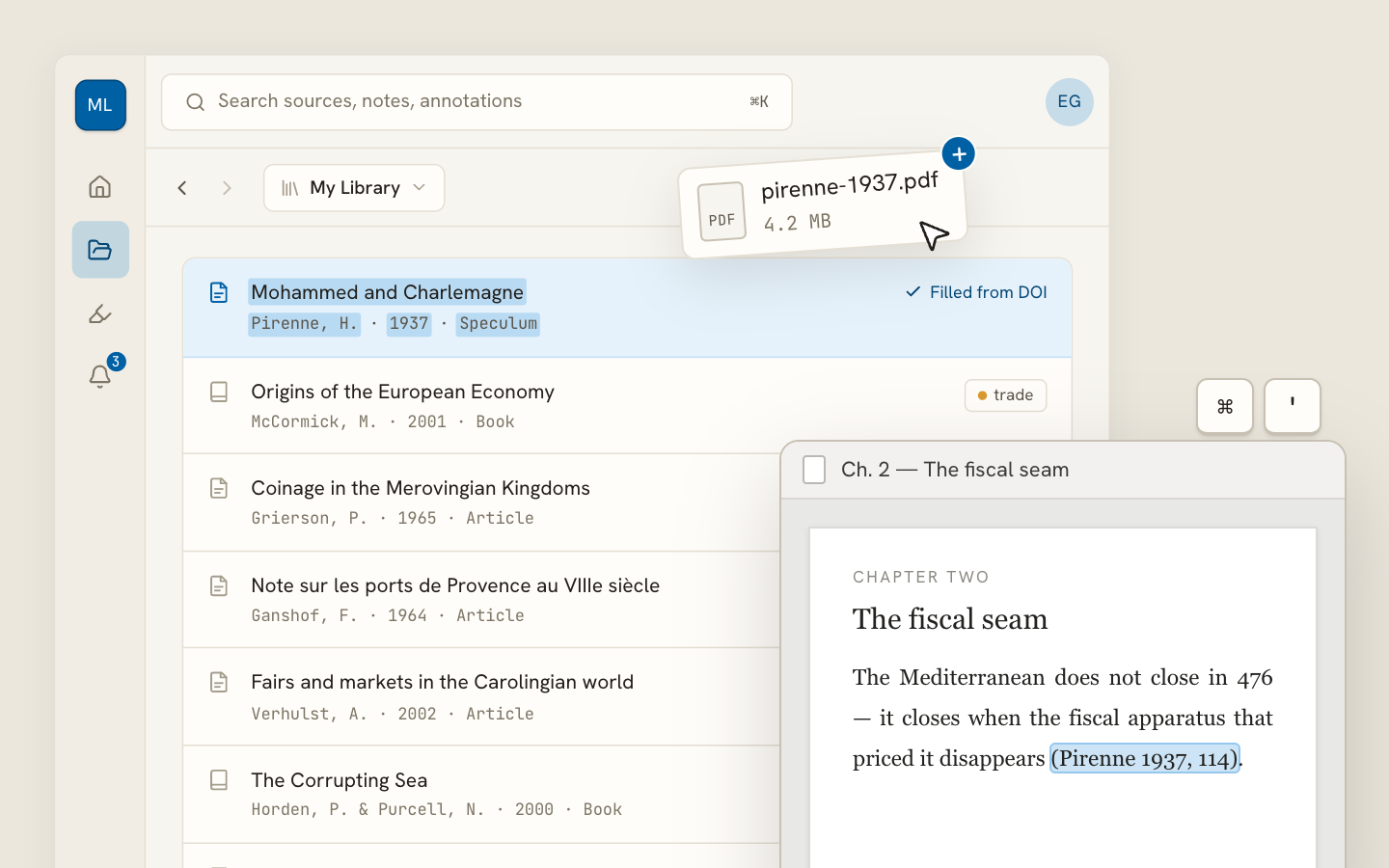
Archivero library view with a source list and an open PDF

Your weekly research workflow, in one email

One tested workflow, three links, no filler — every Tuesday.

Unsubscribe in one click. We never share your address.

Guides/Citations/Harvard Referencing Style

How to Cite a Source With No Author in Harvard

What to do when a source has no identifiable author — Harvard referencing rules for in-text citations and reference list entries.

6 min readHarvard

Key Takeaways

  • When no author is identifiable, use the title in place of the author name in both the in-text citation and the reference list.
  • In-text, use a shortened version of the title — just enough to match the reference list entry unambiguously:
    • ('Endangered species legislation', 2024)
  • Standalone works (books, reports, websites) are italicised in the in-text citation:
    • (Global health report, 2023)
  • Parts of larger works (articles, web pages, chapters) use single quotation marks:
    • ('Endangered species legislation', 2024)
  • Before choosing "no author," check whether a corporate or organisational author can be used instead — government departments, charities, and institutions often qualify.
  • In the reference list, the entry begins with the title instead of a surname:
    • 'Endangered species legislation: an overview' (2024) U.S. Fish & Wildlife Service. Available at: URL (Accessed: Date).
  • When a source has no author and no date, combine both rules:
    • ('Endangered species legislation', n.d.)

On this page

1 of 21
Key TakeawaysWhen Does "No Author" Apply?Corporate or Organisational Author vs. No AuthorIn-Text Citations — Title in Place of AuthorStandalone Works — ItalicsParts of Larger Works — Single Quotation MarksShortening Long TitlesReference List Entries — No AuthorWeb Page With No AuthorBook With No AuthorNewspaper Article With No AuthorDictionary or Encyclopaedia EntryNo Author + No DateExamples by Source TypeWeb Page — No Individual Author, Corporate Author AvailableWeb Page — No Author at AllReport — Government Department as AuthorReport — Truly No AuthorDictionary EntryCommon Mistakes With No-Author CitationsWhat's Next?
All Harvard guides →

When a source has no identifiable author, Harvard referencing uses the title of the work in place of the author name — both in-text and in the reference list. The title is shortened for in-text citations and formatted with italics (for standalone works) or single quotation marks (for parts of larger works). Before defaulting to "no author," always check whether an organisation or institution can serve as the corporate author instead.

When Does "No Author" Apply?

A source genuinely has "no author" when:

  • No individual is credited by name (check the byline, the "About" page, the footer, and any metadata)
  • No organisation, institution, or agency can reasonably be treated as the corporate author
  • The work is published anonymously or attributed only to a vague entity like "Staff writer"

In practice, truly authorless sources are rare. Most web pages, reports, and data sets are published by an identifiable organisation — and Harvard lets you cite that organisation as the author. Only default to the "no author" format when you've exhausted all options.

Corporate or Organisational Author vs. No Author

This distinction trips up many students. If a web page, report, or data set is published by an organisation but has no named individual author, the organisation is the author — not "no author."

ScenarioWhat to DoExample
Named individual authorWhat to DoUse the author's nameExample(Kolbert, 2017)
No individual, but published by an organisationWhat to DoUse the organisation as authorExample(National Health Service, 2024)
No individual, no identifiable organisationWhat to DoUse the titleExample('Endangered species legislation', 2024)

World Health Organization (2024) Fact sheet: depression. Available at: https://www.who.int/news-room/fact-sheets/detail/depression (Accessed: 3 February 2025).

The World Health Organization is the author here — even though no individual wrote the page. Use this approach for government departments, charities, universities, and companies.

For more on corporate authors, see How to Reference a Website in Harvard Style.

In-Text Citations — Title in Place of Author

When you use the title in place of the author, the formatting changes depending on whether the source is a standalone work or part of a larger work.

Standalone Works — Italics

Books, reports, and whole websites are standalone works. Italicise the title (or shortened title) in the in-text citation:

Parenthetical:(Global health report, 2023)

Narrative:The Global health report (2023) identifies three priority areas…

Parts of Larger Works — Single Quotation Marks

Journal articles, web pages, book chapters, and newspaper articles are parts of larger works. Use single quotation marks:

Parenthetical:('Endangered species legislation', 2024)

Narrative:The article 'Endangered species legislation' (2024) explains that…

Shortening Long Titles

If the title is long, shorten it in the in-text citation — but keep enough words to match the reference list entry unambiguously. Use the first few meaningful words:

Full TitleShortened In-Text
'Endangered species legislation: an overview of current protections and proposed amendments'('Endangered species legislation', 2024)
A comprehensive report on global mental health outcomes and future priorities(A comprehensive report on global mental health, 2023)

Omit subtitles and trailing phrases. The reader should be able to scan your reference list and instantly find the matching entry.

Reference List Entries — No Author

When the author position is empty, the reference list entry begins with the title. Everything else follows standard Harvard formatting.

Web Page With No Author

'Endangered species legislation: an overview' (2024) U.S. Fish & Wildlife Service. Available at: https://www.fws.gov/law/endangered-species-act (Accessed: 8 February 2025).

Book With No Author

The Oxford English dictionary (2023) 13th edn. Oxford: Oxford University Press.

Newspaper Article With No Author

'Rail strikes disrupt services across the UK' (2024) The Guardian, 15 March. Available at: https://www.theguardian.com/uk-news/rail-strikes-disrupt (Accessed: 20 March 2025).

Dictionary or Encyclopaedia Entry

'Cognitive dissonance' (2022) in Encyclopaedia Britannica. Available at: https://www.britannica.com/science/cognitive-dissonance (Accessed: 10 January 2025).

Alphabetical ordering: No-author entries are alphabetised by the first significant word of the title (excluding "A," "An," or "The").

No Author + No Date

When a source has neither an author nor a date, combine both rules: the title replaces the author, and n.d. replaces the year.

In-text citation:

('Student support services', n.d.)

Reference list:

'Student support services' (n.d.) University of Bristol. Available at: https://www.bristol.ac.uk/students/support (Accessed: 5 April 2025).

For full guidance on missing dates, see How to Cite a Source With No Date in Harvard.

Examples by Source Type

Web Page — No Individual Author, Corporate Author Available

Use the corporate author:

In-text:(British Red Cross, 2024)

Reference list:British Red Cross (2024) First aid tips. Available at: https://www.redcross.org.uk/first-aid (Accessed: 14 February 2025).

Web Page — No Author at All

In-text:('Mental health resources for students', 2024)

Reference list:'Mental health resources for students' (2024) Student Minds. Available at: https://www.studentminds.org.uk/resources (Accessed: 14 February 2025).

Report — Government Department as Author

In-text:(Department for Education, 2023)

Reference list:Department for Education (2023) Schools white paper: opportunity for all. London: HMSO. Available at: https://www.gov.uk/government/publications/opportunity-for-all (Accessed: 1 March 2025).

Report — Truly No Author

In-text:(Internet trends report, 2024)

Reference list:Internet trends report (2024) Available at: https://www.example.com/internet-trends-2024 (Accessed: 22 April 2025).

Dictionary Entry

In-text:('Sustainability', 2023)

Reference list:'Sustainability' (2023) in Oxford English dictionary. Available at: https://www.oed.com/view/Entry/sustainability (Accessed: 10 January 2025).

Common Mistakes With No-Author Citations

MistakeWhy It's WrongCorrect Approach
Using "Anon." or "Anonymous"Why It's WrongHarvard does not use "Anonymous" unless the work is explicitly published under that nameCorrect ApproachUse the title in place of the author
Defaulting to "no author" when a corporate author existsWhy It's WrongOrganisations count as authors in HarvardCorrect ApproachCheck for a corporate, institutional, or government publisher first
Forgetting to format the title correctlyWhy It's WrongStandalone works need italics; parts of works need quotation marksCorrect ApproachMatch the formatting to the source type
Using the full title in every in-text citationWhy It's WrongLong titles clutter your sentenceCorrect ApproachShorten the title to the first few meaningful words
Alphabetising by "The" or "A"Why It's WrongArticles at the start of titles are ignored for alphabetisationCorrect ApproachAlphabetise by the first significant word

What's Next?

Now that you know how to handle sources with no author, explore these related guides:

  • How to Cite a Source With No Date in Harvard — handling missing publication dates with n.d.
  • How to Reference a Website in Harvard Style — corporate authors, access dates, and URL formatting
  • Harvard In-Text Citations — the complete guide to all in-text citation formats
  • Harvard Reference List — alphabetical ordering, hanging indentation, and full formatting rules
All Harvard guides →
← PreviousHow to Paraphrase in Harvard ReferencingNext →Harvard vs. APA — What's the Difference?

More on Harvard referencing

The dominant system in British, Australian and international universities. In-text citations, reference lists and the local conventions that vary by department.

View all 26 guides →
8 sections·8 min readHarvardHarvard vs. APA — What's the Difference?10 sections·6 min readHarvardHow to Reference a Video in Harvard Style12 sections·8 min readHarvardHow to Reference Social Media in Harvard Style9 sections·7 min readHarvardHarvard Tables and Figures

Your sources, PDFs and citations in one library

  • Import a Zotero, Mendeley or EndNote library — or a folder of PDFs
  • Highlight and annotate without leaving the source
  • Cite in any CSL style as you write, with one shared library for your lab
Request early accessSee the product →
Archivero library view with a source list and an open PDF

Your weekly research workflow, in one email

One tested workflow, three links, no filler — every Tuesday.

Unsubscribe in one click. We never share your address.