Archivero is in early access — your sources, PDFs and citations in one library.Request early access →
Archivero/guides/
APAMLAHarvardThesis writing
Subscribe
Archivero/guides/Request early access →

Guides

APA styleMLA styleHarvard referencingThesis writing

Compare

APA 6th vs 7thMLA 8th vs 9thHarvard vs APAThesis vs dissertation

Product

FeaturesEarly access

Resources

DocsCheat sheetsNewsletter

Company

ContactStatus ↗
© 2025–2026 Ernesto F. GonzálezGuidesDocsContactPrivacyTerms
Guides/Citations/Harvard Referencing Style

How to Reference a Website in Harvard Style

Harvard referencing formats for web pages, blog posts, and online articles — including when to use an access date.

6 min readHarvard

On this page

1 of 13
The Basic FormatWeb Page With an Individual AuthorWeb Page With a Corporate or Organisational AuthorWeb Page With No AuthorWeb Page With No DateBlog PostOnline News ArticleWhen to Include an Access DateAuthor = Organisation Name — What to DoWikipedia and Wiki ArticlesFormatting URLsSummary: Website Reference Formats at a GlanceWhat's Next?
All Harvard guides →

Websites are the source type students reference most often — and the one that causes the most confusion. Unlike books or journal articles, web pages vary enormously in how they present authorship, dates, and titles. Some give you everything you need; others leave you guessing who wrote it, when it was published, and what to call it.

The good news is that Harvard handles all of these situations with the same basic framework. Once you know the pattern, you can reference any web page you encounter — even when information is missing.

The Basic Format

Every website reference follows this general structure:

Author (Year) Title of web page. Available at: URL (Accessed: Day Month Year).

Here's a complete example:

Lundgren, S. (2024) 'The rise of autofiction in contemporary literature', Literary Hub. Available at: https://lithub.com/the-rise-of-autofiction (Accessed: 10 February 2025).

What to notice:

  • The author's surname comes first, followed by initials
  • The year is in parentheses
  • The web page title is in single quotation marks (it's part of a larger work — the website)
  • The website name is italicised
  • "Available at:" introduces the URL
  • The access date is in parentheses at the end

Note:Some Harvard guides omit "Available at:" and just place the URL directly. Others don't require access dates unless the page has no publication date. Follow your institution's convention.

Web Page With an Individual Author

This is the most straightforward case — a web page where a specific person is credited as the author.

Reference list:

Kolbert, E. (2017) 'Why facts don't change our minds', The New Yorker. Available at: https://www.newyorker.com/magazine/2017/02/27/why-facts-dont-change-our-minds (Accessed: 5 March 2025).

In-text citations:

Parenthetical:(Kolbert, 2017)

Narrative:Kolbert (2017) argues that…

If you're referencing a specific passage and paragraph numbers are visible, include them:

(Kolbert, 2017, para. 3)

Web Page With a Corporate or Organisational Author

Many web pages — especially from government agencies, charities, and universities — list an organisation as the author rather than a named individual.

Reference list:

National Health Service (2024) Mental health support. Available at: https://www.nhs.uk/mental-health (Accessed: 12 January 2025).

In-text citations:

Parenthetical:(National Health Service, 2024)

Narrative:The National Health Service (2024) recommends that…

If the organisation's name is long and you cite it multiple times, introduce an abbreviation:

First citation:(National Health Service [NHS], 2024)

Subsequent citations:(NHS, 2024)

When the author and website name are the same:If the organisation is both the author and the website name, you don't need to repeat it. Just list the organisation as author and omit the website name, or include it once — your institution's guide will clarify the preferred approach.

Web Page With No Author

If you genuinely cannot identify an author (check the byline, the "About" page, and the footer), use the title of the page in place of the author:

Reference list:

'Endangered species legislation: an overview' (2024) U.S. Fish & Wildlife Service. Available at: https://www.fws.gov/law/endangered-species-act (Accessed: 8 February 2025).

In-text citations:

Parenthetical:('Endangered species legislation', 2024)

Narrative:The article 'Endangered species legislation: an overview' (2024) explains that…

Use a shortened version of the title in parenthetical citations — just enough to match the reference list entry unambiguously. Keep it in single quotation marks.

Before defaulting to "no author," ask yourself: is the website published by an organisation that could serve as the corporate author? Government agencies, charities, and institutions often qualify. See the corporate author section above.

For more no-author scenarios, see How to Cite a Source With No Author in Harvard.

Web Page With No Date

If no publication or last-updated date is visible, use n.d. (no date):

Reference list:

Harris, T. (n.d.) 'Our mission', Centre for Humane Technology. Available at: https://www.humanetech.com/mission (Accessed: 20 March 2025).

In-text citations:

(Harris, n.d.)

Harris (n.d.) explains that…

When there's no date, the access date becomes more important — it tells the reader when the information was available. Most Harvard guides require an access date for undated web sources even if they don't require it for dated ones.

For detailed guidance, see How to Cite a Source With No Date in Harvard.

Blog Post

Blog posts follow the same structure as other web pages:

Reference list:

Adichie, C.N. (2023) 'On language and identity', Chimamanda.com. Available at: https://www.chimamanda.com/on-language-and-identity (Accessed: 1 April 2025).

In-text citations:

(Adichie, 2023)

If the blog is part of a larger website, treat the blog name as the website name. If the blog is a standalone site, italicise the blog name.

Online News Article

Online news articles from established outlets follow this format:

Reference list:

Harford, T. (2024) 'Why statistics can be misleading', Financial Times, 14 September. Available at: https://www.ft.com/content/statistics-misleading (Accessed: 22 January 2025).

In-text citations:

(Harford, 2024)

Note that for news articles, you can include the specific day and month after the newspaper/outlet name. This is helpful when the same author publishes multiple pieces in the same year.

For more on newspaper articles, see How to Reference a Newspaper Article in Harvard Style.

When to Include an Access Date

This is one of the areas where Harvard guides differ most. The general principle:

Your Institution's RuleWhen to Include Access Date
Always requiredEvery online source — dated or not
Only for undated sourcesOnly when the source has no publication date
DiscretionaryWhen the content might change or disappear (wikis, social media, live pages)

If you're unsure, include the access date. It's never wrong to add one, but it can be a problem to leave one out if your marker expects it.

The format is: (Accessed: Day Month Year)

(Accessed: 15 January 2025)

Author = Organisation Name — What to Do

A common question: "The web page doesn't have a named author, but it's published by the World Health Organization. What do I put?"

Use the organisation as the author:

World Health Organization (2024) Fact sheet: depression. Available at: https://www.who.int/news-room/fact-sheets/detail/depression (Accessed: 3 February 2025).

This applies to government departments, charities, universities, companies, and any institutional publisher. It's always preferable to use a corporate author rather than listing "no author."

Wikipedia and Wiki Articles

Many lecturers discourage or prohibit citing Wikipedia. If you're allowed to use it, reference it like a web page with no individual author:

Reference list:

'Climate change' (2025) Wikipedia. Available at: https://en.wikipedia.org/wiki/Climate_change (Accessed: 28 February 2025).

In-text citations:

('Climate change', 2025)

Use the year of the version you accessed. Because Wikipedia is constantly updated, the access date is essential.

Academic advice:Wikipedia can be a useful starting point for background research, but it's generally not considered a credible academic source. Use it to find primary sources — then cite those instead.

Formatting URLs

A few rules for handling URLs in your reference list:

  • Do not add a full stop after a URL — it could be mistaken for part of the address
  • Do not underline or format URLs as hyperlinks — use plain text (your word processor may hyperlink them automatically; that's fine, but don't add underlining manually)
  • Use the full URL — don't shorten it with bit.ly or similar services
  • Break long URLs before a punctuation mark (slash, dot, hyphen) rather than after — but most Harvard guides are relaxed about this

Summary: Website Reference Formats at a Glance

ScenarioReference List Format
Individual authorSurname, Initial(s). (Year) 'Title', Website Name. Available at: URL (Accessed: Date).
Corporate authorOrganisation (Year) Title. Available at: URL (Accessed: Date).
No author'Title' (Year) Website Name. Available at: URL (Accessed: Date).
No dateAuthor (n.d.) 'Title', Website Name. Available at: URL (Accessed: Date).
Blog postAuthor (Year) 'Title', Blog Name. Available at: URL (Accessed: Date).

What's Next?

Now that you know how to reference websites, explore these related guides:

  • How to Cite a Source With No Author in Harvard — detailed rules for when you can't identify an author
  • How to Cite a Source With No Date in Harvard — handling missing dates with n.d. and access dates
  • Harvard Reference List — the complete guide to formatting your reference list
All Harvard guides →
← PreviousHarvard Reference ListNext →How to Reference a Book in Harvard Style

More on Harvard referencing

The dominant system in British, Australian and international universities. In-text citations, reference lists and the local conventions that vary by department.

View all 26 guides →
13 sections·6 min readHarvardHow to Reference a Book in Harvard Style12 sections·6 min readHarvardHow to Reference a Journal Article in Harvard Style7 sections·7 min readHarvardHarvard Referencing Example Paper10 sections·8 min readHarvardHow to Use Direct Quotes in Harvard Referencing

Your sources, PDFs and citations in one library

  • Import a Zotero, Mendeley or EndNote library — or a folder of PDFs
  • Highlight and annotate without leaving the source
  • Cite in any CSL style as you write, with one shared library for your lab
Request early accessSee the product →
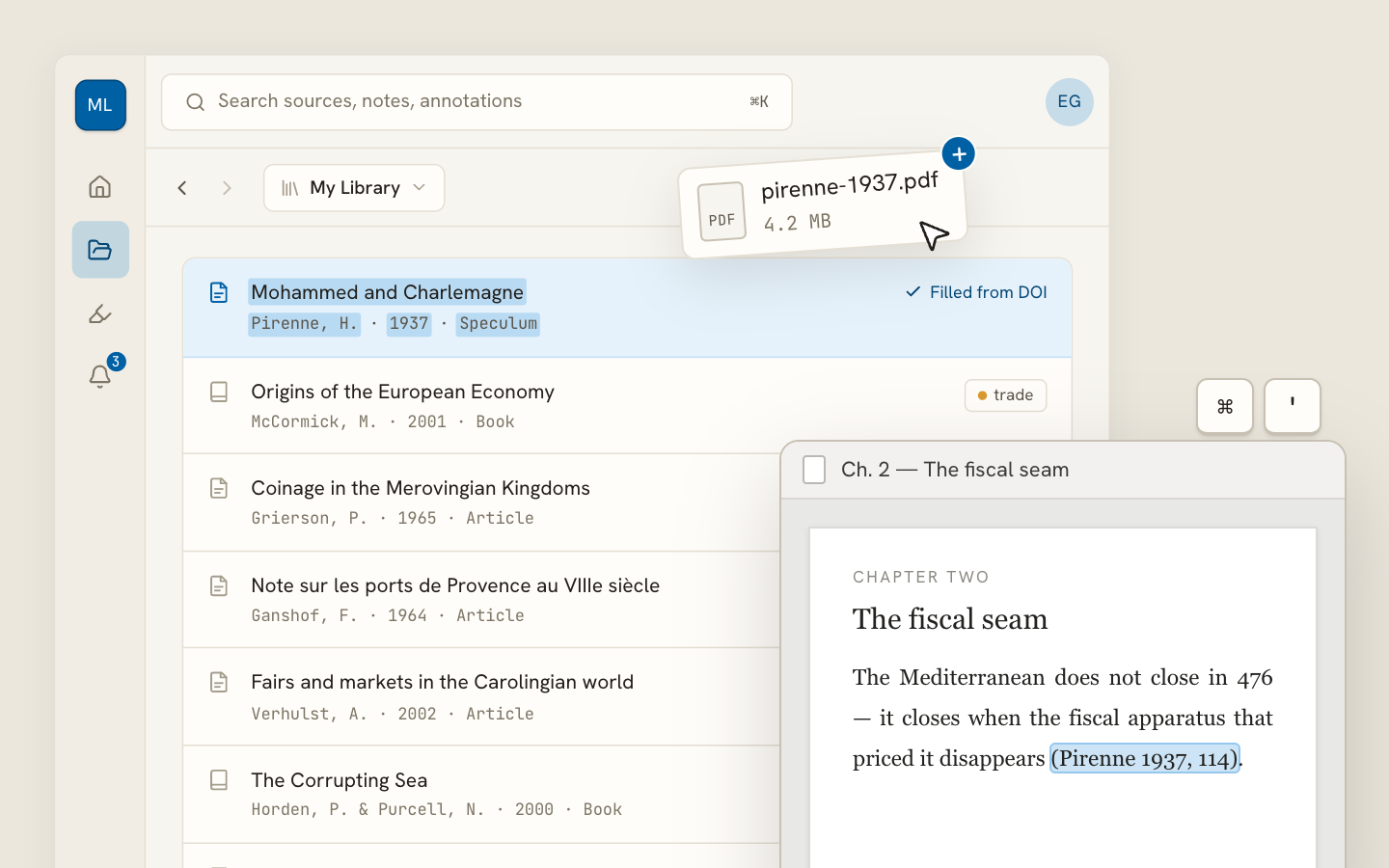
Archivero library view with a source list and an open PDF

Your weekly research workflow, in one email

One tested workflow, three links, no filler — every Tuesday.

Unsubscribe in one click. We never share your address.

Guides/Citations/Harvard Referencing Style

How to Reference a Website in Harvard Style

Harvard referencing formats for web pages, blog posts, and online articles — including when to use an access date.

6 min readHarvard

On this page

1 of 13
The Basic FormatWeb Page With an Individual AuthorWeb Page With a Corporate or Organisational AuthorWeb Page With No AuthorWeb Page With No DateBlog PostOnline News ArticleWhen to Include an Access DateAuthor = Organisation Name — What to DoWikipedia and Wiki ArticlesFormatting URLsSummary: Website Reference Formats at a GlanceWhat's Next?
All Harvard guides →

Websites are the source type students reference most often — and the one that causes the most confusion. Unlike books or journal articles, web pages vary enormously in how they present authorship, dates, and titles. Some give you everything you need; others leave you guessing who wrote it, when it was published, and what to call it.

The good news is that Harvard handles all of these situations with the same basic framework. Once you know the pattern, you can reference any web page you encounter — even when information is missing.

The Basic Format

Every website reference follows this general structure:

Author (Year) Title of web page. Available at: URL (Accessed: Day Month Year).

Here's a complete example:

Lundgren, S. (2024) 'The rise of autofiction in contemporary literature', Literary Hub. Available at: https://lithub.com/the-rise-of-autofiction (Accessed: 10 February 2025).

What to notice:

  • The author's surname comes first, followed by initials
  • The year is in parentheses
  • The web page title is in single quotation marks (it's part of a larger work — the website)
  • The website name is italicised
  • "Available at:" introduces the URL
  • The access date is in parentheses at the end

Note:Some Harvard guides omit "Available at:" and just place the URL directly. Others don't require access dates unless the page has no publication date. Follow your institution's convention.

Web Page With an Individual Author

This is the most straightforward case — a web page where a specific person is credited as the author.

Reference list:

Kolbert, E. (2017) 'Why facts don't change our minds', The New Yorker. Available at: https://www.newyorker.com/magazine/2017/02/27/why-facts-dont-change-our-minds (Accessed: 5 March 2025).

In-text citations:

Parenthetical:(Kolbert, 2017)

Narrative:Kolbert (2017) argues that…

If you're referencing a specific passage and paragraph numbers are visible, include them:

(Kolbert, 2017, para. 3)

Web Page With a Corporate or Organisational Author

Many web pages — especially from government agencies, charities, and universities — list an organisation as the author rather than a named individual.

Reference list:

National Health Service (2024) Mental health support. Available at: https://www.nhs.uk/mental-health (Accessed: 12 January 2025).

In-text citations:

Parenthetical:(National Health Service, 2024)

Narrative:The National Health Service (2024) recommends that…

If the organisation's name is long and you cite it multiple times, introduce an abbreviation:

First citation:(National Health Service [NHS], 2024)

Subsequent citations:(NHS, 2024)

When the author and website name are the same:If the organisation is both the author and the website name, you don't need to repeat it. Just list the organisation as author and omit the website name, or include it once — your institution's guide will clarify the preferred approach.

Web Page With No Author

If you genuinely cannot identify an author (check the byline, the "About" page, and the footer), use the title of the page in place of the author:

Reference list:

'Endangered species legislation: an overview' (2024) U.S. Fish & Wildlife Service. Available at: https://www.fws.gov/law/endangered-species-act (Accessed: 8 February 2025).

In-text citations:

Parenthetical:('Endangered species legislation', 2024)

Narrative:The article 'Endangered species legislation: an overview' (2024) explains that…

Use a shortened version of the title in parenthetical citations — just enough to match the reference list entry unambiguously. Keep it in single quotation marks.

Before defaulting to "no author," ask yourself: is the website published by an organisation that could serve as the corporate author? Government agencies, charities, and institutions often qualify. See the corporate author section above.

For more no-author scenarios, see How to Cite a Source With No Author in Harvard.

Web Page With No Date

If no publication or last-updated date is visible, use n.d. (no date):

Reference list:

Harris, T. (n.d.) 'Our mission', Centre for Humane Technology. Available at: https://www.humanetech.com/mission (Accessed: 20 March 2025).

In-text citations:

(Harris, n.d.)

Harris (n.d.) explains that…

When there's no date, the access date becomes more important — it tells the reader when the information was available. Most Harvard guides require an access date for undated web sources even if they don't require it for dated ones.

For detailed guidance, see How to Cite a Source With No Date in Harvard.

Blog Post

Blog posts follow the same structure as other web pages:

Reference list:

Adichie, C.N. (2023) 'On language and identity', Chimamanda.com. Available at: https://www.chimamanda.com/on-language-and-identity (Accessed: 1 April 2025).

In-text citations:

(Adichie, 2023)

If the blog is part of a larger website, treat the blog name as the website name. If the blog is a standalone site, italicise the blog name.

Online News Article

Online news articles from established outlets follow this format:

Reference list:

Harford, T. (2024) 'Why statistics can be misleading', Financial Times, 14 September. Available at: https://www.ft.com/content/statistics-misleading (Accessed: 22 January 2025).

In-text citations:

(Harford, 2024)

Note that for news articles, you can include the specific day and month after the newspaper/outlet name. This is helpful when the same author publishes multiple pieces in the same year.

For more on newspaper articles, see How to Reference a Newspaper Article in Harvard Style.

When to Include an Access Date

This is one of the areas where Harvard guides differ most. The general principle:

Your Institution's RuleWhen to Include Access Date
Always requiredEvery online source — dated or not
Only for undated sourcesOnly when the source has no publication date
DiscretionaryWhen the content might change or disappear (wikis, social media, live pages)

If you're unsure, include the access date. It's never wrong to add one, but it can be a problem to leave one out if your marker expects it.

The format is: (Accessed: Day Month Year)

(Accessed: 15 January 2025)

Author = Organisation Name — What to Do

A common question: "The web page doesn't have a named author, but it's published by the World Health Organization. What do I put?"

Use the organisation as the author:

World Health Organization (2024) Fact sheet: depression. Available at: https://www.who.int/news-room/fact-sheets/detail/depression (Accessed: 3 February 2025).

This applies to government departments, charities, universities, companies, and any institutional publisher. It's always preferable to use a corporate author rather than listing "no author."

Wikipedia and Wiki Articles

Many lecturers discourage or prohibit citing Wikipedia. If you're allowed to use it, reference it like a web page with no individual author:

Reference list:

'Climate change' (2025) Wikipedia. Available at: https://en.wikipedia.org/wiki/Climate_change (Accessed: 28 February 2025).

In-text citations:

('Climate change', 2025)

Use the year of the version you accessed. Because Wikipedia is constantly updated, the access date is essential.

Academic advice:Wikipedia can be a useful starting point for background research, but it's generally not considered a credible academic source. Use it to find primary sources — then cite those instead.

Formatting URLs

A few rules for handling URLs in your reference list:

  • Do not add a full stop after a URL — it could be mistaken for part of the address
  • Do not underline or format URLs as hyperlinks — use plain text (your word processor may hyperlink them automatically; that's fine, but don't add underlining manually)
  • Use the full URL — don't shorten it with bit.ly or similar services
  • Break long URLs before a punctuation mark (slash, dot, hyphen) rather than after — but most Harvard guides are relaxed about this

Summary: Website Reference Formats at a Glance

ScenarioReference List Format
Individual authorSurname, Initial(s). (Year) 'Title', Website Name. Available at: URL (Accessed: Date).
Corporate authorOrganisation (Year) Title. Available at: URL (Accessed: Date).
No author'Title' (Year) Website Name. Available at: URL (Accessed: Date).
No dateAuthor (n.d.) 'Title', Website Name. Available at: URL (Accessed: Date).
Blog postAuthor (Year) 'Title', Blog Name. Available at: URL (Accessed: Date).

What's Next?

Now that you know how to reference websites, explore these related guides:

  • How to Cite a Source With No Author in Harvard — detailed rules for when you can't identify an author
  • How to Cite a Source With No Date in Harvard — handling missing dates with n.d. and access dates
  • Harvard Reference List — the complete guide to formatting your reference list
All Harvard guides →
← PreviousHarvard Reference ListNext →How to Reference a Book in Harvard Style

More on Harvard referencing

The dominant system in British, Australian and international universities. In-text citations, reference lists and the local conventions that vary by department.

View all 26 guides →
13 sections·6 min readHarvardHow to Reference a Book in Harvard Style12 sections·6 min readHarvardHow to Reference a Journal Article in Harvard Style7 sections·7 min readHarvardHarvard Referencing Example Paper10 sections·8 min readHarvardHow to Use Direct Quotes in Harvard Referencing

Your sources, PDFs and citations in one library

  • Import a Zotero, Mendeley or EndNote library — or a folder of PDFs
  • Highlight and annotate without leaving the source
  • Cite in any CSL style as you write, with one shared library for your lab
Request early accessSee the product →
Archivero library view with a source list and an open PDF

Your weekly research workflow, in one email

One tested workflow, three links, no filler — every Tuesday.

Unsubscribe in one click. We never share your address.