Archivero is in early access — your sources, PDFs and citations in one library.Request early access →
Archivero/guides/
APAMLAHarvardThesis writing
Subscribe
Archivero/guides/Request early access →

Guides

APA styleMLA styleHarvard referencingThesis writing

Compare

APA 6th vs 7thMLA 8th vs 9thHarvard vs APAThesis vs dissertation

Product

FeaturesEarly access

Resources

DocsCheat sheetsNewsletter

Company

ContactStatus ↗
© 2025–2026 Ernesto F. GonzálezGuidesDocsContactPrivacyTerms
Guides/Citations/Harvard Referencing Style

How to Reference a Video in Harvard Style

Harvard referencing formats for YouTube videos, films, TED Talks, TV programmes, and other audiovisual sources.

6 min readHarvard

Key Takeaways

  • Video references follow the general pattern: Creator (Year) Title [Format]. Available at: URL (Accessed: Date).
  • For YouTube videos, the author is usually the channel name that uploaded the video:
    • TED (2019) The danger of a single story [Video]. Available at: URL (Accessed: Date).
  • For films, the director is typically the author:
    • Nolan, C. (dir.) (2010) Inception [Film]. Warner Bros. Pictures.
  • To cite a specific moment, use a timestamp in your in-text citation:
    • (TED, 2019, 4:32)
  • TED Talks can be referenced from the TED website or from YouTube — match the author to where you watched it.
  • TV programmes list the episode title in single quotation marks and the series name in italics.
  • Streaming content (Netflix, iPlayer) follows the film or TV format with the platform as the distributor.
  • Always include [Video], [Film], or [TV programme] in square brackets to indicate the format.

On this page

1 of 22
Key TakeawaysYouTube VideoWhen the Individual and Channel Are the SameFilm / MovieFilm Accessed via StreamingFilm With Multiple DirectorsTED TalkFrom the TED WebsiteFrom YouTube (TED Channel)TV Programme / EpisodeSingle EpisodeEpisode With a Named Writer or DirectorEpisode Accessed via StreamingStreaming Content (Netflix, iPlayer, etc.)Podcast EpisodePodcast With Multiple HostsDocumentaryStandalone DocumentaryDocumentary Series EpisodeCiting a Specific TimestampSummary: Video Reference Formats at a GlanceWhat's Next?
All Harvard guides →

Video sources in Harvard referencing follow the same author-date logic as any other source — but the "author" might be a YouTube channel, a director, a speaker, or a production company. The reference list entry identifies the creator, the year, the title (in italics), the format, and where it can be accessed. You cite a specific moment by including a timestamp instead of a page number.

YouTube Video

YouTube is the most commonly referenced video source in academic work. The author is the channel name — not the individual who appears on screen (unless they are the same).

Reference list:

Kurzgesagt – In a Nutshell (2022) The egg — a short story [Video]. Available at: https://www.youtube.com/watch?v=h6fcK_fRYaI (Accessed: 18 January 2025).

In-text citations:

Parenthetical:(Kurzgesagt – In a Nutshell, 2022)

Narrative:Kurzgesagt – In a Nutshell (2022) illustrates the concept through animation…

If the channel name is long, you can introduce an abbreviation on first mention:

First citation:(Kurzgesagt – In a Nutshell [Kurzgesagt], 2022)

Subsequent citations:(Kurzgesagt, 2022)

When the Individual and Channel Are the Same

If a named person uploads under their own name, use their name in standard surname-first format:

Müller, H. (2023) Understanding neuroplasticity [Video]. Available at: https://www.youtube.com/watch?v=example123 (Accessed: 5 March 2025).

(Müller, 2023)

Film / Movie

For films, the director is the standard author. Include the production company as the publisher.

Reference list:

Nolan, C. (dir.) (2010) Inception [Film]. Warner Bros. Pictures.

In-text citations:

Parenthetical:(Nolan, 2010)

Narrative:Nolan (2010) uses layered dream sequences to explore…

Film Accessed via Streaming

If you watched the film on a streaming platform rather than in a cinema or on physical media, add the platform:

Gerwig, G. (dir.) (2019) Little women [Film]. Sony Pictures. Available at: https://www.netflix.com (Accessed: 12 February 2025).

Film With Multiple Directors

Wachowski, L. and Wachowski, L. (dirs.) (1999) The Matrix [Film]. Warner Bros. Pictures.

Use the standard multiple authors rules for two or more directors.

TED Talk

TED Talks are a hybrid — they can be referenced from the TED website or from YouTube. Match the reference to where you actually watched it.

From the TED Website

When the speaker is named on the TED website, use the speaker as the author:

Adichie, C.N. (2009) The danger of a single story [Video]. TED Conferences. Available at: https://www.ted.com/talks/chimamanda_ngozi_adichie_the_danger_of_a_single_story (Accessed: 28 March 2025).

In-text citations:

(Adichie, 2009)

Adichie (2009) argues that single narratives reduce complex cultures to stereotypes…

From YouTube (TED Channel)

If you watched the TED Talk on YouTube, the author is the TED channel:

TED (2009) The danger of a single story | Chimamanda Ngozi Adichie [Video]. Available at: https://www.youtube.com/watch?v=D9Ihs241zeg (Accessed: 28 March 2025).

(TED, 2009)

Use whichever version matches the URL you're citing. Don't mix — if your URL points to ted.com, use the TED website format.

TV Programme / Episode

For TV shows, the key elements are the episode title (in single quotation marks), the series name (in italics), and the broadcast or streaming details.

Single Episode

'Hush' (2019) Buffy the Vampire Slayer, series 4, episode 10. BBC Two, 14 November.

In-text:

('Hush', 2019)

Episode With a Named Writer or Director

If you need to credit an individual:

Whedon, J. (1999) 'Hush', Buffy the Vampire Slayer, series 4, episode 10. Directed by Joss Whedon. WB Television Network, 14 December.

(Whedon, 1999)

Episode Accessed via Streaming

'Nosedive' (2016) Black Mirror, series 3, episode 1. Directed by Joe Wright. Available at: https://www.netflix.com (Accessed: 3 April 2025).

('Nosedive', 2016)

Streaming Content (Netflix, iPlayer, etc.)

Content accessed on streaming platforms follows the same format as films or TV shows — just add the platform and access information:

Wilkinson, E. (dir.) (2023) The deepest breath [Documentary]. Netflix. Available at: https://www.netflix.com (Accessed: 20 May 2025).

(Wilkinson, 2023)

For a series rather than a single film:

'The queen's gambit' (2020) The Queen's Gambit, limited series, episode 1. Directed by Scott Frank. Netflix. Available at: https://www.netflix.com (Accessed: 10 June 2025).

Podcast Episode

Podcasts sit between audio and video — some are video podcasts, others are audio only. The format is the same either way:

Reference list:

Gladwell, M. (2021) 'The basement tapes', Revisionist History [Podcast]. 15 June. Available at: https://www.pushkin.fm/podcasts/revisionist-history/the-basement-tapes (Accessed: 22 January 2025).

In-text citations:

(Gladwell, 2021)

Gladwell (2021) examines the tension between talent and recognition…

Podcast With Multiple Hosts

Harris, S. and Huberman, A. (2023) 'The science of focus', Making Sense [Podcast]. 3 October. Available at: https://www.samharris.org/podcasts/making-sense-episodes/the-science-of-focus (Accessed: 14 February 2025).

(Harris and Huberman, 2023)

Documentary

Documentaries can be treated as films (if they are standalone features) or as TV episodes (if they are part of a series).

Standalone Documentary

Attenborough, D. (presenter) (2020) A life on our planet [Documentary]. Silverback Films. Available at: https://www.netflix.com (Accessed: 10 January 2025).

(Attenborough, 2020)

Documentary Series Episode

'Our planet' (2019) Our Planet, series 1, episode 1. Narrated by David Attenborough. Netflix. Available at: https://www.netflix.com (Accessed: 15 March 2025).

('Our planet', 2019)

Citing a Specific Timestamp

When you refer to a specific moment in a video, use a timestamp instead of a page number:

Parenthetical:(Adichie, 2009, 7:15)

Narrative:At 7:15, Adichie (2009) explains that…

Use the format mm:ss for videos under an hour and hh:mm:ss for longer content:

(Attenborough, 2020, 1:23:45)

Timestamps help your reader (or marker) find the exact moment you're referencing — include them whenever you discuss a specific claim, scene, or statement.

Summary: Video Reference Formats at a Glance

Source TypeReference List Format
YouTube videoChannel Name (Year) Title [Video]. Available at: URL (Accessed: Date).
FilmDirector (dir.) (Year) Title [Film]. Studio.
Film (streaming)Director (dir.) (Year) Title [Film]. Studio. Available at: URL (Accessed: Date).
TED Talk (ted.com)Speaker (Year) Title [Video]. TED Conferences. Available at: URL (Accessed: Date).
TED Talk (YouTube)TED (Year) Title [Video]. Available at: URL (Accessed: Date).
TV episode'Episode Title' (Year) Series Name, series X, episode Y. Broadcaster, Day Month.
PodcastHost (Year) 'Episode title', Podcast Name [Podcast]. Day Month. Available at: URL (Accessed: Date).
DocumentaryDirector/Presenter (Year) Title [Documentary]. Studio. Available at: URL (Accessed: Date).

What's Next?

Now that you know how to reference video sources, explore these related guides:

  • How to Reference Social Media in Harvard Style — formats for tweets, Instagram posts, TikTok videos, and more
  • How to Reference a Website in Harvard Style — rules for web pages, blogs, and online articles
  • Harvard Reference List — the complete guide to formatting your reference list
All Harvard guides →
← PreviousHarvard vs. APA — What's the Difference?Next →How to Reference Social Media in Harvard Style

More on Harvard referencing

The dominant system in British, Australian and international universities. In-text citations, reference lists and the local conventions that vary by department.

View all 26 guides →
12 sections·8 min readHarvardHow to Reference Social Media in Harvard Style9 sections·7 min readHarvardHarvard Tables and Figures8 sections·6 min readHarvardHow to Cite a Secondary Source in Harvard10 sections·6 min readHarvardHow to Cite a Source With No Date in Harvard

Your sources, PDFs and citations in one library

  • Import a Zotero, Mendeley or EndNote library — or a folder of PDFs
  • Highlight and annotate without leaving the source
  • Cite in any CSL style as you write, with one shared library for your lab
Request early accessSee the product →
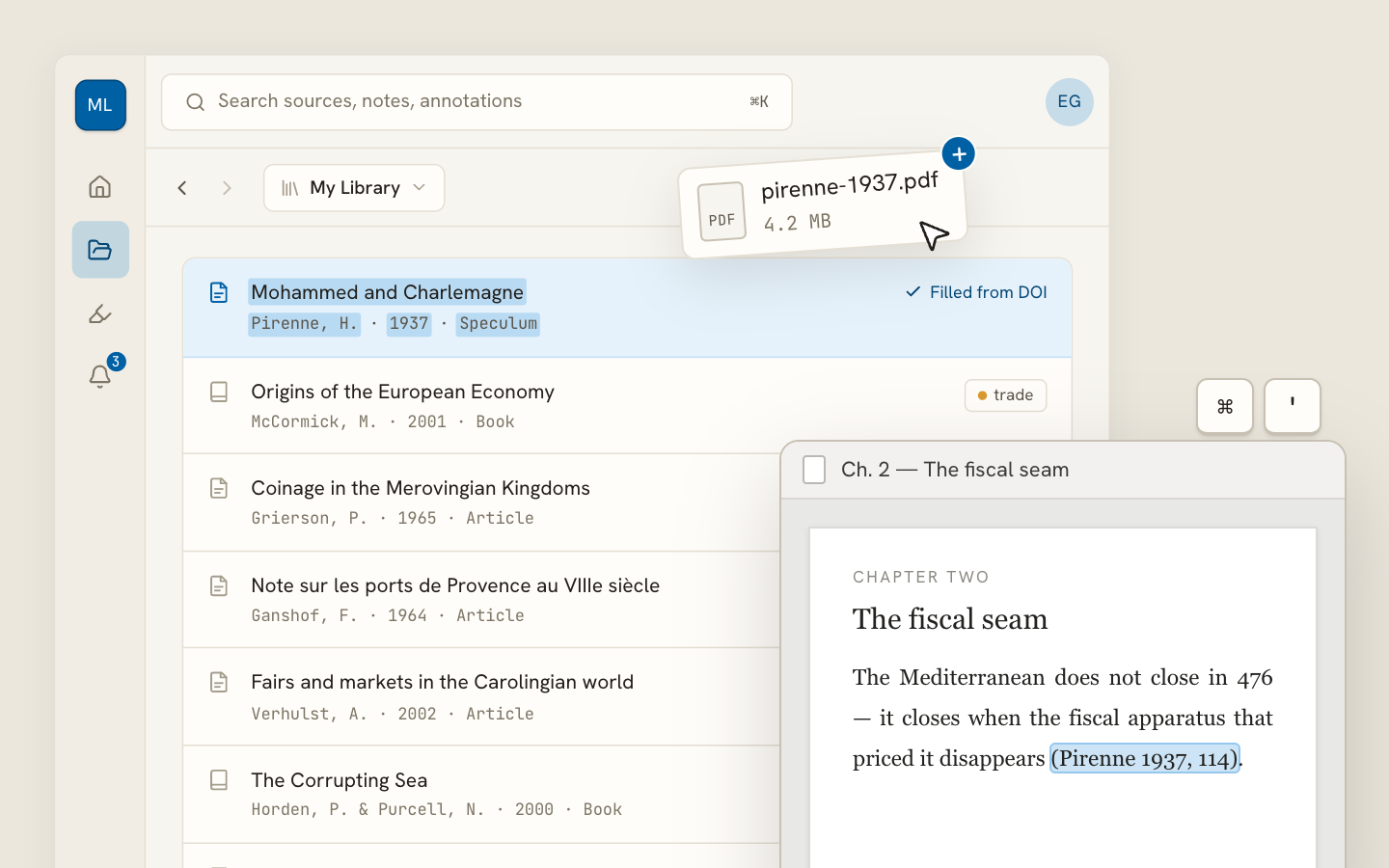
Archivero library view with a source list and an open PDF

Your weekly research workflow, in one email

One tested workflow, three links, no filler — every Tuesday.

Unsubscribe in one click. We never share your address.

Guides/Citations/Harvard Referencing Style

How to Reference a Video in Harvard Style

Harvard referencing formats for YouTube videos, films, TED Talks, TV programmes, and other audiovisual sources.

6 min readHarvard

Key Takeaways

  • Video references follow the general pattern: Creator (Year) Title [Format]. Available at: URL (Accessed: Date).
  • For YouTube videos, the author is usually the channel name that uploaded the video:
    • TED (2019) The danger of a single story [Video]. Available at: URL (Accessed: Date).
  • For films, the director is typically the author:
    • Nolan, C. (dir.) (2010) Inception [Film]. Warner Bros. Pictures.
  • To cite a specific moment, use a timestamp in your in-text citation:
    • (TED, 2019, 4:32)
  • TED Talks can be referenced from the TED website or from YouTube — match the author to where you watched it.
  • TV programmes list the episode title in single quotation marks and the series name in italics.
  • Streaming content (Netflix, iPlayer) follows the film or TV format with the platform as the distributor.
  • Always include [Video], [Film], or [TV programme] in square brackets to indicate the format.

On this page

1 of 22
Key TakeawaysYouTube VideoWhen the Individual and Channel Are the SameFilm / MovieFilm Accessed via StreamingFilm With Multiple DirectorsTED TalkFrom the TED WebsiteFrom YouTube (TED Channel)TV Programme / EpisodeSingle EpisodeEpisode With a Named Writer or DirectorEpisode Accessed via StreamingStreaming Content (Netflix, iPlayer, etc.)Podcast EpisodePodcast With Multiple HostsDocumentaryStandalone DocumentaryDocumentary Series EpisodeCiting a Specific TimestampSummary: Video Reference Formats at a GlanceWhat's Next?
All Harvard guides →

Video sources in Harvard referencing follow the same author-date logic as any other source — but the "author" might be a YouTube channel, a director, a speaker, or a production company. The reference list entry identifies the creator, the year, the title (in italics), the format, and where it can be accessed. You cite a specific moment by including a timestamp instead of a page number.

YouTube Video

YouTube is the most commonly referenced video source in academic work. The author is the channel name — not the individual who appears on screen (unless they are the same).

Reference list:

Kurzgesagt – In a Nutshell (2022) The egg — a short story [Video]. Available at: https://www.youtube.com/watch?v=h6fcK_fRYaI (Accessed: 18 January 2025).

In-text citations:

Parenthetical:(Kurzgesagt – In a Nutshell, 2022)

Narrative:Kurzgesagt – In a Nutshell (2022) illustrates the concept through animation…

If the channel name is long, you can introduce an abbreviation on first mention:

First citation:(Kurzgesagt – In a Nutshell [Kurzgesagt], 2022)

Subsequent citations:(Kurzgesagt, 2022)

When the Individual and Channel Are the Same

If a named person uploads under their own name, use their name in standard surname-first format:

Müller, H. (2023) Understanding neuroplasticity [Video]. Available at: https://www.youtube.com/watch?v=example123 (Accessed: 5 March 2025).

(Müller, 2023)

Film / Movie

For films, the director is the standard author. Include the production company as the publisher.

Reference list:

Nolan, C. (dir.) (2010) Inception [Film]. Warner Bros. Pictures.

In-text citations:

Parenthetical:(Nolan, 2010)

Narrative:Nolan (2010) uses layered dream sequences to explore…

Film Accessed via Streaming

If you watched the film on a streaming platform rather than in a cinema or on physical media, add the platform:

Gerwig, G. (dir.) (2019) Little women [Film]. Sony Pictures. Available at: https://www.netflix.com (Accessed: 12 February 2025).

Film With Multiple Directors

Wachowski, L. and Wachowski, L. (dirs.) (1999) The Matrix [Film]. Warner Bros. Pictures.

Use the standard multiple authors rules for two or more directors.

TED Talk

TED Talks are a hybrid — they can be referenced from the TED website or from YouTube. Match the reference to where you actually watched it.

From the TED Website

When the speaker is named on the TED website, use the speaker as the author:

Adichie, C.N. (2009) The danger of a single story [Video]. TED Conferences. Available at: https://www.ted.com/talks/chimamanda_ngozi_adichie_the_danger_of_a_single_story (Accessed: 28 March 2025).

In-text citations:

(Adichie, 2009)

Adichie (2009) argues that single narratives reduce complex cultures to stereotypes…

From YouTube (TED Channel)

If you watched the TED Talk on YouTube, the author is the TED channel:

TED (2009) The danger of a single story | Chimamanda Ngozi Adichie [Video]. Available at: https://www.youtube.com/watch?v=D9Ihs241zeg (Accessed: 28 March 2025).

(TED, 2009)

Use whichever version matches the URL you're citing. Don't mix — if your URL points to ted.com, use the TED website format.

TV Programme / Episode

For TV shows, the key elements are the episode title (in single quotation marks), the series name (in italics), and the broadcast or streaming details.

Single Episode

'Hush' (2019) Buffy the Vampire Slayer, series 4, episode 10. BBC Two, 14 November.

In-text:

('Hush', 2019)

Episode With a Named Writer or Director

If you need to credit an individual:

Whedon, J. (1999) 'Hush', Buffy the Vampire Slayer, series 4, episode 10. Directed by Joss Whedon. WB Television Network, 14 December.

(Whedon, 1999)

Episode Accessed via Streaming

'Nosedive' (2016) Black Mirror, series 3, episode 1. Directed by Joe Wright. Available at: https://www.netflix.com (Accessed: 3 April 2025).

('Nosedive', 2016)

Streaming Content (Netflix, iPlayer, etc.)

Content accessed on streaming platforms follows the same format as films or TV shows — just add the platform and access information:

Wilkinson, E. (dir.) (2023) The deepest breath [Documentary]. Netflix. Available at: https://www.netflix.com (Accessed: 20 May 2025).

(Wilkinson, 2023)

For a series rather than a single film:

'The queen's gambit' (2020) The Queen's Gambit, limited series, episode 1. Directed by Scott Frank. Netflix. Available at: https://www.netflix.com (Accessed: 10 June 2025).

Podcast Episode

Podcasts sit between audio and video — some are video podcasts, others are audio only. The format is the same either way:

Reference list:

Gladwell, M. (2021) 'The basement tapes', Revisionist History [Podcast]. 15 June. Available at: https://www.pushkin.fm/podcasts/revisionist-history/the-basement-tapes (Accessed: 22 January 2025).

In-text citations:

(Gladwell, 2021)

Gladwell (2021) examines the tension between talent and recognition…

Podcast With Multiple Hosts

Harris, S. and Huberman, A. (2023) 'The science of focus', Making Sense [Podcast]. 3 October. Available at: https://www.samharris.org/podcasts/making-sense-episodes/the-science-of-focus (Accessed: 14 February 2025).

(Harris and Huberman, 2023)

Documentary

Documentaries can be treated as films (if they are standalone features) or as TV episodes (if they are part of a series).

Standalone Documentary

Attenborough, D. (presenter) (2020) A life on our planet [Documentary]. Silverback Films. Available at: https://www.netflix.com (Accessed: 10 January 2025).

(Attenborough, 2020)

Documentary Series Episode

'Our planet' (2019) Our Planet, series 1, episode 1. Narrated by David Attenborough. Netflix. Available at: https://www.netflix.com (Accessed: 15 March 2025).

('Our planet', 2019)

Citing a Specific Timestamp

When you refer to a specific moment in a video, use a timestamp instead of a page number:

Parenthetical:(Adichie, 2009, 7:15)

Narrative:At 7:15, Adichie (2009) explains that…

Use the format mm:ss for videos under an hour and hh:mm:ss for longer content:

(Attenborough, 2020, 1:23:45)

Timestamps help your reader (or marker) find the exact moment you're referencing — include them whenever you discuss a specific claim, scene, or statement.

Summary: Video Reference Formats at a Glance

Source TypeReference List Format
YouTube videoChannel Name (Year) Title [Video]. Available at: URL (Accessed: Date).
FilmDirector (dir.) (Year) Title [Film]. Studio.
Film (streaming)Director (dir.) (Year) Title [Film]. Studio. Available at: URL (Accessed: Date).
TED Talk (ted.com)Speaker (Year) Title [Video]. TED Conferences. Available at: URL (Accessed: Date).
TED Talk (YouTube)TED (Year) Title [Video]. Available at: URL (Accessed: Date).
TV episode'Episode Title' (Year) Series Name, series X, episode Y. Broadcaster, Day Month.
PodcastHost (Year) 'Episode title', Podcast Name [Podcast]. Day Month. Available at: URL (Accessed: Date).
DocumentaryDirector/Presenter (Year) Title [Documentary]. Studio. Available at: URL (Accessed: Date).

What's Next?

Now that you know how to reference video sources, explore these related guides:

  • How to Reference Social Media in Harvard Style — formats for tweets, Instagram posts, TikTok videos, and more
  • How to Reference a Website in Harvard Style — rules for web pages, blogs, and online articles
  • Harvard Reference List — the complete guide to formatting your reference list
All Harvard guides →
← PreviousHarvard vs. APA — What's the Difference?Next →How to Reference Social Media in Harvard Style

More on Harvard referencing

The dominant system in British, Australian and international universities. In-text citations, reference lists and the local conventions that vary by department.

View all 26 guides →
12 sections·8 min readHarvardHow to Reference Social Media in Harvard Style9 sections·7 min readHarvardHarvard Tables and Figures8 sections·6 min readHarvardHow to Cite a Secondary Source in Harvard10 sections·6 min readHarvardHow to Cite a Source With No Date in Harvard

Your sources, PDFs and citations in one library

  • Import a Zotero, Mendeley or EndNote library — or a folder of PDFs
  • Highlight and annotate without leaving the source
  • Cite in any CSL style as you write, with one shared library for your lab
Request early accessSee the product →
Archivero library view with a source list and an open PDF

Your weekly research workflow, in one email

One tested workflow, three links, no filler — every Tuesday.

Unsubscribe in one click. We never share your address.