Archivero is in early access — your sources, PDFs and citations in one library.Request early access →
Archivero/guides/
APAMLAHarvardThesis writing
Subscribe
Archivero/guides/Request early access →

Guides

APA styleMLA styleHarvard referencingThesis writing

Compare

APA 6th vs 7thMLA 8th vs 9thHarvard vs APAThesis vs dissertation

Product

FeaturesEarly access

Resources

DocsCheat sheetsNewsletter

Company

ContactStatus ↗
© 2025–2026 Ernesto F. GonzálezGuidesDocsContactPrivacyTerms
Guides/Citations/Harvard Referencing Style

How to Reference a Conference Paper in Harvard Style

Harvard referencing formats for conference presentations, posters, symposium contributions, and published proceedings.

6 min readHarvard

Key Takeaways

  • A conference paper published in proceedings is referenced like a book chapter — with the paper title in single quotation marks and the proceedings title in italics:
    • Torres, M. (2024) 'Paper title', in Editor (ed.) Proceedings title. Place: Publisher, pp. X–Y.
  • A conference paper presented but not published is referenced as a presentation with the conference name and date:
    • Torres, M. (2024) 'Paper title', Conference Name. Location, Day–Day Month.
  • Poster presentations include [Poster presentation] in square brackets.
  • Include page numbers for published proceedings. Omit them for unpublished presentations.
  • If the paper is available online, add Available at: with the URL and an access date.
  • Keynote addresses are identified with [Keynote address] in square brackets.
  • Symposium contributions name the symposium within the larger conference.
  • Always check whether the paper was published — proceedings published by major academic publishers (Springer, IEEE, ACM) are usually treated as book chapters.

On this page

1 of 17
Key TakeawaysConference Paper Published in ProceedingsKey ElementsProceedings With a DOIProceedings Available Online Without a DOIConference Paper Presented but UnpublishedKey ElementsUnpublished Paper Available OnlinePoster PresentationKeynote AddressKeynote Available as a Video RecordingSymposium ContributionKey ElementsConference Paper Available OnlineSummary: Conference Paper Reference Formats at a GlanceCommon Mistakes With Conference Paper CitationsWhat's Next?
All Harvard guides →

Conference papers in Harvard referencing fall into two categories: papers published in proceedings (which are treated like book chapters) and papers presented but not published (which are treated like unpublished or grey literature). The key distinction is whether the paper appears in a formally published collection — if it does, you reference the proceedings volume; if it doesn't, you reference the presentation itself with the conference name, location, and date.

Conference Paper Published in Proceedings

When a conference paper is published in a proceedings volume — typically by an academic publisher — it is referenced like a chapter in an edited book. The paper title goes in single quotation marks, and the proceedings title is italicised.

Reference list:

Torres, M. (2024) 'Sustainable urban design and public health outcomes', in Okafor, D. and Chen, L. (eds.) Proceedings of the 12th International Conference on Urban Planning. London: Routledge, pp. 145–162.

In-text citations:

Parenthetical:(Torres, 2024)

Narrative:Torres (2024) found that access to green space within 500 metres of residential areas was associated with…

Key Elements

ElementWhat to Include
AuthorPaper author's surname and initials
YearYear of publication (or year of the conference if published the same year)
Paper titleIn single quotation marks, sentence case
"in"Lowercase, introduces the proceedings
Editor(s)Initials and surname, followed by (ed.) or (eds.)
Proceedings titleIn italics
Place of publicationCity
PublisherPublishing house
Page rangepp. X–Y

Proceedings With a DOI

If the proceedings volume or individual paper has a DOI, include it at the end:

Patel, N. (2023) 'Machine learning approaches to flood prediction', in Williams, K. (ed.) Proceedings of the IEEE Conference on Environmental Modelling. New York: IEEE, pp. 78–91. doi:10.1109/icem.2023.0078.

Proceedings Available Online Without a DOI

Rahman, S. (2024) 'Community-based mental health interventions in rural India', in Fernandez, R. (ed.) Proceedings of the Global Health Conference 2024. Available at: https://www.globalhealthconf.org/proceedings/2024 (Accessed: 18 February 2025), pp. 34–49.

Conference Paper Presented but Unpublished

If the paper was presented at a conference but not published in proceedings, reference it as a presentation:

Reference list:

Kim, J. (2024) 'Student perceptions of AI-assisted feedback in higher education', British Educational Research Association Annual Conference. Manchester, 10–12 September.

In-text citations:

Parenthetical:(Kim, 2024)

Narrative:Kim (2024) reported that 72% of surveyed students preferred human feedback over AI-generated comments…

Key Elements

ElementWhat to Include
AuthorPresenter's surname and initials
YearYear the paper was presented
Paper titleIn single quotation marks
Conference nameFull conference name (not abbreviated)
LocationCity
DateDay–Day Month (the conference dates)

Unpublished Paper Available Online

If slides or a preprint of the paper are available online, add the URL:

Kim, J. (2024) 'Student perceptions of AI-assisted feedback in higher education', British Educational Research Association Annual Conference. Manchester, 10–12 September. Available at: https://www.bera.ac.uk/conference2024/kim-slides (Accessed: 20 October 2025).

Poster Presentation

Poster presentations are referenced like unpublished conference papers, with [Poster presentation] added as a format identifier:

Reference list:

Williams, K. and Harrison, T. (2024) 'The effect of sleep quality on academic performance in first-year undergraduates' [Poster presentation], Annual Conference of the British Psychological Society. Nottingham, 15–17 May.

In-text citations:

Parenthetical:(Williams and Harrison, 2024)

Narrative:Williams and Harrison (2024) presented data showing a statistically significant correlation between…

Keynote Address

Keynote addresses are referenced with [Keynote address] in square brackets:

Reference list:

Fernandez, R. (2024) 'The future of interdisciplinary research in a post-pandemic world' [Keynote address], Royal Society Research Conference. London, 22 March.

In-text citations:

Parenthetical:(Fernandez, 2024)

Narrative:In her keynote, Fernandez (2024) called for a fundamental rethinking of how research councils fund…

Keynote Available as a Video Recording

If the keynote was recorded and is publicly available, add the URL:

Fernandez, R. (2024) 'The future of interdisciplinary research in a post-pandemic world' [Keynote address], Royal Society Research Conference. London, 22 March. Available at: https://www.royalsociety.org/conference2024/keynote (Accessed: 10 April 2025).

Symposium Contribution

A symposium is a themed session within a larger conference. Reference the individual contribution and name the symposium:

Reference list:

Okafor, D. (2024) 'Cultural competence in clinical psychology training', in S. Ahmed (Chair), Diversity and inclusion in mental health education [Symposium], British Psychological Society Annual Conference. Nottingham, 15–17 May.

In-text:

(Okafor, 2024)

Key Elements

ElementWhat to Include
AuthorContributor's surname and initials
Paper titleIn single quotation marks
ChairSymposium chair's initials and surname, with (Chair)
Symposium titleIn italics, preceded by "in"
[Symposium]Format identifier
Conference nameFull conference name
Location and dateCity, Day–Day Month

Conference Paper Available Online

If a conference paper — whether published or unpublished — is available online, always add the URL and access date:

Torres, M. (2024) 'Sustainable urban design and public health outcomes', 12th International Conference on Urban Planning. London, 3–5 June. Available at: https://www.urbanplanningconf.org/papers/torres-2024 (Accessed: 22 July 2025).

For papers with DOIs, prefer the DOI over a URL — DOIs are permanent and won't break:

doi:10.1109/icem.2023.0078

Summary: Conference Paper Reference Formats at a Glance

Source TypeReference List Format
Published in proceedingsAuthor (Year) 'Paper title', in Editor (ed.) Proceedings title. Place: Publisher, pp. X–Y.
Published with DOIAuthor (Year) 'Paper title', in Editor (ed.) Proceedings title. Place: Publisher, pp. X–Y. doi:xxxxx.
Presented (unpublished)Author (Year) 'Paper title', Conference Name. Location, Day–Day Month.
PosterAuthor (Year) 'Title' [Poster presentation], Conference Name. Location, Day–Day Month.
KeynoteAuthor (Year) 'Title' [Keynote address], Conference Name. Location, Day Month.
SymposiumAuthor (Year) 'Title', in Chair (Chair), Symposium Title [Symposium], Conference Name. Location, Day–Day Month.

Common Mistakes With Conference Paper Citations

MistakeWhy It's WrongCorrect Approach
Treating an unpublished presentation like a book chapterWhy It's WrongUnpublished papers don't have a proceedings volume, publisher, or page rangeCorrect ApproachUse the presentation format (conference name, location, dates)
Omitting the conference nameWhy It's WrongThe reader needs to know where the paper was presentedCorrect ApproachAlways include the full conference name
Using the conference abbreviation without the full nameWhy It's WrongAbbreviations like "BPS" or "IEEE ICEM" may be ambiguousCorrect ApproachWrite the full name; add the abbreviation in brackets if useful
Missing page numbers for published proceedingsWhy It's WrongPublished proceedings have page ranges, just like book chaptersCorrect ApproachInclude pp. X–Y for published papers
Confusing the conference year with the publication yearWhy It's WrongProceedings are sometimes published the year after the conferenceCorrect ApproachUse the publication year for published proceedings

What's Next?

Now that you know how to reference conference papers, explore these related guides:

  • How to Reference a Lecture in Harvard Style — formats for lecture slides, lecture notes, and guest lectures
  • How to Reference a Dissertation or Thesis in Harvard Style — formats for published and unpublished theses
  • Harvard Reference List — the complete guide to formatting your reference list
All Harvard guides →
← PreviousHow to Reference a Government Report in Harvard StyleNext →How to Reference a Dissertation or Thesis in Harvard Style

More on Harvard referencing

The dominant system in British, Australian and international universities. In-text citations, reference lists and the local conventions that vary by department.

View all 26 guides →
9 sections·6 min readHarvardHow to Reference a Dissertation or Thesis in Harvard Style10 sections·6 min readHarvardHow to Reference a Newspaper Article in Harvard Style10 sections·7 min readHarvardHow to Reference Legal Sources in Harvard Style9 sections·5 min readHarvardHarvard Format Paper

Your sources, PDFs and citations in one library

  • Import a Zotero, Mendeley or EndNote library — or a folder of PDFs
  • Highlight and annotate without leaving the source
  • Cite in any CSL style as you write, with one shared library for your lab
Request early accessSee the product →
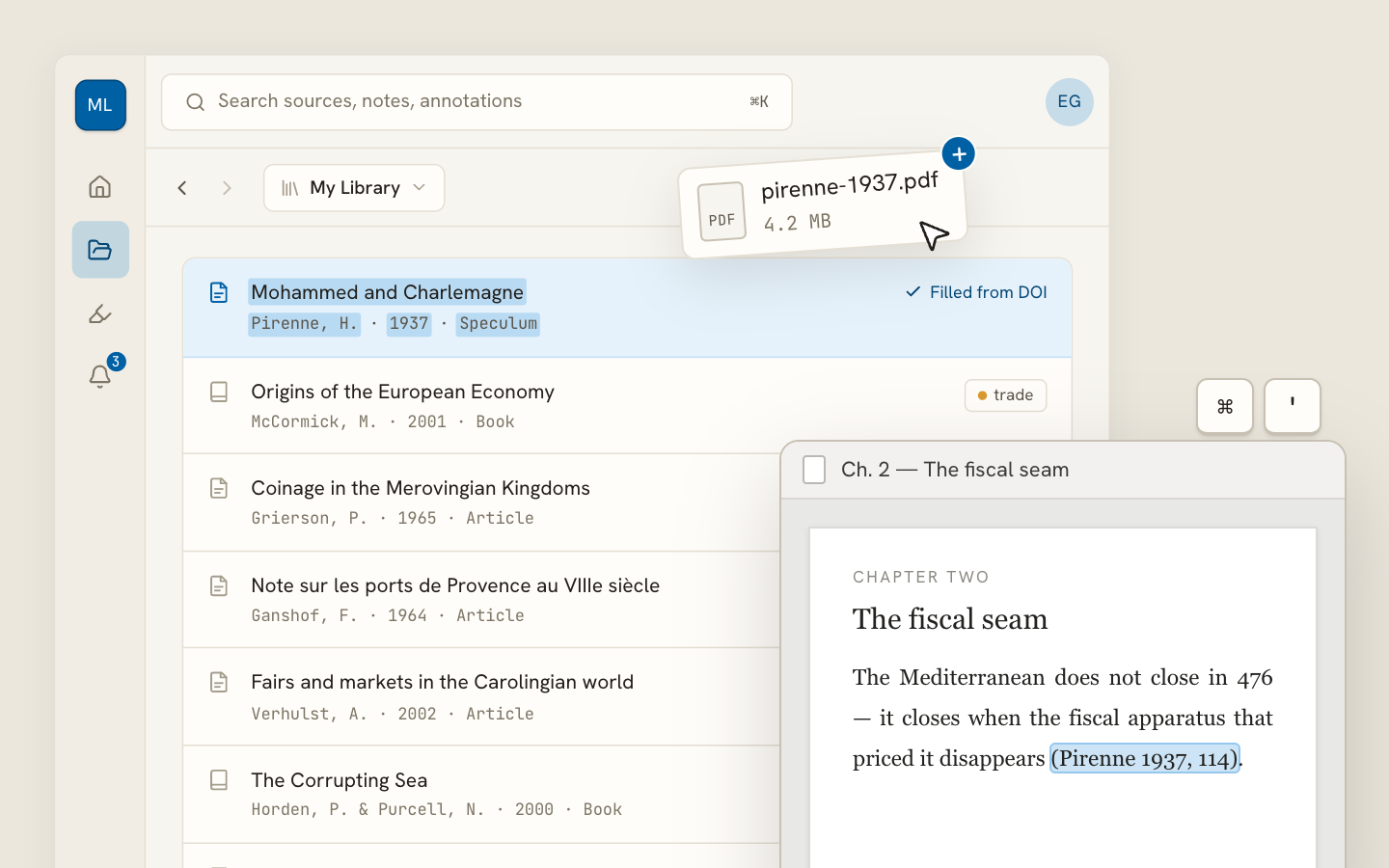
Archivero library view with a source list and an open PDF

Your weekly research workflow, in one email

One tested workflow, three links, no filler — every Tuesday.

Unsubscribe in one click. We never share your address.

Guides/Citations/Harvard Referencing Style

How to Reference a Conference Paper in Harvard Style

Harvard referencing formats for conference presentations, posters, symposium contributions, and published proceedings.

6 min readHarvard

Key Takeaways

  • A conference paper published in proceedings is referenced like a book chapter — with the paper title in single quotation marks and the proceedings title in italics:
    • Torres, M. (2024) 'Paper title', in Editor (ed.) Proceedings title. Place: Publisher, pp. X–Y.
  • A conference paper presented but not published is referenced as a presentation with the conference name and date:
    • Torres, M. (2024) 'Paper title', Conference Name. Location, Day–Day Month.
  • Poster presentations include [Poster presentation] in square brackets.
  • Include page numbers for published proceedings. Omit them for unpublished presentations.
  • If the paper is available online, add Available at: with the URL and an access date.
  • Keynote addresses are identified with [Keynote address] in square brackets.
  • Symposium contributions name the symposium within the larger conference.
  • Always check whether the paper was published — proceedings published by major academic publishers (Springer, IEEE, ACM) are usually treated as book chapters.

On this page

1 of 17
Key TakeawaysConference Paper Published in ProceedingsKey ElementsProceedings With a DOIProceedings Available Online Without a DOIConference Paper Presented but UnpublishedKey ElementsUnpublished Paper Available OnlinePoster PresentationKeynote AddressKeynote Available as a Video RecordingSymposium ContributionKey ElementsConference Paper Available OnlineSummary: Conference Paper Reference Formats at a GlanceCommon Mistakes With Conference Paper CitationsWhat's Next?
All Harvard guides →

Conference papers in Harvard referencing fall into two categories: papers published in proceedings (which are treated like book chapters) and papers presented but not published (which are treated like unpublished or grey literature). The key distinction is whether the paper appears in a formally published collection — if it does, you reference the proceedings volume; if it doesn't, you reference the presentation itself with the conference name, location, and date.

Conference Paper Published in Proceedings

When a conference paper is published in a proceedings volume — typically by an academic publisher — it is referenced like a chapter in an edited book. The paper title goes in single quotation marks, and the proceedings title is italicised.

Reference list:

Torres, M. (2024) 'Sustainable urban design and public health outcomes', in Okafor, D. and Chen, L. (eds.) Proceedings of the 12th International Conference on Urban Planning. London: Routledge, pp. 145–162.

In-text citations:

Parenthetical:(Torres, 2024)

Narrative:Torres (2024) found that access to green space within 500 metres of residential areas was associated with…

Key Elements

ElementWhat to Include
AuthorPaper author's surname and initials
YearYear of publication (or year of the conference if published the same year)
Paper titleIn single quotation marks, sentence case
"in"Lowercase, introduces the proceedings
Editor(s)Initials and surname, followed by (ed.) or (eds.)
Proceedings titleIn italics
Place of publicationCity
PublisherPublishing house
Page rangepp. X–Y

Proceedings With a DOI

If the proceedings volume or individual paper has a DOI, include it at the end:

Patel, N. (2023) 'Machine learning approaches to flood prediction', in Williams, K. (ed.) Proceedings of the IEEE Conference on Environmental Modelling. New York: IEEE, pp. 78–91. doi:10.1109/icem.2023.0078.

Proceedings Available Online Without a DOI

Rahman, S. (2024) 'Community-based mental health interventions in rural India', in Fernandez, R. (ed.) Proceedings of the Global Health Conference 2024. Available at: https://www.globalhealthconf.org/proceedings/2024 (Accessed: 18 February 2025), pp. 34–49.

Conference Paper Presented but Unpublished

If the paper was presented at a conference but not published in proceedings, reference it as a presentation:

Reference list:

Kim, J. (2024) 'Student perceptions of AI-assisted feedback in higher education', British Educational Research Association Annual Conference. Manchester, 10–12 September.

In-text citations:

Parenthetical:(Kim, 2024)

Narrative:Kim (2024) reported that 72% of surveyed students preferred human feedback over AI-generated comments…

Key Elements

ElementWhat to Include
AuthorPresenter's surname and initials
YearYear the paper was presented
Paper titleIn single quotation marks
Conference nameFull conference name (not abbreviated)
LocationCity
DateDay–Day Month (the conference dates)

Unpublished Paper Available Online

If slides or a preprint of the paper are available online, add the URL:

Kim, J. (2024) 'Student perceptions of AI-assisted feedback in higher education', British Educational Research Association Annual Conference. Manchester, 10–12 September. Available at: https://www.bera.ac.uk/conference2024/kim-slides (Accessed: 20 October 2025).

Poster Presentation

Poster presentations are referenced like unpublished conference papers, with [Poster presentation] added as a format identifier:

Reference list:

Williams, K. and Harrison, T. (2024) 'The effect of sleep quality on academic performance in first-year undergraduates' [Poster presentation], Annual Conference of the British Psychological Society. Nottingham, 15–17 May.

In-text citations:

Parenthetical:(Williams and Harrison, 2024)

Narrative:Williams and Harrison (2024) presented data showing a statistically significant correlation between…

Keynote Address

Keynote addresses are referenced with [Keynote address] in square brackets:

Reference list:

Fernandez, R. (2024) 'The future of interdisciplinary research in a post-pandemic world' [Keynote address], Royal Society Research Conference. London, 22 March.

In-text citations:

Parenthetical:(Fernandez, 2024)

Narrative:In her keynote, Fernandez (2024) called for a fundamental rethinking of how research councils fund…

Keynote Available as a Video Recording

If the keynote was recorded and is publicly available, add the URL:

Fernandez, R. (2024) 'The future of interdisciplinary research in a post-pandemic world' [Keynote address], Royal Society Research Conference. London, 22 March. Available at: https://www.royalsociety.org/conference2024/keynote (Accessed: 10 April 2025).

Symposium Contribution

A symposium is a themed session within a larger conference. Reference the individual contribution and name the symposium:

Reference list:

Okafor, D. (2024) 'Cultural competence in clinical psychology training', in S. Ahmed (Chair), Diversity and inclusion in mental health education [Symposium], British Psychological Society Annual Conference. Nottingham, 15–17 May.

In-text:

(Okafor, 2024)

Key Elements

ElementWhat to Include
AuthorContributor's surname and initials
Paper titleIn single quotation marks
ChairSymposium chair's initials and surname, with (Chair)
Symposium titleIn italics, preceded by "in"
[Symposium]Format identifier
Conference nameFull conference name
Location and dateCity, Day–Day Month

Conference Paper Available Online

If a conference paper — whether published or unpublished — is available online, always add the URL and access date:

Torres, M. (2024) 'Sustainable urban design and public health outcomes', 12th International Conference on Urban Planning. London, 3–5 June. Available at: https://www.urbanplanningconf.org/papers/torres-2024 (Accessed: 22 July 2025).

For papers with DOIs, prefer the DOI over a URL — DOIs are permanent and won't break:

doi:10.1109/icem.2023.0078

Summary: Conference Paper Reference Formats at a Glance

Source TypeReference List Format
Published in proceedingsAuthor (Year) 'Paper title', in Editor (ed.) Proceedings title. Place: Publisher, pp. X–Y.
Published with DOIAuthor (Year) 'Paper title', in Editor (ed.) Proceedings title. Place: Publisher, pp. X–Y. doi:xxxxx.
Presented (unpublished)Author (Year) 'Paper title', Conference Name. Location, Day–Day Month.
PosterAuthor (Year) 'Title' [Poster presentation], Conference Name. Location, Day–Day Month.
KeynoteAuthor (Year) 'Title' [Keynote address], Conference Name. Location, Day Month.
SymposiumAuthor (Year) 'Title', in Chair (Chair), Symposium Title [Symposium], Conference Name. Location, Day–Day Month.

Common Mistakes With Conference Paper Citations

MistakeWhy It's WrongCorrect Approach
Treating an unpublished presentation like a book chapterWhy It's WrongUnpublished papers don't have a proceedings volume, publisher, or page rangeCorrect ApproachUse the presentation format (conference name, location, dates)
Omitting the conference nameWhy It's WrongThe reader needs to know where the paper was presentedCorrect ApproachAlways include the full conference name
Using the conference abbreviation without the full nameWhy It's WrongAbbreviations like "BPS" or "IEEE ICEM" may be ambiguousCorrect ApproachWrite the full name; add the abbreviation in brackets if useful
Missing page numbers for published proceedingsWhy It's WrongPublished proceedings have page ranges, just like book chaptersCorrect ApproachInclude pp. X–Y for published papers
Confusing the conference year with the publication yearWhy It's WrongProceedings are sometimes published the year after the conferenceCorrect ApproachUse the publication year for published proceedings

What's Next?

Now that you know how to reference conference papers, explore these related guides:

  • How to Reference a Lecture in Harvard Style — formats for lecture slides, lecture notes, and guest lectures
  • How to Reference a Dissertation or Thesis in Harvard Style — formats for published and unpublished theses
  • Harvard Reference List — the complete guide to formatting your reference list
All Harvard guides →
← PreviousHow to Reference a Government Report in Harvard StyleNext →How to Reference a Dissertation or Thesis in Harvard Style

More on Harvard referencing

The dominant system in British, Australian and international universities. In-text citations, reference lists and the local conventions that vary by department.

View all 26 guides →
9 sections·6 min readHarvardHow to Reference a Dissertation or Thesis in Harvard Style10 sections·6 min readHarvardHow to Reference a Newspaper Article in Harvard Style10 sections·7 min readHarvardHow to Reference Legal Sources in Harvard Style9 sections·5 min readHarvardHarvard Format Paper

Your sources, PDFs and citations in one library

  • Import a Zotero, Mendeley or EndNote library — or a folder of PDFs
  • Highlight and annotate without leaving the source
  • Cite in any CSL style as you write, with one shared library for your lab
Request early accessSee the product →
Archivero library view with a source list and an open PDF

Your weekly research workflow, in one email

One tested workflow, three links, no filler — every Tuesday.

Unsubscribe in one click. We never share your address.