Archivero is in early access — your sources, PDFs and citations in one library.Request early access →
Archivero/guides/
APAMLAHarvardThesis writing
Subscribe
Archivero/guides/Request early access →

Guides

APA styleMLA styleHarvard referencingThesis writing

Compare

APA 6th vs 7thMLA 8th vs 9thHarvard vs APAThesis vs dissertation

Product

FeaturesEarly access

Resources

DocsCheat sheetsNewsletter

Company

ContactStatus ↗
© 2025–2026 Ernesto F. GonzálezGuidesDocsContactPrivacyTerms
Guides/Citations/Harvard Referencing Style

How to Reference Legal Sources in Harvard Style

Harvard referencing formats for legislation, case law, statutory instruments, and legal commentary — with notes on when to use OSCOLA instead.

7 min readHarvard

Key Takeaways

  • Check whether your department requires OSCOLA — most UK law schools do. Harvard is typically used for legal sources in non-law disciplines.
  • Acts of Parliament (statutes) are referenced by their official short title and year, without an author:
    • Equality Act 2010.
  • In-text, cite the short title and year directly — no parenthetical author-date format is needed:
    • The Equality Act 2010 establishes…
  • Statutory instruments include the SI number:
    • The Environmental Permitting (England and Wales) Regulations 2016, SI 2016/1154.
  • Case law in Harvard uses the case name in italics, the year, and the law report reference:
    • Donoghue v Stevenson [1932] AC 562.
  • For legal commentary (textbooks, journal articles about law), use the standard Harvard book or article format.
  • Include a URL and access date for legislation and cases accessed via online databases like legislation.gov.uk or BAILII.
  • EU and international legislation follow similar principles — use the official title and document number.

On this page

1 of 21
Key TakeawaysWhen Harvard Applies vs. When OSCOLA Is PreferredActs of Parliament / StatutesScottish Parliament ActsNorthern Ireland ActsUS Federal StatutesAustralian ActsStatutory Instruments and RegulationsCase LawUnderstanding the Citation ElementsNeutral Citations (Modern UK Cases)Bills and Hansard (Parliamentary Debates)BillsHansard (Parliamentary Debates)EU and International LegislationEU Regulations and DirectivesInternational TreatiesLegal Commentary and TextbooksSummary: Legal Source Reference Formats at a GlanceCommon Mistakes With Legal Source CitationsWhat's Next?
All Harvard guides →

Legal sources in Harvard referencing can be tricky because law has its own specialist citation system — OSCOLA (Oxford University Standard for the Citation of Legal Authorities) — which many UK law schools and journals require. If you're writing for a law module, check whether your department expects OSCOLA. If you're writing for a non-law subject and need to reference a piece of legislation, a court case, or a government legal document, Harvard format is usually fine. This guide covers the Harvard approach to common legal sources.

When Harvard Applies vs. When OSCOLA Is Preferred

The key question is: who is your audience?

ScenarioCitation System
Law module at a UK universityAlmost certainly OSCOLA
Law journal submission (UK)OSCOLA (check the journal's guide)
Non-law essay referencing a statute or caseHarvard
Interdisciplinary essay (e.g., politics, health policy, social work)Harvard
Australian or South African universityUsually Harvard (with local legal citation conventions)

If your institution requires OSCOLA, this guide is not the right resource — OSCOLA has its own rules for footnotes, case citations, and legislation. If you're using Harvard for a non-law essay that happens to reference legal material, read on.

Acts of Parliament / Statutes

UK Acts of Parliament are cited by their short title and the year of enactment. There is no "author" in the conventional sense — the title and year serve as the identifier.

Reference list:

Equality Act 2010 (c. 15). London: HMSO. Available at: https://www.legislation.gov.uk/ukpga/2010/15/contents (Accessed: 14 March 2025).

The "(c. 15)" is the chapter number — it identifies the Act's position in the session's legislation. Including it is good practice but not always required by Harvard guides.

In-text citations:

Legal sources often sit outside the normal author-date flow. You can integrate them naturally into your sentence:

The Equality Act 2010 protects individuals from discrimination based on nine protected characteristics.

Or, if a parenthetical style is needed:

Employers have a legal duty to make reasonable adjustments (Equality Act 2010).

Scottish Parliament Acts

Climate Change (Scotland) Act 2009 (asp 12). Edinburgh: Queen's Printer for Scotland. Available at: https://www.legislation.gov.uk/asp/2009/12/contents (Accessed: 10 January 2025).

Northern Ireland Acts

Mental Capacity Act (Northern Ireland) 2016 (c. 18). Belfast: HMSO. Available at: https://www.legislation.gov.uk/nia/2016/18/contents (Accessed: 22 February 2025).

US Federal Statutes

Americans with Disabilities Act of 1990, Pub. L. 101-336, 42 U.S.C. § 12101. Available at: https://www.ada.gov (Accessed: 5 March 2025).

Australian Acts

Fair Work Act 2009 (Cth). Available at: https://www.legislation.gov.au/Series/C2009A00028 (Accessed: 15 April 2025).

Statutory Instruments and Regulations

Statutory instruments (SIs) are secondary legislation made under powers delegated by an Act. Include the SI number:

Reference list:

The Environmental Permitting (England and Wales) Regulations 2016, SI 2016/1154. Available at: https://www.legislation.gov.uk/uksi/2016/1154/contents (Accessed: 20 January 2025).

In-text:

The Environmental Permitting Regulations 2016 require operators to obtain a permit before…

Or:

(Environmental Permitting (England and Wales) Regulations 2016)

Case Law

Citing case law in Harvard is a simplification of the full legal citation. Use the case name in italics, the year, and the law report reference:

Reference list:

Donoghue v Stevenson [1932] AC 562. Available at: https://www.bailii.org/uk/cases/UKHL/1932/100.html (Accessed: 14 March 2025).

In-text:

In Donoghue v Stevenson [1932], the House of Lords established the modern concept of negligence in tort law.

Understanding the Citation Elements

ElementMeaning
Donoghue v StevensonCase name (in italics) — claimant v. defendant
[1932]Year of the decision (square brackets when the year is part of the reference)
ACAbbreviation for the law report series (Appeal Cases)
562Page number where the case report begins

Neutral Citations (Modern UK Cases)

Recent UK cases have a neutral citation assigned by the court — this is preferred when available:

R v Smith [2023] UKSC 15. Available at: https://www.supremecourt.uk/cases/uksc-2023-0015.html (Accessed: 22 March 2025).

AbbreviationCourt
UKSCUK Supreme Court
EWCA Civ / EWCA CrimCourt of Appeal (Civil / Criminal)
EWHCHigh Court of England and Wales

Bills and Hansard (Parliamentary Debates)

Bills

Bills (proposed legislation not yet enacted) are referenced by their title and the parliamentary session:

Reference list:

Online Safety Bill 2021–22, HC Bill 4. Available at: https://bills.parliament.uk/bills/3137 (Accessed: 10 February 2025).

In-text:

The Online Safety Bill 2021–22 proposed new duties for social media platforms…

Hansard (Parliamentary Debates)

For guidance on referencing Hansard, see How to Reference a Government Report in Harvard Style, which covers parliamentary debate citations in detail.

EU and International Legislation

EU Regulations and Directives

EU legislation is referenced by its official title, document number, and the Official Journal reference:

Reference list:

Regulation (EU) 2016/679 of the European Parliament and of the Council of 27 April 2016 on the protection of natural persons with regard to the processing of personal data (General Data Protection Regulation). Official Journal of the European Union, L 119, pp. 1–88. Available at: https://eur-lex.europa.eu/eli/reg/2016/679/oj (Accessed: 14 March 2025).

In-text:

The General Data Protection Regulation (Regulation (EU) 2016/679) requires organisations to…

International Treaties

United Nations (1989) Convention on the Rights of the Child. Treaty Series, vol. 1577. Available at: https://www.ohchr.org/en/instruments-mechanisms/instruments/convention-rights-child (Accessed: 5 January 2025).

(United Nations, 1989)

Legal Commentary and Textbooks

Legal commentary — textbooks, journal articles, and encyclopaedias about law — follows the standard Harvard format for the type of source. The content is about law, but the source format is a regular book or article:

Book:

Elliott, C. and Quinn, F. (2022) English legal system. 23rd edn. Harlow: Pearson.

(Elliott and Quinn, 2022)

Journal article:

Williams, K. (2023) 'The evolution of duty of care since Donoghue v Stevenson', Modern Law Review, 86(4), pp. 789–812. doi:10.1111/1468-2230.12345.

(Williams, 2023)

These are referenced exactly as you would any other book or journal article — see How to Reference a Book in Harvard Style and How to Reference a Journal Article in Harvard Style.

Summary: Legal Source Reference Formats at a Glance

Source TypeReference List Format
Act of ParliamentShort Title Year (c. X). Place: Publisher. Available at: URL (Accessed: Date).
Statutory instrumentTitle Year, SI Year/Number. Available at: URL (Accessed: Date).
Case lawCase Name [Year] Report Abbreviation Page. Available at: URL (Accessed: Date).
BillTitle Session, HC/HL Bill Number. Available at: URL (Accessed: Date).
EU regulationRegulation (EU) Number. Official Journal, L Issue, pp. X–Y. Available at: URL (Accessed: Date).
TreatyOrganisation (Year) Title. Series details. Available at: URL (Accessed: Date).
Legal textbookStandard Harvard book format.

Common Mistakes With Legal Source Citations

MistakeWhy It's WrongCorrect Approach
Using OSCOLA formatting in a Harvard reference listWhy It's WrongOSCOLA uses footnotes and a different citation structureCorrect ApproachUse Harvard author-date format (unless your department requires OSCOLA)
Putting the case name in quotation marks instead of italicsWhy It's WrongCase names are italicised in Harvard (and in OSCOLA)Correct ApproachUse italics: Donoghue v Stevenson
Omitting the year of an ActWhy It's WrongThe year is part of the Act's official title and is essential for identificationCorrect ApproachAlways include the year: Equality Act 2010
Confusing an Act with a BillWhy It's WrongAn Act is enacted law; a Bill is proposed legislationCorrect ApproachCheck Parliament's website to confirm the status
Omitting the access date for online legal sourcesWhy It's WrongLegislation databases update frequentlyCorrect ApproachAlways include (Accessed: Day Month Year)
Using informal abbreviationsWhy It's Wrong"GDPR" is fine in the text but the reference list needs the full official titleCorrect ApproachUse the full title in the reference list; abbreviate in text after first use

What's Next?

Now that you know how to reference legal sources, explore these related guides:

  • How to Reference a Government Report in Harvard Style — government publications, Hansard, and white papers
  • How to Cite a Source With No Author in Harvard — handling sources with no identifiable author
  • Harvard Reference List — the complete guide to formatting your reference list
All Harvard guides →
← PreviousHow to Reference a Newspaper Article in Harvard Style

More on Harvard referencing

The dominant system in British, Australian and international universities. In-text citations, reference lists and the local conventions that vary by department.

View all 26 guides →
9 sections·5 min readHarvardHarvard Format Paper17 sections·6 min readHarvardHarvard In-Text Citations9 sections·6 min readHarvardHarvard Reference List13 sections·6 min readHarvardHow to Reference a Website in Harvard Style

Your sources, PDFs and citations in one library

  • Import a Zotero, Mendeley or EndNote library — or a folder of PDFs
  • Highlight and annotate without leaving the source
  • Cite in any CSL style as you write, with one shared library for your lab
Request early accessSee the product →
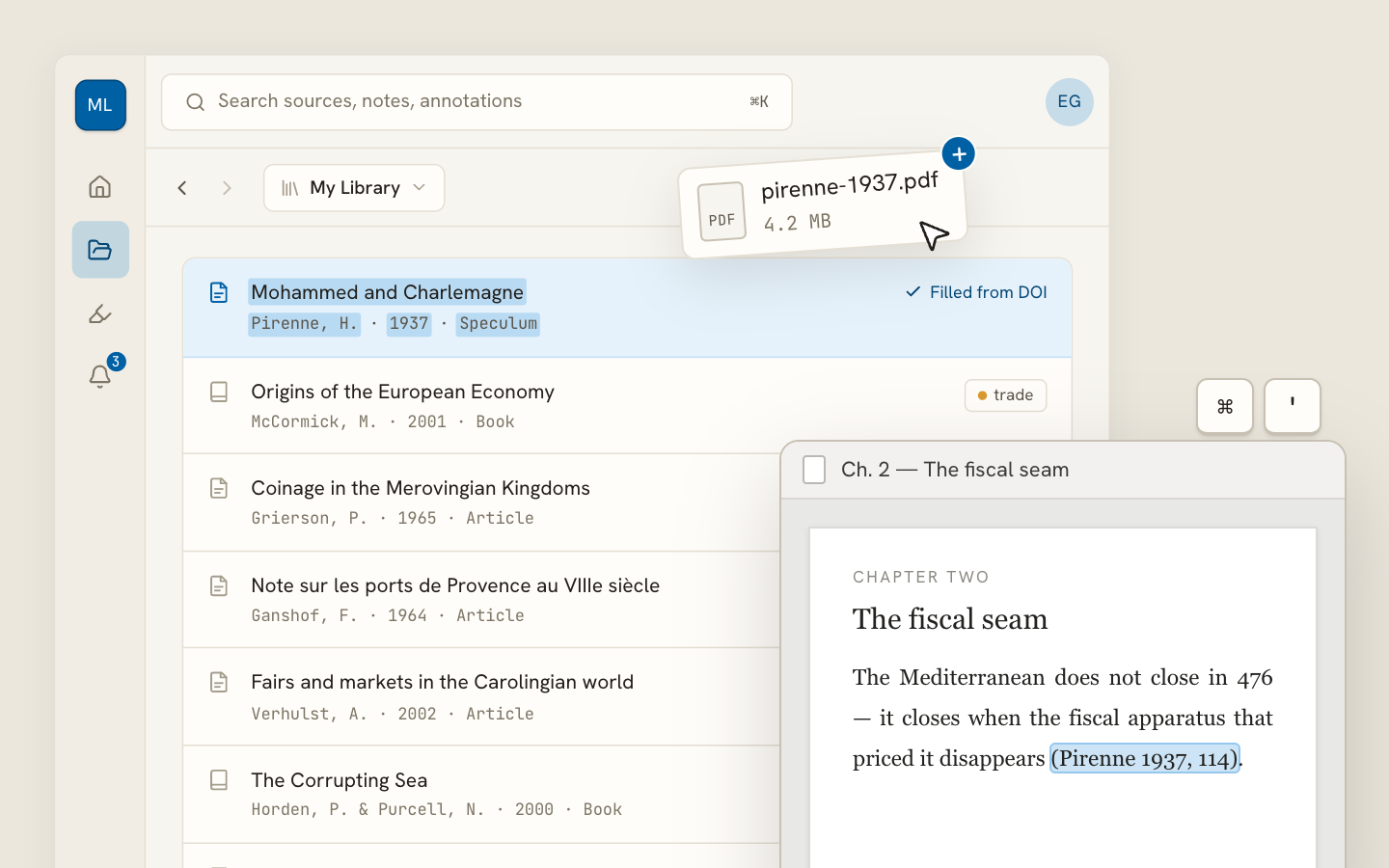
Archivero library view with a source list and an open PDF

Your weekly research workflow, in one email

One tested workflow, three links, no filler — every Tuesday.

Unsubscribe in one click. We never share your address.

Guides/Citations/Harvard Referencing Style

How to Reference Legal Sources in Harvard Style

Harvard referencing formats for legislation, case law, statutory instruments, and legal commentary — with notes on when to use OSCOLA instead.

7 min readHarvard

Key Takeaways

  • Check whether your department requires OSCOLA — most UK law schools do. Harvard is typically used for legal sources in non-law disciplines.
  • Acts of Parliament (statutes) are referenced by their official short title and year, without an author:
    • Equality Act 2010.
  • In-text, cite the short title and year directly — no parenthetical author-date format is needed:
    • The Equality Act 2010 establishes…
  • Statutory instruments include the SI number:
    • The Environmental Permitting (England and Wales) Regulations 2016, SI 2016/1154.
  • Case law in Harvard uses the case name in italics, the year, and the law report reference:
    • Donoghue v Stevenson [1932] AC 562.
  • For legal commentary (textbooks, journal articles about law), use the standard Harvard book or article format.
  • Include a URL and access date for legislation and cases accessed via online databases like legislation.gov.uk or BAILII.
  • EU and international legislation follow similar principles — use the official title and document number.

On this page

1 of 21
Key TakeawaysWhen Harvard Applies vs. When OSCOLA Is PreferredActs of Parliament / StatutesScottish Parliament ActsNorthern Ireland ActsUS Federal StatutesAustralian ActsStatutory Instruments and RegulationsCase LawUnderstanding the Citation ElementsNeutral Citations (Modern UK Cases)Bills and Hansard (Parliamentary Debates)BillsHansard (Parliamentary Debates)EU and International LegislationEU Regulations and DirectivesInternational TreatiesLegal Commentary and TextbooksSummary: Legal Source Reference Formats at a GlanceCommon Mistakes With Legal Source CitationsWhat's Next?
All Harvard guides →

Legal sources in Harvard referencing can be tricky because law has its own specialist citation system — OSCOLA (Oxford University Standard for the Citation of Legal Authorities) — which many UK law schools and journals require. If you're writing for a law module, check whether your department expects OSCOLA. If you're writing for a non-law subject and need to reference a piece of legislation, a court case, or a government legal document, Harvard format is usually fine. This guide covers the Harvard approach to common legal sources.

When Harvard Applies vs. When OSCOLA Is Preferred

The key question is: who is your audience?

ScenarioCitation System
Law module at a UK universityAlmost certainly OSCOLA
Law journal submission (UK)OSCOLA (check the journal's guide)
Non-law essay referencing a statute or caseHarvard
Interdisciplinary essay (e.g., politics, health policy, social work)Harvard
Australian or South African universityUsually Harvard (with local legal citation conventions)

If your institution requires OSCOLA, this guide is not the right resource — OSCOLA has its own rules for footnotes, case citations, and legislation. If you're using Harvard for a non-law essay that happens to reference legal material, read on.

Acts of Parliament / Statutes

UK Acts of Parliament are cited by their short title and the year of enactment. There is no "author" in the conventional sense — the title and year serve as the identifier.

Reference list:

Equality Act 2010 (c. 15). London: HMSO. Available at: https://www.legislation.gov.uk/ukpga/2010/15/contents (Accessed: 14 March 2025).

The "(c. 15)" is the chapter number — it identifies the Act's position in the session's legislation. Including it is good practice but not always required by Harvard guides.

In-text citations:

Legal sources often sit outside the normal author-date flow. You can integrate them naturally into your sentence:

The Equality Act 2010 protects individuals from discrimination based on nine protected characteristics.

Or, if a parenthetical style is needed:

Employers have a legal duty to make reasonable adjustments (Equality Act 2010).

Scottish Parliament Acts

Climate Change (Scotland) Act 2009 (asp 12). Edinburgh: Queen's Printer for Scotland. Available at: https://www.legislation.gov.uk/asp/2009/12/contents (Accessed: 10 January 2025).

Northern Ireland Acts

Mental Capacity Act (Northern Ireland) 2016 (c. 18). Belfast: HMSO. Available at: https://www.legislation.gov.uk/nia/2016/18/contents (Accessed: 22 February 2025).

US Federal Statutes

Americans with Disabilities Act of 1990, Pub. L. 101-336, 42 U.S.C. § 12101. Available at: https://www.ada.gov (Accessed: 5 March 2025).

Australian Acts

Fair Work Act 2009 (Cth). Available at: https://www.legislation.gov.au/Series/C2009A00028 (Accessed: 15 April 2025).

Statutory Instruments and Regulations

Statutory instruments (SIs) are secondary legislation made under powers delegated by an Act. Include the SI number:

Reference list:

The Environmental Permitting (England and Wales) Regulations 2016, SI 2016/1154. Available at: https://www.legislation.gov.uk/uksi/2016/1154/contents (Accessed: 20 January 2025).

In-text:

The Environmental Permitting Regulations 2016 require operators to obtain a permit before…

Or:

(Environmental Permitting (England and Wales) Regulations 2016)

Case Law

Citing case law in Harvard is a simplification of the full legal citation. Use the case name in italics, the year, and the law report reference:

Reference list:

Donoghue v Stevenson [1932] AC 562. Available at: https://www.bailii.org/uk/cases/UKHL/1932/100.html (Accessed: 14 March 2025).

In-text:

In Donoghue v Stevenson [1932], the House of Lords established the modern concept of negligence in tort law.

Understanding the Citation Elements

ElementMeaning
Donoghue v StevensonCase name (in italics) — claimant v. defendant
[1932]Year of the decision (square brackets when the year is part of the reference)
ACAbbreviation for the law report series (Appeal Cases)
562Page number where the case report begins

Neutral Citations (Modern UK Cases)

Recent UK cases have a neutral citation assigned by the court — this is preferred when available:

R v Smith [2023] UKSC 15. Available at: https://www.supremecourt.uk/cases/uksc-2023-0015.html (Accessed: 22 March 2025).

AbbreviationCourt
UKSCUK Supreme Court
EWCA Civ / EWCA CrimCourt of Appeal (Civil / Criminal)
EWHCHigh Court of England and Wales

Bills and Hansard (Parliamentary Debates)

Bills

Bills (proposed legislation not yet enacted) are referenced by their title and the parliamentary session:

Reference list:

Online Safety Bill 2021–22, HC Bill 4. Available at: https://bills.parliament.uk/bills/3137 (Accessed: 10 February 2025).

In-text:

The Online Safety Bill 2021–22 proposed new duties for social media platforms…

Hansard (Parliamentary Debates)

For guidance on referencing Hansard, see How to Reference a Government Report in Harvard Style, which covers parliamentary debate citations in detail.

EU and International Legislation

EU Regulations and Directives

EU legislation is referenced by its official title, document number, and the Official Journal reference:

Reference list:

Regulation (EU) 2016/679 of the European Parliament and of the Council of 27 April 2016 on the protection of natural persons with regard to the processing of personal data (General Data Protection Regulation). Official Journal of the European Union, L 119, pp. 1–88. Available at: https://eur-lex.europa.eu/eli/reg/2016/679/oj (Accessed: 14 March 2025).

In-text:

The General Data Protection Regulation (Regulation (EU) 2016/679) requires organisations to…

International Treaties

United Nations (1989) Convention on the Rights of the Child. Treaty Series, vol. 1577. Available at: https://www.ohchr.org/en/instruments-mechanisms/instruments/convention-rights-child (Accessed: 5 January 2025).

(United Nations, 1989)

Legal Commentary and Textbooks

Legal commentary — textbooks, journal articles, and encyclopaedias about law — follows the standard Harvard format for the type of source. The content is about law, but the source format is a regular book or article:

Book:

Elliott, C. and Quinn, F. (2022) English legal system. 23rd edn. Harlow: Pearson.

(Elliott and Quinn, 2022)

Journal article:

Williams, K. (2023) 'The evolution of duty of care since Donoghue v Stevenson', Modern Law Review, 86(4), pp. 789–812. doi:10.1111/1468-2230.12345.

(Williams, 2023)

These are referenced exactly as you would any other book or journal article — see How to Reference a Book in Harvard Style and How to Reference a Journal Article in Harvard Style.

Summary: Legal Source Reference Formats at a Glance

Source TypeReference List Format
Act of ParliamentShort Title Year (c. X). Place: Publisher. Available at: URL (Accessed: Date).
Statutory instrumentTitle Year, SI Year/Number. Available at: URL (Accessed: Date).
Case lawCase Name [Year] Report Abbreviation Page. Available at: URL (Accessed: Date).
BillTitle Session, HC/HL Bill Number. Available at: URL (Accessed: Date).
EU regulationRegulation (EU) Number. Official Journal, L Issue, pp. X–Y. Available at: URL (Accessed: Date).
TreatyOrganisation (Year) Title. Series details. Available at: URL (Accessed: Date).
Legal textbookStandard Harvard book format.

Common Mistakes With Legal Source Citations

MistakeWhy It's WrongCorrect Approach
Using OSCOLA formatting in a Harvard reference listWhy It's WrongOSCOLA uses footnotes and a different citation structureCorrect ApproachUse Harvard author-date format (unless your department requires OSCOLA)
Putting the case name in quotation marks instead of italicsWhy It's WrongCase names are italicised in Harvard (and in OSCOLA)Correct ApproachUse italics: Donoghue v Stevenson
Omitting the year of an ActWhy It's WrongThe year is part of the Act's official title and is essential for identificationCorrect ApproachAlways include the year: Equality Act 2010
Confusing an Act with a BillWhy It's WrongAn Act is enacted law; a Bill is proposed legislationCorrect ApproachCheck Parliament's website to confirm the status
Omitting the access date for online legal sourcesWhy It's WrongLegislation databases update frequentlyCorrect ApproachAlways include (Accessed: Day Month Year)
Using informal abbreviationsWhy It's Wrong"GDPR" is fine in the text but the reference list needs the full official titleCorrect ApproachUse the full title in the reference list; abbreviate in text after first use

What's Next?

Now that you know how to reference legal sources, explore these related guides:

  • How to Reference a Government Report in Harvard Style — government publications, Hansard, and white papers
  • How to Cite a Source With No Author in Harvard — handling sources with no identifiable author
  • Harvard Reference List — the complete guide to formatting your reference list
All Harvard guides →
← PreviousHow to Reference a Newspaper Article in Harvard Style

More on Harvard referencing

The dominant system in British, Australian and international universities. In-text citations, reference lists and the local conventions that vary by department.

View all 26 guides →
9 sections·5 min readHarvardHarvard Format Paper17 sections·6 min readHarvardHarvard In-Text Citations9 sections·6 min readHarvardHarvard Reference List13 sections·6 min readHarvardHow to Reference a Website in Harvard Style

Your sources, PDFs and citations in one library

  • Import a Zotero, Mendeley or EndNote library — or a folder of PDFs
  • Highlight and annotate without leaving the source
  • Cite in any CSL style as you write, with one shared library for your lab
Request early accessSee the product →
Archivero library view with a source list and an open PDF

Your weekly research workflow, in one email

One tested workflow, three links, no filler — every Tuesday.

Unsubscribe in one click. We never share your address.