Archivero is in early access — your sources, PDFs and citations in one library.Request early access →
Archivero/guides/
APAMLAHarvardThesis writing
Subscribe
Archivero/guides/Request early access →

Guides

APA styleMLA styleHarvard referencingThesis writing

Compare

APA 6th vs 7thMLA 8th vs 9thHarvard vs APAThesis vs dissertation

Product

FeaturesEarly access

Resources

DocsCheat sheetsNewsletter

Company

ContactStatus ↗
© 2025–2026 Ernesto F. GonzálezGuidesDocsContactPrivacyTerms
Guides/Citations/Harvard Referencing Style

Harvard Format Paper

How to format an academic paper using Harvard referencing — margins, font, spacing, title page, and reference list layout.

5 min readHarvard

On this page

1 of 12
Page Layout BasicsTitle Page FormattingBody Text RulesParagraphsSpacingFontHeadings and SubheadingsPage NumberingReference List Placement and FormattingAppendicesA Note on Institutional VariationWhat's Next?
All Harvard guides →

Here's something that catches many students off guard: Harvard referencing doesn't come with a rigid paper format. Unlike APA — which specifies exact margins, font sizes, heading levels, and even how your title page should look — Harvard is primarily a citation system, not a complete formatting manual. The formatting of your paper is usually determined by your institution, your department, or your module handbook.

That said, there are widely accepted conventions that most Harvard-using universities follow. This guide covers those conventions so you have a solid starting point — but always check your institution's specific requirements, because they take priority over any general guide.

Page Layout Basics

Most Harvard-using institutions expect the following general layout:

ElementCommon Convention
Margins2.54 cm (1 inch) on all sides
Font12 pt Times New Roman, Arial, or Calibri
Line spacingDouble-spaced (or 1.5 spacing — check your guide)
Paragraph indentFirst line indented 1.27 cm (0.5 inches), OR block paragraphs with a blank line between them
AlignmentLeft-aligned (ragged right edge), not justified
Paper sizeA4 (210 × 297 mm) in the UK/AU; US Letter in North America

Important:These are defaults, not rules. Some universities require 1.5 spacing rather than double spacing. Some prefer justified alignment. Some specify Arial 11 pt. Your course handbook or departmental style guide is always the final word.

Title Page Formatting

Harvard doesn't prescribe a single title page format, but most institutions expect a title page that includes:

  1. Title of the assignment — centred, often in bold
  2. Your full name (or student number, depending on anonymity requirements)
  3. Module name and code
  4. Lecturer's name (sometimes optional)
  5. Date of submission
  6. Word count (if required)

A typical layout places the title in the upper third of the page with the remaining details below it, all centred:

The Impact of Remote Working on Employee Wellbeing

Jane Thompson

BSN3021: Organisational Behaviour

Dr. Michael Chen

15 March 2025

Word count: 2,450

Some universities do not require a separate title page at all — they ask you to put your name, module, and title at the top of the first page instead. Others use a standardised cover sheet that you download and attach. Check what your institution expects.

Body Text Rules

Paragraphs

Most Harvard guides expect one of two paragraph styles:

  • Indented paragraphs — First line indented by 1.27 cm (0.5 inches), no extra space between paragraphs. This is the more traditional academic style.
  • Block paragraphs — No first-line indent, but a blank line between each paragraph. This is common in reports and business-style assignments.

Pick one and be consistent. If your module handbook specifies a preference, follow it.

Spacing

Double spacing is the most common requirement because it gives markers room to annotate. However, some UK and Australian universities accept or prefer 1.5 line spacing for coursework. Never use single spacing unless explicitly told to.

Font

Stick to a readable, professional font. The safe choices are:

  • 12 pt Times New Roman
  • 12 pt Arial
  • 11 pt Calibri

Avoid decorative, condensed, or display fonts. Use the same font throughout the document — including the reference list.

Headings and Subheadings

Harvard referencing itself doesn't specify heading levels the way APA does. Instead, follow your department's conventions. A common approach in UK/AU academic writing:

LevelFormatExample
1FormatBold, title case, centred or left-alignedExampleLiterature Review
2FormatBold, sentence case, left-alignedExampleTheories of motivation
3FormatBold italic, sentence case, left-alignedExampleSelf-determination theory

The key rules:

  • Be consistent — if Level 1 headings are bold and centred, every Level 1 heading should be bold and centred
  • Don't use more heading levels than you need — most essays use two levels at most
  • Don't number headings unless your assignment brief asks you to (reports often require numbered headings; essays typically don't)

Page Numbering

Include page numbers on every page. The most common placement is:

  • Top-right corner (in the header), or
  • Bottom-centre (in the footer)

Start numbering from the first page of the body text. Whether the title page counts as page 1 depends on your institution — some count it, some don't. If in doubt, start page numbering from the first page after the title page.

Reference List Placement and Formatting

The reference list appears at the end of your paper, after the body text and before any appendices. Key formatting rules:

  1. Start on a new page — with "Reference List" or "References" as the heading (centred or left-aligned, depending on your institution's preference)
  2. Alphabetical order — entries are sorted by the first author's surname
  3. Hanging indent — the first line of each entry is flush left; subsequent lines are indented by 1.27 cm (0.5 inches)
  4. Same spacing as the body — double-spaced (or 1.5, matching the rest of your paper)
  5. No numbering or bullet points — entries are not numbered

For a complete guide to building your reference list, see Harvard Reference List.

Appendices

If your assignment includes supplementary material — raw data, interview transcripts, survey instruments, additional tables — place it in appendices after the reference list.

Label each appendix with a letter: Appendix A, Appendix B, Appendix C, and so on. If there's only one appendix, you can simply call it Appendix.

Refer to each appendix in the body of your text:

The full interview transcript is provided in Appendix B.

Each appendix starts on a new page with the label (e.g., "Appendix A") centred at the top, followed by a descriptive title:

Appendix A: Participant Survey Questions

A Note on Institutional Variation

We've said it before, but it bears repeating: Harvard is a convention, not a rulebook. The formatting requirements described on this page represent common practice, but your university's guide may differ on specific points — spacing, heading styles, title page layout, and whether to include a contents page.

Before you format your paper, check these sources in order:

  1. Your assignment brief — the specific instructions for this piece of work
  2. Your module handbook — often contains formatting requirements for all assignments in the module
  3. Your university's Harvard guide — usually available from the library website
  4. This guide — as a general reference when the above don't cover something

When in doubt, ask your lecturer or academic skills team. Nobody will mark you down for asking a formatting question — but they might mark you down for getting it wrong.

What's Next?

Now that you know how to format your paper, learn how to handle the two core components of Harvard referencing:

  • Harvard In-Text Citations — how to credit sources in the body of your text
  • Harvard Reference List — how to build the alphabetical list of sources at the end of your paper
All Harvard guides →
Next →Harvard In-Text Citations

More on Harvard referencing

The dominant system in British, Australian and international universities. In-text citations, reference lists and the local conventions that vary by department.

View all 26 guides →
17 sections·6 min readHarvardHarvard In-Text Citations9 sections·6 min readHarvardHarvard Reference List13 sections·6 min readHarvardHow to Reference a Website in Harvard Style13 sections·6 min readHarvardHow to Reference a Book in Harvard Style

Your sources, PDFs and citations in one library

  • Import a Zotero, Mendeley or EndNote library — or a folder of PDFs
  • Highlight and annotate without leaving the source
  • Cite in any CSL style as you write, with one shared library for your lab
Request early accessSee the product →
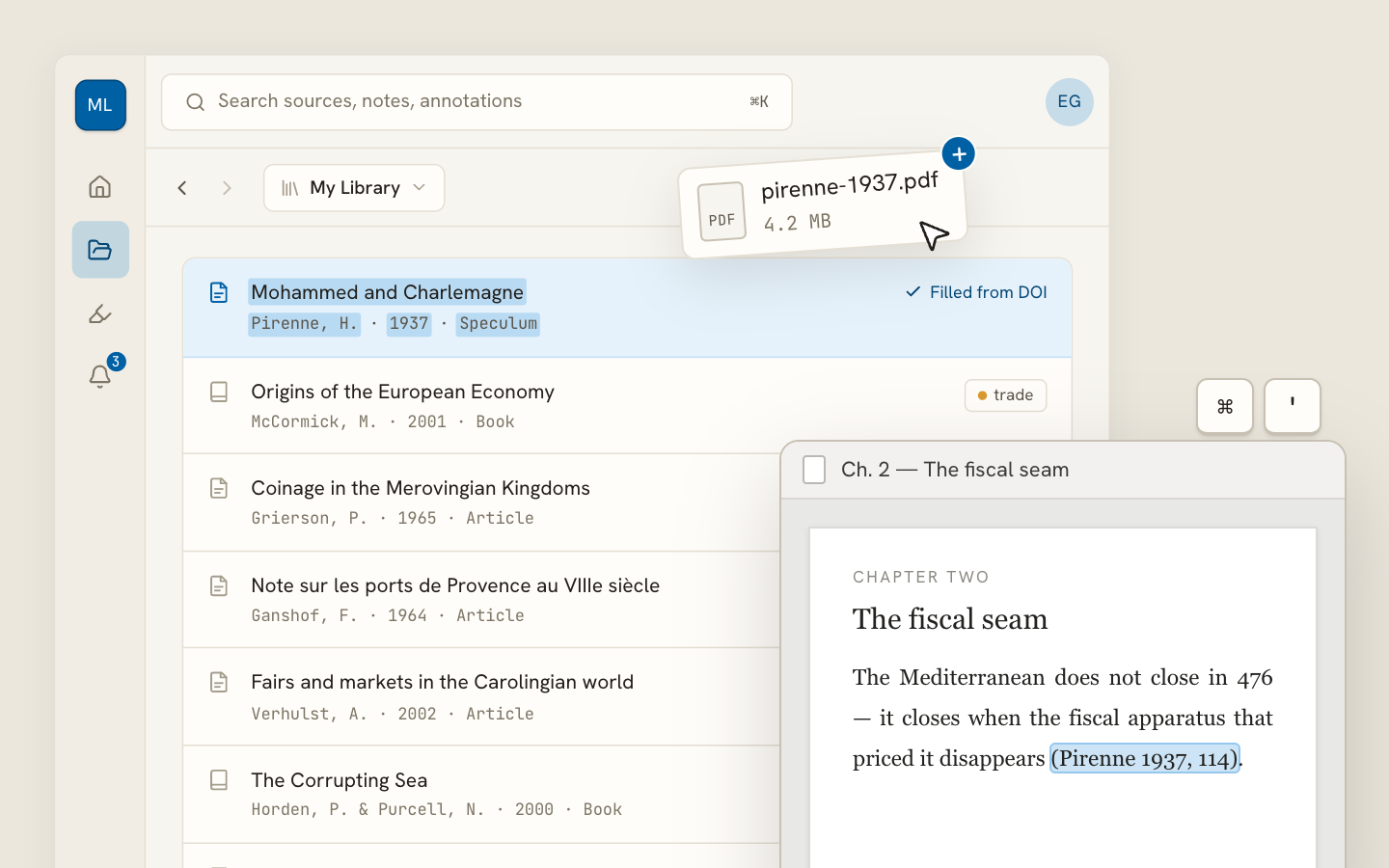
Archivero library view with a source list and an open PDF

Your weekly research workflow, in one email

One tested workflow, three links, no filler — every Tuesday.

Unsubscribe in one click. We never share your address.

Guides/Citations/Harvard Referencing Style

Harvard Format Paper

How to format an academic paper using Harvard referencing — margins, font, spacing, title page, and reference list layout.

5 min readHarvard

On this page

1 of 12
Page Layout BasicsTitle Page FormattingBody Text RulesParagraphsSpacingFontHeadings and SubheadingsPage NumberingReference List Placement and FormattingAppendicesA Note on Institutional VariationWhat's Next?
All Harvard guides →

Here's something that catches many students off guard: Harvard referencing doesn't come with a rigid paper format. Unlike APA — which specifies exact margins, font sizes, heading levels, and even how your title page should look — Harvard is primarily a citation system, not a complete formatting manual. The formatting of your paper is usually determined by your institution, your department, or your module handbook.

That said, there are widely accepted conventions that most Harvard-using universities follow. This guide covers those conventions so you have a solid starting point — but always check your institution's specific requirements, because they take priority over any general guide.

Page Layout Basics

Most Harvard-using institutions expect the following general layout:

ElementCommon Convention
Margins2.54 cm (1 inch) on all sides
Font12 pt Times New Roman, Arial, or Calibri
Line spacingDouble-spaced (or 1.5 spacing — check your guide)
Paragraph indentFirst line indented 1.27 cm (0.5 inches), OR block paragraphs with a blank line between them
AlignmentLeft-aligned (ragged right edge), not justified
Paper sizeA4 (210 × 297 mm) in the UK/AU; US Letter in North America

Important:These are defaults, not rules. Some universities require 1.5 spacing rather than double spacing. Some prefer justified alignment. Some specify Arial 11 pt. Your course handbook or departmental style guide is always the final word.

Title Page Formatting

Harvard doesn't prescribe a single title page format, but most institutions expect a title page that includes:

  1. Title of the assignment — centred, often in bold
  2. Your full name (or student number, depending on anonymity requirements)
  3. Module name and code
  4. Lecturer's name (sometimes optional)
  5. Date of submission
  6. Word count (if required)

A typical layout places the title in the upper third of the page with the remaining details below it, all centred:

The Impact of Remote Working on Employee Wellbeing

Jane Thompson

BSN3021: Organisational Behaviour

Dr. Michael Chen

15 March 2025

Word count: 2,450

Some universities do not require a separate title page at all — they ask you to put your name, module, and title at the top of the first page instead. Others use a standardised cover sheet that you download and attach. Check what your institution expects.

Body Text Rules

Paragraphs

Most Harvard guides expect one of two paragraph styles:

  • Indented paragraphs — First line indented by 1.27 cm (0.5 inches), no extra space between paragraphs. This is the more traditional academic style.
  • Block paragraphs — No first-line indent, but a blank line between each paragraph. This is common in reports and business-style assignments.

Pick one and be consistent. If your module handbook specifies a preference, follow it.

Spacing

Double spacing is the most common requirement because it gives markers room to annotate. However, some UK and Australian universities accept or prefer 1.5 line spacing for coursework. Never use single spacing unless explicitly told to.

Font

Stick to a readable, professional font. The safe choices are:

  • 12 pt Times New Roman
  • 12 pt Arial
  • 11 pt Calibri

Avoid decorative, condensed, or display fonts. Use the same font throughout the document — including the reference list.

Headings and Subheadings

Harvard referencing itself doesn't specify heading levels the way APA does. Instead, follow your department's conventions. A common approach in UK/AU academic writing:

LevelFormatExample
1FormatBold, title case, centred or left-alignedExampleLiterature Review
2FormatBold, sentence case, left-alignedExampleTheories of motivation
3FormatBold italic, sentence case, left-alignedExampleSelf-determination theory

The key rules:

  • Be consistent — if Level 1 headings are bold and centred, every Level 1 heading should be bold and centred
  • Don't use more heading levels than you need — most essays use two levels at most
  • Don't number headings unless your assignment brief asks you to (reports often require numbered headings; essays typically don't)

Page Numbering

Include page numbers on every page. The most common placement is:

  • Top-right corner (in the header), or
  • Bottom-centre (in the footer)

Start numbering from the first page of the body text. Whether the title page counts as page 1 depends on your institution — some count it, some don't. If in doubt, start page numbering from the first page after the title page.

Reference List Placement and Formatting

The reference list appears at the end of your paper, after the body text and before any appendices. Key formatting rules:

  1. Start on a new page — with "Reference List" or "References" as the heading (centred or left-aligned, depending on your institution's preference)
  2. Alphabetical order — entries are sorted by the first author's surname
  3. Hanging indent — the first line of each entry is flush left; subsequent lines are indented by 1.27 cm (0.5 inches)
  4. Same spacing as the body — double-spaced (or 1.5, matching the rest of your paper)
  5. No numbering or bullet points — entries are not numbered

For a complete guide to building your reference list, see Harvard Reference List.

Appendices

If your assignment includes supplementary material — raw data, interview transcripts, survey instruments, additional tables — place it in appendices after the reference list.

Label each appendix with a letter: Appendix A, Appendix B, Appendix C, and so on. If there's only one appendix, you can simply call it Appendix.

Refer to each appendix in the body of your text:

The full interview transcript is provided in Appendix B.

Each appendix starts on a new page with the label (e.g., "Appendix A") centred at the top, followed by a descriptive title:

Appendix A: Participant Survey Questions

A Note on Institutional Variation

We've said it before, but it bears repeating: Harvard is a convention, not a rulebook. The formatting requirements described on this page represent common practice, but your university's guide may differ on specific points — spacing, heading styles, title page layout, and whether to include a contents page.

Before you format your paper, check these sources in order:

  1. Your assignment brief — the specific instructions for this piece of work
  2. Your module handbook — often contains formatting requirements for all assignments in the module
  3. Your university's Harvard guide — usually available from the library website
  4. This guide — as a general reference when the above don't cover something

When in doubt, ask your lecturer or academic skills team. Nobody will mark you down for asking a formatting question — but they might mark you down for getting it wrong.

What's Next?

Now that you know how to format your paper, learn how to handle the two core components of Harvard referencing:

  • Harvard In-Text Citations — how to credit sources in the body of your text
  • Harvard Reference List — how to build the alphabetical list of sources at the end of your paper
All Harvard guides →
Next →Harvard In-Text Citations

More on Harvard referencing

The dominant system in British, Australian and international universities. In-text citations, reference lists and the local conventions that vary by department.

View all 26 guides →
17 sections·6 min readHarvardHarvard In-Text Citations9 sections·6 min readHarvardHarvard Reference List13 sections·6 min readHarvardHow to Reference a Website in Harvard Style13 sections·6 min readHarvardHow to Reference a Book in Harvard Style

Your sources, PDFs and citations in one library

  • Import a Zotero, Mendeley or EndNote library — or a folder of PDFs
  • Highlight and annotate without leaving the source
  • Cite in any CSL style as you write, with one shared library for your lab
Request early accessSee the product →
Archivero library view with a source list and an open PDF

Your weekly research workflow, in one email

One tested workflow, three links, no filler — every Tuesday.

Unsubscribe in one click. We never share your address.