Archivero is in early access — your sources, PDFs and citations in one library.Request early access →
Archivero/guides/
APAMLAHarvardThesis writing
Subscribe
Archivero/guides/Request early access →

Guides

APA styleMLA styleHarvard referencingThesis writing

Compare

APA 6th vs 7thMLA 8th vs 9thHarvard vs APAThesis vs dissertation

Product

FeaturesEarly access

Resources

DocsCheat sheetsNewsletter

Company

ContactStatus ↗
© 2025–2026 Ernesto F. GonzálezGuidesDocsContactPrivacyTerms
Guides/Citations/APA Citation Style

How to Cite Social Media in APA Format

APA 7th edition formats for tweets, Instagram posts, Facebook posts, Reddit threads, and other social media content.

8 min readAPA

On this page

1 of 23
General Format for Social Media ReferencesTwitter/X PostPost From an IndividualPost From an OrganizationRetweet or Quote TweetInstagram PostPhoto PostCarousel PostInstagram StoryFacebook PostPost From an IndividualPost From a Page or OrganizationReddit Post or CommentReddit PostReddit CommentLinkedIn PostTikTok VideoHandling Usernames and Real NamesEmojis and Hashtags in TitlesRetrieval Dates for Social MediaQuick-Reference TableCommon MistakesWhat's Next
All APA guides →

Social media is now a legitimate academic source. A researcher might cite a public health official's tweet about vaccine distribution, an Instagram infographic from a nonprofit, or a Reddit thread that illustrates public sentiment on a policy issue. APA 7th edition has specific guidance for all of these — because social media didn't exist as a citable category when the 6th edition was published.

The rules are surprisingly consistent across platforms. Once you learn the general format, every platform is just a variation on the same structure.

General Format for Social Media References

Every social media citation follows this template:

Author. (Date). Content of the post up to the first 20 words [Description of audiovisuals] [Type of post]. Platform Name. URL

Here's what each element means:

  • Author: The account holder's real name (if known), with the username/handle in brackets.
  • Date: The exact date the post was published — year, month, and day.
  • Content: Use the first 20 words of the post as the title. Italicize it (because a standalone social media post is treated as a standalone work). Include the full text if it's 20 words or fewer.
  • Audiovisual descriptions: If the post includes an image, video, or other media, describe it in brackets: [Image attached], [Video], [Thumbnail with link].
  • Type of post: Specify the format in brackets: [Tweet], [Instagram post], [Facebook post], etc.
  • Platform: The social media platform name.
  • URL: A direct link to the post.

Twitter/X Post

Twitter (now X) is probably the most cited social media platform in academic work.

Post From an Individual

Reference list:

Gates, B. [@BillGates]. (2025, January 15). The progress we've made on malaria prevention is remarkable, but we still have a long way to go. New data from [Thumbnail with link attached] [Tweet]. X. https://x.com/BillGates/status/example123

In-text citations:

Parenthetical:(Gates, 2025)

Narrative:Gates (2025) noted that…

Key details:

  • Use the person's real name as the author, with their handle in brackets after it.
  • Include the first 20 words of the tweet as the title (italicized).
  • If the tweet includes an image, video, or link preview, note it in brackets: [Image attached], [Video], [Thumbnail with link attached].
  • Add [Tweet] as the post type.
  • The platform is X (formerly Twitter).

Post From an Organization

World Health Organization [@WHO]. (2025, February 3). New guidelines on physical activity for children aged 5–17 recommend at least 60 minutes of moderate-to-vigorous activity daily [Infographic] [Tweet]. X. https://x.com/WHO/status/example456

In-text: (World Health Organization, 2025)

Retweet or Quote Tweet

When citing a retweet, cite the original post — the one that was retweeted. Don't cite the person who retweeted it, unless the retweeter added substantive commentary (in which case cite the retweeter's post).

Instagram Post

Photo Post

National Geographic [@natgeo]. (2025, March 8). A mother polar bear and her cubs navigate the thinning sea ice of Hudson Bay. As Arctic ice continues [Photograph] [Instagram post]. Instagram. https://www.instagram.com/p/example789

In-text: (National Geographic, 2025)

Carousel Post

American Psychological Association [@americanpsychologicalassociation]. (2025, January 22). Five evidence-based study strategies that actually work — backed by cognitive science research. Swipe to learn about each [Infographic carousel] [Instagram post]. Instagram. https://www.instagram.com/p/example012

In-text: (American Psychological Association, 2025)

Instagram Story

Instagram Stories are ephemeral — they disappear after 24 hours. If you need to cite one, include a retrieval date:

Patel, R. [@drpatel_neuro]. (2025, February 10). Today's rounds: fascinating case of [Video] [Instagram story]. Instagram. Retrieved February 10, 2025, from https://www.instagram.com/stories/drpatel_neuro/example345

Since stories can't be revisited after 24 hours, consider whether a more permanent source would be a better citation. If you do cite a story, save a screenshot or screen recording for your own records.

Facebook Post

Post From an Individual

Obama, B. (2025, January 20). As we reflect on where we've been and where we're going, I'm reminded of the power of community to drive [Photograph] [Facebook post]. Facebook. https://www.facebook.com/barackobama/posts/example567

In-text: (Obama, 2025)

Post From a Page or Organization

Centers for Disease Control and Prevention. (2025, March 1). Flu season update: This week's surveillance data shows a continued decline in influenza activity across most regions [Infographic] [Facebook post]. Facebook. https://www.facebook.com/CDC/posts/example890

In-text (first use): (Centers for Disease Control and Prevention [CDC], 2025)

In-text (subsequent): (CDC, 2025)

Note: For organizational authors on Facebook, you typically won't need a username in brackets because the page name is the author name. Include a handle only if the page name differs significantly from the organization's official name.

Reddit Post or Comment

Reddit Post

u/neuroscience_nerd. (2025, February 14). Has anyone else noticed that the most cited papers in cognitive psychology are rarely replicated? I compiled a list of [Online forum post]. Reddit. https://www.reddit.com/r/AcademicPsychology/comments/example

In-text: (u/neuroscience_nerd, 2025)

Key detail: Most Reddit users are anonymous, so the username (with the u/ prefix) serves as the author. If you happen to know the poster's real name, use it with the username in brackets — but this is rare on Reddit.

Reddit Comment

u/data_scientist_42. (2025, February 14). The replication crisis isn't limited to psychology — look at the recent meta-analyses in cancer biology that found [Comment on the online forum post "Has anyone else noticed"]. Reddit. https://www.reddit.com/r/AcademicPsychology/comments/example/comment/example

In-text: (u/data_scientist_42, 2025)

For comments, note in brackets that it's a comment and identify which post it's on.

LinkedIn Post

Johnson, M. (2025, January 30). After 15 years in HR, here's what I've learned about remote work policies: the companies that thrive are the ones [LinkedIn post]. LinkedIn. https://www.linkedin.com/posts/example

In-text: (Johnson, 2025)

LinkedIn posts generally list the author's real name, so use it in standard APA format. LinkedIn doesn't have a widely used handle system, so you typically won't need brackets for a username.

TikTok Video

@scishow. (2025, March 5). Why does your voice sound different on recordings? It's not because the recording is wrong — it's because you hear [Video] [TikTok]. TikTok. https://www.tiktok.com/@scishow/video/example

In-text: (@scishow, 2025)

Key details:

  • If you know the creator's real name, use it with the handle in brackets: Doe, J. [@scishow].
  • If you only know the handle, use it as the author (with the @ symbol).
  • Include [Video] for the audiovisual content and [TikTok] for the platform type.

Handling Usernames and Real Names

APA's approach to social media authors follows a clear priority:

  1. Real name known: Use the real name as the author, with the username/handle in brackets.

    Gates, B. [@BillGates]. (2025).

  2. Only username known: Use the username as the author (including the platform's prefix symbol, like @ or u/).

    @scishow. (2025).

    u/neuroscience_nerd. (2025).

  3. Group/organizational account: Use the organization's name, with the handle in brackets if different.

    World Health Organization [@WHO]. (2025).

ScenarioAuthor FormatIn-Text
Real name + usernameAuthor FormatGates, B. [@BillGates].In-Text(Gates, 2025)
Username onlyAuthor Format@scishow.In-Text(@scishow, 2025)
Organization + handleAuthor FormatWorld Health Organization [@WHO].In-Text(World Health Organization, 2025)
Organization = handleAuthor FormatNational Geographic [@natgeo].In-Text(National Geographic, 2025)

Emojis and Hashtags in Titles

Social media posts often contain emojis and hashtags. APA's guidance is practical:

  • Emojis: Include them in the title if they're part of the original post. Copy the emoji directly into your reference: 🧠 New study reveals that sleep improves memory consolidation
  • Hashtags: Include them as they appear in the post. They're part of the author's original text: Five tips for better sleep #SleepScience #WellnessWednesday

If the post is emoji-heavy or relies heavily on hashtags, use your judgment — include enough of the content for identification, but you don't need to reproduce every emoji or tag.

Retrieval Dates for Social Media

Most social media posts do not need a retrieval date because they have a specific publication date and the content is generally stable.

When you do need a retrieval date:

  • Profiles and bios — these change frequently and have no fixed publication date
  • Instagram Stories — ephemeral content that disappears after 24 hours
  • Content you suspect may be deleted — save a screenshot for your records

Format:

Retrieved February 15, 2026, from https://www.instagram.com/example

Quick-Reference Table

PlatformAuthor FormatPost Type LabelExample In-Text
X (Twitter)Author FormatName [@handle].Post Type Label[Tweet]Example In-Text(Gates, 2025)
InstagramAuthor FormatName [@handle].Post Type Label[Instagram post]Example In-Text(National Geographic, 2025)
FacebookAuthor FormatName or Organization.Post Type Label[Facebook post]Example In-Text(Obama, 2025)
RedditAuthor Formatu/username.Post Type Label[Online forum post]Example In-Text(u/neuroscience_nerd, 2025)
LinkedInAuthor FormatName.Post Type Label[LinkedIn post]Example In-Text(Johnson, 2025)
TikTokAuthor FormatName [@handle] or @handle.Post Type Label[TikTok]Example In-Text(@scishow, 2025)

Common Mistakes

These are the social media citation errors we see most often:

  1. Omitting the [Tweet] / [Instagram post] label. The bracketed description of the post type is required. Without it, the reader doesn't know what kind of source this is.

  2. Using only the handle when the real name is available. If you can identify the person's actual name, use it as the author with the handle in brackets. Handles alone are a last resort.

  3. Forgetting audiovisual descriptions. If the post includes an image, video, or infographic, describe it in brackets: [Image attached], [Video], [Infographic].

  4. Including more than 20 words of the post as the title. Cap the title at 20 words. If the full post is 20 words or fewer, include all of it.

  5. Adding a period after the URL. Same rule as always — no period after URLs.

  6. Citing a deleted post without evidence. If a tweet or post has been deleted, you can still cite it — but note that it's no longer available, and keep a screenshot in your records.

What's Next

Now that you know how to cite social media, explore these related topics:

  • How to Cite a Video in APA Format — citing YouTube videos, TED Talks, and films
  • How to Cite a Website in APA Format — web pages, blog posts, and organizational sources
  • APA Reference List — the complete guide to formatting your reference entries

Archivero can help you format social media citations correctly — including handling usernames, emojis, and post type labels — so you can focus on your research rather than hunting for formatting rules.
All APA guides →
← PreviousHow to Cite a Video in APA FormatNext →How to Cite a Government Report in APA Format

More on APA style

The standard in psychology, education and the social sciences. The author–date system, reference-list formatting and what the 7th edition changed.

View all 34 guides →
10 sections·7 min readAPAHow to Cite a Government Report in APA Format9 sections·6 min readAPAHow to Cite a Conference Paper in APA Format9 sections·6 min readAPAHow to Cite a Dissertation or Thesis in APA Format9 sections·8 min readAPAHow to Cite ChatGPT & AI-Generated Content in APA

Your sources, PDFs and citations in one library

  • Import a Zotero, Mendeley or EndNote library — or a folder of PDFs
  • Highlight and annotate without leaving the source
  • Cite in any CSL style as you write, with one shared library for your lab
Request early accessSee the product →
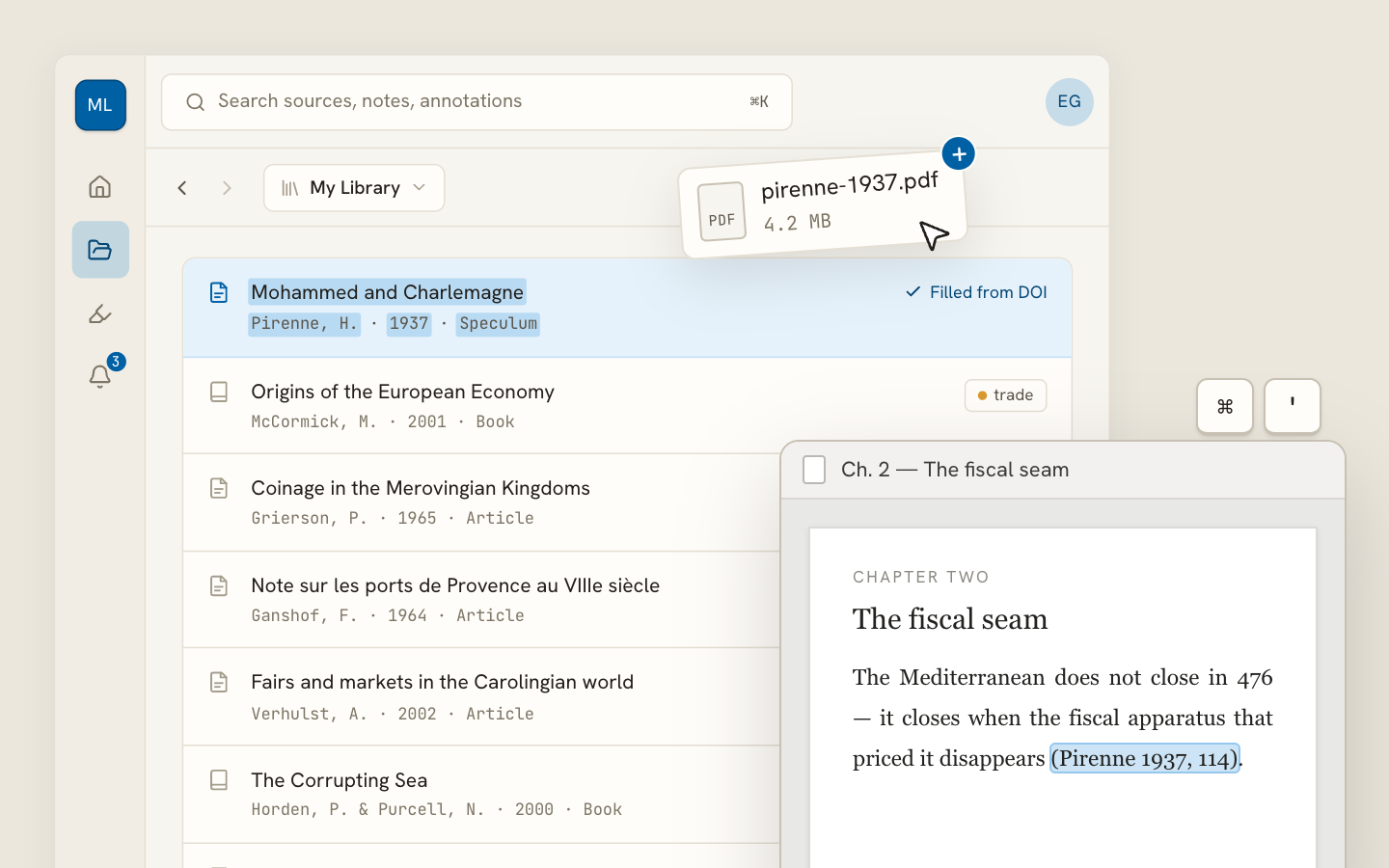
Archivero library view with a source list and an open PDF

Your weekly research workflow, in one email

One tested workflow, three links, no filler — every Tuesday.

Unsubscribe in one click. We never share your address.

Guides/Citations/APA Citation Style

How to Cite Social Media in APA Format

APA 7th edition formats for tweets, Instagram posts, Facebook posts, Reddit threads, and other social media content.

8 min readAPA

On this page

1 of 23
General Format for Social Media ReferencesTwitter/X PostPost From an IndividualPost From an OrganizationRetweet or Quote TweetInstagram PostPhoto PostCarousel PostInstagram StoryFacebook PostPost From an IndividualPost From a Page or OrganizationReddit Post or CommentReddit PostReddit CommentLinkedIn PostTikTok VideoHandling Usernames and Real NamesEmojis and Hashtags in TitlesRetrieval Dates for Social MediaQuick-Reference TableCommon MistakesWhat's Next
All APA guides →

Social media is now a legitimate academic source. A researcher might cite a public health official's tweet about vaccine distribution, an Instagram infographic from a nonprofit, or a Reddit thread that illustrates public sentiment on a policy issue. APA 7th edition has specific guidance for all of these — because social media didn't exist as a citable category when the 6th edition was published.

The rules are surprisingly consistent across platforms. Once you learn the general format, every platform is just a variation on the same structure.

General Format for Social Media References

Every social media citation follows this template:

Author. (Date). Content of the post up to the first 20 words [Description of audiovisuals] [Type of post]. Platform Name. URL

Here's what each element means:

  • Author: The account holder's real name (if known), with the username/handle in brackets.
  • Date: The exact date the post was published — year, month, and day.
  • Content: Use the first 20 words of the post as the title. Italicize it (because a standalone social media post is treated as a standalone work). Include the full text if it's 20 words or fewer.
  • Audiovisual descriptions: If the post includes an image, video, or other media, describe it in brackets: [Image attached], [Video], [Thumbnail with link].
  • Type of post: Specify the format in brackets: [Tweet], [Instagram post], [Facebook post], etc.
  • Platform: The social media platform name.
  • URL: A direct link to the post.

Twitter/X Post

Twitter (now X) is probably the most cited social media platform in academic work.

Post From an Individual

Reference list:

Gates, B. [@BillGates]. (2025, January 15). The progress we've made on malaria prevention is remarkable, but we still have a long way to go. New data from [Thumbnail with link attached] [Tweet]. X. https://x.com/BillGates/status/example123

In-text citations:

Parenthetical:(Gates, 2025)

Narrative:Gates (2025) noted that…

Key details:

  • Use the person's real name as the author, with their handle in brackets after it.
  • Include the first 20 words of the tweet as the title (italicized).
  • If the tweet includes an image, video, or link preview, note it in brackets: [Image attached], [Video], [Thumbnail with link attached].
  • Add [Tweet] as the post type.
  • The platform is X (formerly Twitter).

Post From an Organization

World Health Organization [@WHO]. (2025, February 3). New guidelines on physical activity for children aged 5–17 recommend at least 60 minutes of moderate-to-vigorous activity daily [Infographic] [Tweet]. X. https://x.com/WHO/status/example456

In-text: (World Health Organization, 2025)

Retweet or Quote Tweet

When citing a retweet, cite the original post — the one that was retweeted. Don't cite the person who retweeted it, unless the retweeter added substantive commentary (in which case cite the retweeter's post).

Instagram Post

Photo Post

National Geographic [@natgeo]. (2025, March 8). A mother polar bear and her cubs navigate the thinning sea ice of Hudson Bay. As Arctic ice continues [Photograph] [Instagram post]. Instagram. https://www.instagram.com/p/example789

In-text: (National Geographic, 2025)

Carousel Post

American Psychological Association [@americanpsychologicalassociation]. (2025, January 22). Five evidence-based study strategies that actually work — backed by cognitive science research. Swipe to learn about each [Infographic carousel] [Instagram post]. Instagram. https://www.instagram.com/p/example012

In-text: (American Psychological Association, 2025)

Instagram Story

Instagram Stories are ephemeral — they disappear after 24 hours. If you need to cite one, include a retrieval date:

Patel, R. [@drpatel_neuro]. (2025, February 10). Today's rounds: fascinating case of [Video] [Instagram story]. Instagram. Retrieved February 10, 2025, from https://www.instagram.com/stories/drpatel_neuro/example345

Since stories can't be revisited after 24 hours, consider whether a more permanent source would be a better citation. If you do cite a story, save a screenshot or screen recording for your own records.

Facebook Post

Post From an Individual

Obama, B. (2025, January 20). As we reflect on where we've been and where we're going, I'm reminded of the power of community to drive [Photograph] [Facebook post]. Facebook. https://www.facebook.com/barackobama/posts/example567

In-text: (Obama, 2025)

Post From a Page or Organization

Centers for Disease Control and Prevention. (2025, March 1). Flu season update: This week's surveillance data shows a continued decline in influenza activity across most regions [Infographic] [Facebook post]. Facebook. https://www.facebook.com/CDC/posts/example890

In-text (first use): (Centers for Disease Control and Prevention [CDC], 2025)

In-text (subsequent): (CDC, 2025)

Note: For organizational authors on Facebook, you typically won't need a username in brackets because the page name is the author name. Include a handle only if the page name differs significantly from the organization's official name.

Reddit Post or Comment

Reddit Post

u/neuroscience_nerd. (2025, February 14). Has anyone else noticed that the most cited papers in cognitive psychology are rarely replicated? I compiled a list of [Online forum post]. Reddit. https://www.reddit.com/r/AcademicPsychology/comments/example

In-text: (u/neuroscience_nerd, 2025)

Key detail: Most Reddit users are anonymous, so the username (with the u/ prefix) serves as the author. If you happen to know the poster's real name, use it with the username in brackets — but this is rare on Reddit.

Reddit Comment

u/data_scientist_42. (2025, February 14). The replication crisis isn't limited to psychology — look at the recent meta-analyses in cancer biology that found [Comment on the online forum post "Has anyone else noticed"]. Reddit. https://www.reddit.com/r/AcademicPsychology/comments/example/comment/example

In-text: (u/data_scientist_42, 2025)

For comments, note in brackets that it's a comment and identify which post it's on.

LinkedIn Post

Johnson, M. (2025, January 30). After 15 years in HR, here's what I've learned about remote work policies: the companies that thrive are the ones [LinkedIn post]. LinkedIn. https://www.linkedin.com/posts/example

In-text: (Johnson, 2025)

LinkedIn posts generally list the author's real name, so use it in standard APA format. LinkedIn doesn't have a widely used handle system, so you typically won't need brackets for a username.

TikTok Video

@scishow. (2025, March 5). Why does your voice sound different on recordings? It's not because the recording is wrong — it's because you hear [Video] [TikTok]. TikTok. https://www.tiktok.com/@scishow/video/example

In-text: (@scishow, 2025)

Key details:

  • If you know the creator's real name, use it with the handle in brackets: Doe, J. [@scishow].
  • If you only know the handle, use it as the author (with the @ symbol).
  • Include [Video] for the audiovisual content and [TikTok] for the platform type.

Handling Usernames and Real Names

APA's approach to social media authors follows a clear priority:

  1. Real name known: Use the real name as the author, with the username/handle in brackets.

    Gates, B. [@BillGates]. (2025).

  2. Only username known: Use the username as the author (including the platform's prefix symbol, like @ or u/).

    @scishow. (2025).

    u/neuroscience_nerd. (2025).

  3. Group/organizational account: Use the organization's name, with the handle in brackets if different.

    World Health Organization [@WHO]. (2025).

ScenarioAuthor FormatIn-Text
Real name + usernameAuthor FormatGates, B. [@BillGates].In-Text(Gates, 2025)
Username onlyAuthor Format@scishow.In-Text(@scishow, 2025)
Organization + handleAuthor FormatWorld Health Organization [@WHO].In-Text(World Health Organization, 2025)
Organization = handleAuthor FormatNational Geographic [@natgeo].In-Text(National Geographic, 2025)

Emojis and Hashtags in Titles

Social media posts often contain emojis and hashtags. APA's guidance is practical:

  • Emojis: Include them in the title if they're part of the original post. Copy the emoji directly into your reference: 🧠 New study reveals that sleep improves memory consolidation
  • Hashtags: Include them as they appear in the post. They're part of the author's original text: Five tips for better sleep #SleepScience #WellnessWednesday

If the post is emoji-heavy or relies heavily on hashtags, use your judgment — include enough of the content for identification, but you don't need to reproduce every emoji or tag.

Retrieval Dates for Social Media

Most social media posts do not need a retrieval date because they have a specific publication date and the content is generally stable.

When you do need a retrieval date:

  • Profiles and bios — these change frequently and have no fixed publication date
  • Instagram Stories — ephemeral content that disappears after 24 hours
  • Content you suspect may be deleted — save a screenshot for your records

Format:

Retrieved February 15, 2026, from https://www.instagram.com/example

Quick-Reference Table

PlatformAuthor FormatPost Type LabelExample In-Text
X (Twitter)Author FormatName [@handle].Post Type Label[Tweet]Example In-Text(Gates, 2025)
InstagramAuthor FormatName [@handle].Post Type Label[Instagram post]Example In-Text(National Geographic, 2025)
FacebookAuthor FormatName or Organization.Post Type Label[Facebook post]Example In-Text(Obama, 2025)
RedditAuthor Formatu/username.Post Type Label[Online forum post]Example In-Text(u/neuroscience_nerd, 2025)
LinkedInAuthor FormatName.Post Type Label[LinkedIn post]Example In-Text(Johnson, 2025)
TikTokAuthor FormatName [@handle] or @handle.Post Type Label[TikTok]Example In-Text(@scishow, 2025)

Common Mistakes

These are the social media citation errors we see most often:

  1. Omitting the [Tweet] / [Instagram post] label. The bracketed description of the post type is required. Without it, the reader doesn't know what kind of source this is.

  2. Using only the handle when the real name is available. If you can identify the person's actual name, use it as the author with the handle in brackets. Handles alone are a last resort.

  3. Forgetting audiovisual descriptions. If the post includes an image, video, or infographic, describe it in brackets: [Image attached], [Video], [Infographic].

  4. Including more than 20 words of the post as the title. Cap the title at 20 words. If the full post is 20 words or fewer, include all of it.

  5. Adding a period after the URL. Same rule as always — no period after URLs.

  6. Citing a deleted post without evidence. If a tweet or post has been deleted, you can still cite it — but note that it's no longer available, and keep a screenshot in your records.

What's Next

Now that you know how to cite social media, explore these related topics:

  • How to Cite a Video in APA Format — citing YouTube videos, TED Talks, and films
  • How to Cite a Website in APA Format — web pages, blog posts, and organizational sources
  • APA Reference List — the complete guide to formatting your reference entries

Archivero can help you format social media citations correctly — including handling usernames, emojis, and post type labels — so you can focus on your research rather than hunting for formatting rules.

All APA guides →
← PreviousHow to Cite a Video in APA FormatNext →How to Cite a Government Report in APA Format

More on APA style

The standard in psychology, education and the social sciences. The author–date system, reference-list formatting and what the 7th edition changed.

View all 34 guides →
10 sections·7 min readAPAHow to Cite a Government Report in APA Format9 sections·6 min readAPAHow to Cite a Conference Paper in APA Format9 sections·6 min readAPAHow to Cite a Dissertation or Thesis in APA Format9 sections·8 min readAPAHow to Cite ChatGPT & AI-Generated Content in APA

Your sources, PDFs and citations in one library

  • Import a Zotero, Mendeley or EndNote library — or a folder of PDFs
  • Highlight and annotate without leaving the source
  • Cite in any CSL style as you write, with one shared library for your lab
Request early accessSee the product →
Archivero library view with a source list and an open PDF

Your weekly research workflow, in one email

One tested workflow, three links, no filler — every Tuesday.

Unsubscribe in one click. We never share your address.