Government publications — reports, white papers, statistical datasets, legislation — are authored by agencies and departments rather than individuals. MLA treats the government body as a corporate author, following the same container system used for any other source. For legal sources like court cases and statutes, MLA provides a basic citation approach, though legal writing typically follows the Bluebook standard.
Government and legal sources can feel intimidating because they don't fit the standard author–title–publisher pattern. But MLA's container system handles them consistently: identify the author (usually an agency), the title, the publisher (usually the government body), and the location (URL or database). The examples below cover every common scenario.
Government Report with a Corporate Author
Most government publications list an agency as the author rather than a named individual. Use the agency name, starting from the broadest level of government and narrowing down:
Basic Format
Government. Agency. Title of Report. Publisher, Year.
Federal Report (United States)
Works Cited:
United States, Department of Education. The Condition of Education 2025. Government Publishing Office, 2025.
In-text citation:
(United States, Dept. of Education 14)
What to notice:
- "United States" is the broadest government level
- The department follows, separated by a comma
- The title is italicized
- You can abbreviate "Department" as "Dept." in in-text citations for readability
Report from a Sub-Agency
When a sub-agency or office within a department authored the report, list the full chain:
Works Cited:
United States, Department of Health and Human Services, Centers for Disease Control and Prevention. Morbidity and Mortality Weekly Report. Vol. 74, no. 3, 2025.
In-text citation:
(United States, Dept. of Health and Human Services, CDC 8)
After the first full citation, you can use an abbreviation like "CDC" in subsequent in-text citations if you introduce it clearly in your text.
State or Local Government
Works Cited:
California, Department of Water Resources. California Water Plan Update 2024. State of California, 2024.
In-text citation:
(California, Dept. of Water Resources 31)
Government Report with a Named Author
Some government reports credit a specific individual as the author. When a named person appears on the title page, list them as the author:
Works Cited:
Fernández, María Elena. Trends in Public School Enrollment, 2020–2025. United States, Department of Education, National Center for Education Statistics, 2025.
In-text citation:
(Fernández 7)
The government agency moves to the publisher position when a named author is available.
Government Report Accessed Online
For reports found on a government website, add the website as a container:
Works Cited:
United States, Bureau of Labor Statistics. Occupational Outlook Handbook. 2025. Bureau of Labor Statistics, https://www.bls.gov/ooh/.
In-text citation:
(United States, Bureau of Labor Statistics)
If you accessed the report through a database instead:
Works Cited:
United States, Government Accountability Office. Federal Student Loan Repayment: Actions Needed to Improve Oversight. GAO-25-106429, 2025. Government Accountability Office, https://www.gao.gov/products/gao-25-106429.
Including a Publication Number
Government reports often have publication or catalog numbers. Include them after the title if they help the reader locate the document:
United States, Government Accountability Office. Federal Student Loan Repayment: Actions Needed to Improve Oversight. GAO-25-106429, 2025.
Non-U.S. Government Sources
The same format applies — start with the country, then narrow to the agency:
Works Cited:
United Kingdom, Office for National Statistics. Population Estimates for the UK, 2024. 2024. ONS, https://www.ons.gov.uk/releases/populationestimates2024.
In-text citation:
(United Kingdom, Office for National Statistics)
Works Cited:
Canada, Statistics Canada. Census of Population, 2021. 2022. Statistics Canada, https://www12.statcan.gc.ca/census-recensement/2021/.
Laws and Statutes
MLA provides a basic format for citing legislation. For formal legal writing, the Bluebook: A Uniform System of Citation is the standard — but for a humanities paper, MLA format is sufficient.
United States Federal Law
Cite the official name of the act, the public law number, the Statutes at Large or United States Code citation, and the year of enactment:
Works Cited:
Higher Education Act of 1965. Pub. L. 89-329, 79 Stat. 1219. 1965.
In-text citation:
(Higher Education Act)
United States Code
If you're citing the codified version:
Works Cited:
Title IX, Education Amendments of 1972. 20 U.S.C. §§ 1681–1688. 1972.
In-text citation:
(Title IX)
State Law
Works Cited:
California Consumer Privacy Act of 2018. Cal. Civ. Code, §§ 1798.100-1798.199. 2018.
In-text citation:
(California Consumer Privacy Act)
Court Cases
MLA uses the case name in italics, followed by the volume, reporter, page number, court (if not the Supreme Court), and year:
United States Supreme Court
Works Cited:
Brown v. Board of Education. 347 U.S. 483. 1954.
In-text citation:
(Brown v. Board of Education 487)
Lower Courts
Include the court abbreviation before the year:
Works Cited:
Tinker v. Des Moines Independent Community School District. 393 U.S. 503. 1969.
In-text citation:
(Tinker v. Des Moines 506)
Important: If your paper involves substantial legal analysis, your instructor may expect Bluebook citations rather than MLA. Check with your instructor if you're citing multiple cases.
Executive Orders and Presidential Documents
Works Cited:
Obama, Barack. "Establishing Paid Sick Leave for Federal Contractors." Executive Order 13706. Federal Register, vol. 80, no. 180, 2015, pp. 54697–54700.
In-text citation:
(Obama)
If the focus of your paper is on the policy rather than the president:
Works Cited:
"Establishing Paid Sick Leave for Federal Contractors." Executive Order 13706. Federal Register, vol. 80, no. 180, 2015, pp. 54697–54700.
In-text citation:
("Establishing Paid Sick Leave")
Congressional Hearings and Testimony
Works Cited:
United States, Congress, Senate, Committee on the Judiciary. Oversight of the Federal Bureau of Investigation. Government Publishing Office, 2024.
In-text citation:
(United States, Congress, Senate, Committee on the Judiciary 15)
For specific testimony by a named individual:
Works Cited:
Gupta, Anika. "Testimony on Digital Privacy and Consumer Protection." Hearing Before the Subcommittee on Consumer Protection, United States, Congress, Senate, Committee on Commerce, Science, and Transportation, 18 Mar. 2025.
In-text citation:
(Gupta)
In-Text Citation Quick Reference
| Source Type | Works Cited Author | In-Text Citation |
|---|---|---|
| Federal report (agency) | United States, Department of Education. | (United States, Dept. of Education 14) |
| Report (named author) | Fernández, María Elena. | (Fernández 7) |
| State report | California, Dept. of Water Resources. | (California, Dept. of Water Resources 31) |
| Federal law | Higher Education Act of 1965. | (Higher Education Act) |
| Supreme Court case | Brown v. Board of Education. | (Brown v. Board of Education 487) |
| Executive order | Obama, Barack. | (Obama) |
| Congressional hearing | United States, Congress, Senate… | (United States, Congress, Senate… 15) |
Common Mistakes
- Using "no author" for government publications. The government agency is the author. "United States, Department of Education" is a corporate author — don't treat it as anonymous.
- Listing only the country without the specific agency. "United States" alone is too broad. Include the department or agency that authored the document.
- Italicizing law names inconsistently. Law and act names are generally not italicized in MLA. Case names are italicized.
- Using Bluebook format in an MLA paper. Unless your instructor specifically requires Bluebook, use MLA format. The two systems are not interchangeable.
- Omitting the URL for online government sources. If you accessed it online, include the URL. Many government reports are freely available on the web.
- Forgetting to include the publication number. Report numbers (like GAO numbers) help readers locate the specific document — include them when available.
What's Next
Now that you know how to cite government and legal sources, explore related guides:
- MLA Works Cited Page — the complete guide to building Works Cited entries
- How to Cite a Source With No Author in MLA — when a source genuinely has no identifiable author
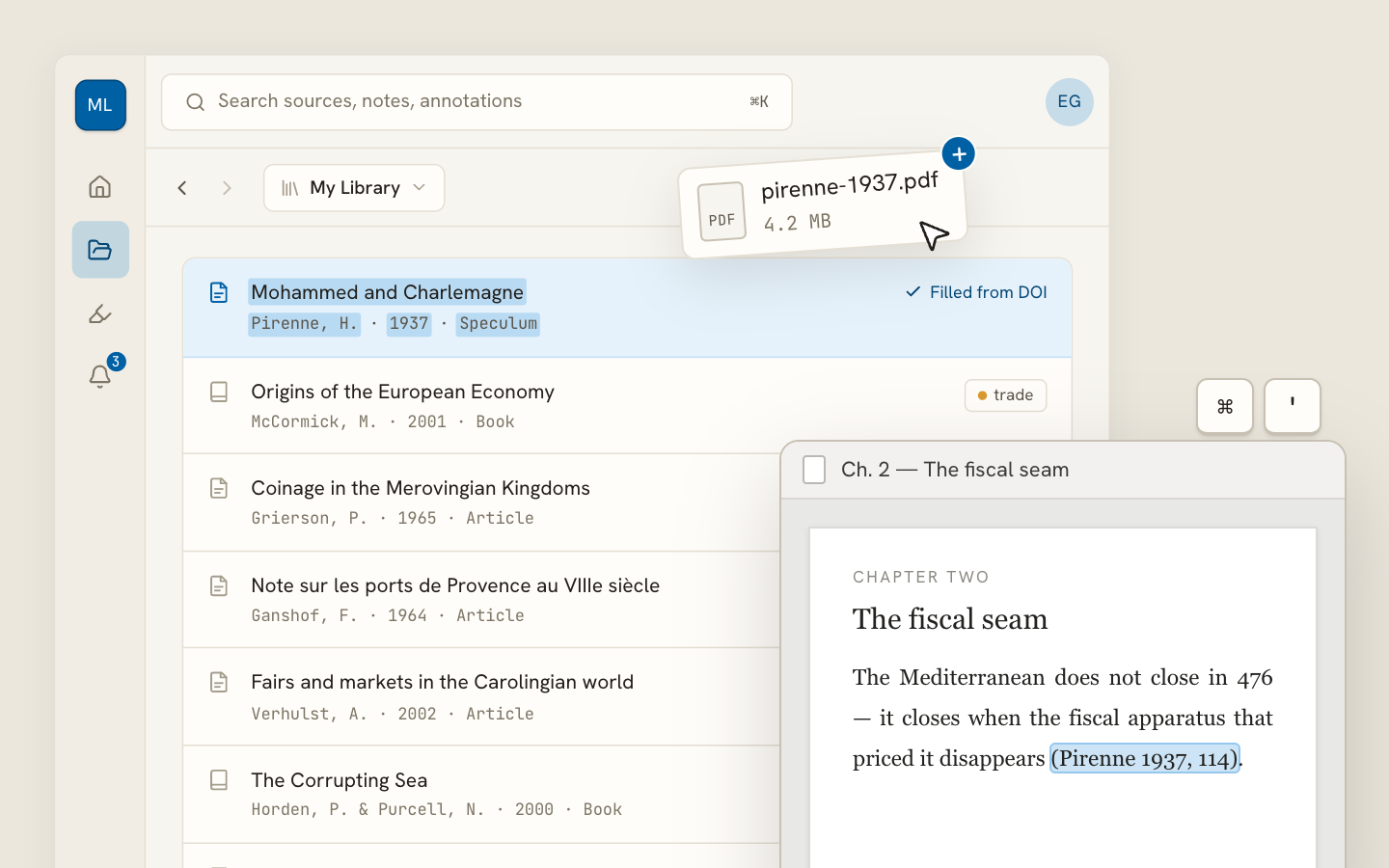
Archivero can help you organize government sources in your library — save a government report or legislative page, and the Works Cited entry is generated automatically with the agency, title, and access information.