Archivero is in early access — your sources, PDFs and citations in one library.Request early access →
Archivero/guides/
APAMLAHarvardThesis writing
Subscribe
Archivero/guides/Request early access →

Guides

APA styleMLA styleHarvard referencingThesis writing

Compare

APA 6th vs 7thMLA 8th vs 9thHarvard vs APAThesis vs dissertation

Product

FeaturesEarly access

Resources

DocsCheat sheetsNewsletter

Company

ContactStatus ↗
© 2025–2026 Ernesto F. GonzálezGuidesDocsContactPrivacyTerms
Guides/How to Write a Thesis

Thesis Abstract

How to write a thesis abstract — a concise summary of your research including the problem, methods, results, and conclusions, typically 150–300 words.

8 min readThesis writing

Key Takeaways

  • A thesis abstract is a standalone summary of the entire thesis — it should make sense without reading the full document.
  • It covers five elements in order: background/problem, methods, results, conclusions, and keywords.
  • Most abstracts are 150–300 words — check your institution's specific word limit.
  • The abstract is not an introduction — it includes your results and conclusions, which the introduction does not.
  • Write the abstract last, after all other chapters are complete, so it accurately reflects the final thesis.
  • Use past tense for what you did and found; use present tense for conclusions and implications.
  • Each sentence should convey substantive information — there is no room for filler, background detail, or citations.
  • Include 3–5 keywords after the abstract to help database indexing and discoverability.

On this page

1 of 16
Key TakeawaysWhat Is a Thesis Abstract?What to IncludeBackground / ProblemMethodsResultsConclusionsKeywordsHow Long Is an Abstract?Abstract vs. IntroductionExample AbstractsQuantitative StudyQualitative StudyWhen to Write the AbstractCommon MistakesNext Steps
All Thesis writing guides →

A thesis abstract is a concise, standalone summary of an entire thesis or dissertation — typically 150–300 words — that covers the research problem, methodology, key findings, and conclusions. It appears in the front matter before Chapter 1 and is often the first (and sometimes only) part of a thesis that readers, database indexers, and committee members read.

What Is a Thesis Abstract?

A thesis abstract is a compressed version of your entire research project in a single paragraph (or, in some formats, a few short paragraphs). It's designed to give any reader — a committee member, a librarian, a fellow researcher — a complete picture of what you studied, how you studied it, what you found, and what it means.

Abstracts serve two practical functions:

  1. Gatekeeping — readers use the abstract to decide whether the full thesis is relevant to their own work. In databases like ProQuest, ERIC, or Google Scholar, the abstract is often the only freely available text.
  2. Indexing — databases categorize and surface your thesis based on the abstract's content and keywords.

Because the abstract must stand alone, it cannot rely on context from other chapters. A reader should be able to understand your research problem, your approach, and your findings from the abstract alone — without turning a single page.

What to Include

A thesis abstract follows a predictable structure. Each element should be present, in this order.

Background / Problem

Open with 1–2 sentences establishing the research context and stating the problem or gap your thesis addresses. This is the "why" — why does this research exist?

Despite growing adoption of asynchronous online courses in higher education, little research has examined how course design features specifically affect student engagement among first-generation college students.

Don't start with overly broad context ("Education is important"). Jump directly to the specific issue your research addresses.

Methods

In 1–2 sentences, describe the research design and key methods. Name the approach (qualitative, quantitative, mixed methods), the sample, and the data collection technique.

This mixed-methods study surveyed 250 undergraduate students at a public university and conducted semi-structured interviews with 15 first-generation students to explore their engagement experiences.

Be specific but concise. The methodology chapter provides the full detail — the abstract provides the essentials.

Results

In 2–3 sentences, state the most important findings. Include key data points (statistics, effect sizes, or themes) that directly answer the research questions.

Survey results showed that asynchronous course formats were associated with a 23% decrease in self-reported engagement (p < .001), with first-generation students reporting significantly lower engagement than continuing-generation peers. Interviews revealed that the absence of real-time peer interaction and delayed instructor feedback were the primary factors driving disengagement.

The results section is the most important part of the abstract. Don't be vague — state what you actually found.

Conclusions

In 1–2 sentences, state what the findings mean — their implications for theory, practice, or policy.

These findings suggest that online course designers should embed synchronous interaction opportunities into asynchronous course shells, particularly in programs serving high proportions of first-generation students, to mitigate engagement disparities.

The conclusion should connect back to the problem statement. You identified a gap; your findings address it. Close the loop.

Keywords

List 3–5 keywords or phrases that describe the main topics of your thesis. These help databases categorize your work and make it discoverable.

Keywords:online learning, student engagement, first-generation college students, asynchronous course design, mixed methods

Choose keywords that a researcher searching for work in your area would actually type. Avoid overly broad terms ("education") and overly narrow ones that only apply to your specific study.

How Long Is an Abstract?

Most thesis abstracts fall within 150–350 words, but the exact limit depends on your institution and style guide.

SourceWord Limit
APA Style (7th edition)250 words
ProQuest Dissertations350 words (doctoral), 150 words (master's)
Most universities150–300 words (check your program's guidelines)

Every word counts. At 250 words, you have roughly 10–12 sentences. Trim filler ruthlessly — phrases like "it is important to note that" or "this study aims to" consume space without adding information.

Abstract vs. Introduction

The abstract and the introduction both describe the research, but they differ in scope, content, and audience.

AbstractIntroduction
LengthAbstract150–300 wordsIntroduction5–15 pages
PositionAbstractFront matter (before Chapter 1)IntroductionChapter 1
Includes results?AbstractYes — states key findingsIntroductionNo — sets up the problem only
Includes conclusions?AbstractYes — states implicationsIntroductionNo — the conclusion comes in the final chapter
Standalone?AbstractYes — must make sense independentlyIntroductionNo — assumes the reader will continue
AudienceAbstractAnyone deciding whether to read the thesisIntroductionReaders who are committed to reading the full thesis
Detail levelAbstractMinimal — essentials onlyIntroductionFull context, background, and justification

The introduction asks the question. The abstract answers it — in miniature.

For a full guide on writing the introduction, see Thesis Introduction.

Example Abstracts

Quantitative Study

Smartphone use among adolescents has increased dramatically, yet its relationship to sleep quality remains poorly quantified in non-Western populations. This cross-sectional study examined the association between daily smartphone screen time and sleep quality in 800 high school students in Seoul, South Korea, using the Pittsburgh Sleep Quality Index (PSQI) and self-reported screen time logs. Results showed that students averaging more than 3 hours of daily screen time had significantly poorer sleep quality scores (M = 8.2, SD = 3.1) compared to those averaging under 2 hours (M = 5.4, SD = 2.6), F(2, 797) = 24.6, p < .001. The relationship remained significant after controlling for age, gender, caffeine consumption, and extracurricular activity load. Evening screen time — particularly in the hour before bed — was a stronger predictor of sleep disruption than total daily screen time. These findings suggest that interventions targeting evening screen habits may be more effective than blanket screen time limits in improving adolescent sleep quality.

Keywords: smartphone use, sleep quality, adolescents, screen time, South Korea

Qualitative Study

First-generation doctoral students face distinct challenges navigating the "hidden curriculum" of graduate education, yet their experiences remain underrepresented in higher education research. This phenomenological study explored how 12 first-generation doctoral students at three research universities in the United States experienced academic socialization during their first two years. Data were collected through semi-structured interviews and reflective journals over one academic year, and analyzed using interpretive phenomenological analysis (IPA). Three overarching themes emerged: (1) code-switching between academic and family identities, (2) learning unwritten rules through trial and error rather than mentorship, and (3) imposter syndrome amplified by perceived class and cultural distance from peers. Participants described a persistent tension between belonging and alienation, often navigating academic norms without the tacit knowledge that continuing-generation peers absorbed through family exposure. These findings highlight the need for structured mentorship programs and explicit orientation to academic norms — not as remedial support, but as institutional recognition that the hidden curriculum disadvantages students who lack inherited academic capital.

Keywords: first-generation students, doctoral education, hidden curriculum, academic socialization, phenomenology

When to Write the Abstract

Write the abstract last — after every other chapter of the thesis is complete. This ensures the abstract accurately reflects the final version of the research, including any changes to the methodology, unexpected findings, or revised conclusions that emerged during the writing process.

Many writers draft a preliminary abstract early in the process to clarify their thinking, and that's a useful exercise. But the submitted abstract should describe the thesis as it actually turned out, not as you originally planned it. If your findings surprised you or your analysis shifted direction, the abstract needs to reflect that.

A practical approach:

  1. Finish all chapters, including the conclusion
  2. Open a blank document and write the abstract from scratch (don't copy-paste from chapters)
  3. Follow the five-part structure: background → methods → results → conclusions → keywords
  4. Check the word count and trim to meet your institution's limit
  5. Read it aloud — if any sentence doesn't convey substantive information, cut or rewrite it

Common Mistakes

  1. Writing it too early. An abstract written before the results are in will be inaccurate. Draft it last, based on the completed thesis.

  2. Being too vague about results. "Results were significant" tells the reader nothing. State what was significant, with numbers if quantitative or themes if qualitative.

  3. Including citations. Abstracts almost never include references. The abstract should be self-contained — if a concept requires a citation to explain, you're going into too much detail.

  4. Rehashing the introduction. The abstract includes results and conclusions; the introduction does not. If your abstract reads like a shorter version of the introduction (problem + background but no findings), it's missing the most important part.

  5. Exceeding the word limit. Institutions enforce word limits strictly. A 350-word abstract submitted to a program that requires 250 words may be returned for revision — or worse, truncated automatically by database systems.

  6. Omitting keywords. Keywords help your thesis appear in database searches. Skipping them reduces the discoverability of your work.

  7. Using jargon without definition. The abstract should be accessible to readers outside your narrow specialization. If a term is highly specialized, either define it briefly or use a more accessible phrase.

Next Steps

With the abstract complete, you've written the final component of a thesis. Revisit the other chapters to ensure everything aligns:

  • Thesis Introduction — confirm the introduction's research questions match the answers in your abstract
  • Thesis Conclusion — ensure the conclusion and abstract tell the same story at different levels of detail
  • Thesis Structure — review how all chapters fit together
  • Thesis Formatting — formatting guidelines for the abstract page and overall submission

If your thesis follows APA style, see the APA Abstract guide for the specific formatting rules — word limits, keywords placement, and page layout.

Archivero helps you finalize your thesis by keeping all your research, annotations, and sources organized — so when you write the abstract, you can quickly review the key findings and evidence from every chapter in one place.
All Thesis writing guides →
← PreviousThesis ConclusionNext →Thesis Proposal

More on Thesis writing

From crafting a thesis statement to structuring chapters, writing the proposal and preparing for the defence.

View all 19 guides →
8 sections·9 min readThesis writingThesis Proposal8 sections·9 min readThesis writingThesis Formatting7 sections·7 min readThesis writingThesis vs. Dissertation7 sections·10 min readThesis writingThesis Defense

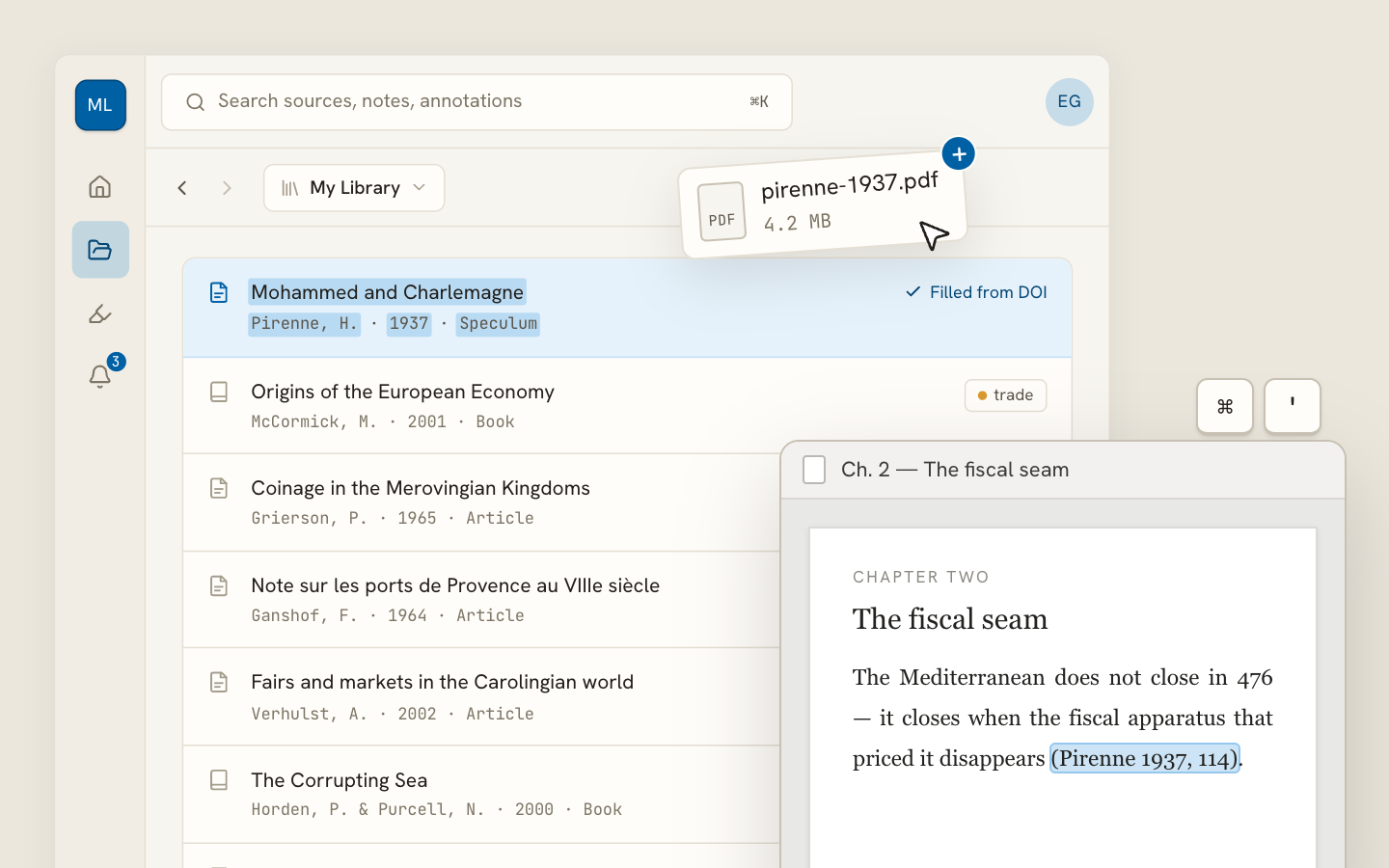
Your sources, PDFs and citations in one library

  • Import a Zotero, Mendeley or EndNote library — or a folder of PDFs
  • Highlight and annotate without leaving the source
  • Cite in any CSL style as you write, with one shared library for your lab
Request early accessSee the product →
Archivero library view with a source list and an open PDF

Your weekly research workflow, in one email

One tested workflow, three links, no filler — every Tuesday.

Unsubscribe in one click. We never share your address.

Guides/How to Write a Thesis

Thesis Abstract

How to write a thesis abstract — a concise summary of your research including the problem, methods, results, and conclusions, typically 150–300 words.

8 min readThesis writing

Key Takeaways

  • A thesis abstract is a standalone summary of the entire thesis — it should make sense without reading the full document.
  • It covers five elements in order: background/problem, methods, results, conclusions, and keywords.
  • Most abstracts are 150–300 words — check your institution's specific word limit.
  • The abstract is not an introduction — it includes your results and conclusions, which the introduction does not.
  • Write the abstract last, after all other chapters are complete, so it accurately reflects the final thesis.
  • Use past tense for what you did and found; use present tense for conclusions and implications.
  • Each sentence should convey substantive information — there is no room for filler, background detail, or citations.
  • Include 3–5 keywords after the abstract to help database indexing and discoverability.

On this page

1 of 16
Key TakeawaysWhat Is a Thesis Abstract?What to IncludeBackground / ProblemMethodsResultsConclusionsKeywordsHow Long Is an Abstract?Abstract vs. IntroductionExample AbstractsQuantitative StudyQualitative StudyWhen to Write the AbstractCommon MistakesNext Steps
All Thesis writing guides →

A thesis abstract is a concise, standalone summary of an entire thesis or dissertation — typically 150–300 words — that covers the research problem, methodology, key findings, and conclusions. It appears in the front matter before Chapter 1 and is often the first (and sometimes only) part of a thesis that readers, database indexers, and committee members read.

What Is a Thesis Abstract?

A thesis abstract is a compressed version of your entire research project in a single paragraph (or, in some formats, a few short paragraphs). It's designed to give any reader — a committee member, a librarian, a fellow researcher — a complete picture of what you studied, how you studied it, what you found, and what it means.

Abstracts serve two practical functions:

  1. Gatekeeping — readers use the abstract to decide whether the full thesis is relevant to their own work. In databases like ProQuest, ERIC, or Google Scholar, the abstract is often the only freely available text.
  2. Indexing — databases categorize and surface your thesis based on the abstract's content and keywords.

Because the abstract must stand alone, it cannot rely on context from other chapters. A reader should be able to understand your research problem, your approach, and your findings from the abstract alone — without turning a single page.

What to Include

A thesis abstract follows a predictable structure. Each element should be present, in this order.

Background / Problem

Open with 1–2 sentences establishing the research context and stating the problem or gap your thesis addresses. This is the "why" — why does this research exist?

Despite growing adoption of asynchronous online courses in higher education, little research has examined how course design features specifically affect student engagement among first-generation college students.

Don't start with overly broad context ("Education is important"). Jump directly to the specific issue your research addresses.

Methods

In 1–2 sentences, describe the research design and key methods. Name the approach (qualitative, quantitative, mixed methods), the sample, and the data collection technique.

This mixed-methods study surveyed 250 undergraduate students at a public university and conducted semi-structured interviews with 15 first-generation students to explore their engagement experiences.

Be specific but concise. The methodology chapter provides the full detail — the abstract provides the essentials.

Results

In 2–3 sentences, state the most important findings. Include key data points (statistics, effect sizes, or themes) that directly answer the research questions.

Survey results showed that asynchronous course formats were associated with a 23% decrease in self-reported engagement (p < .001), with first-generation students reporting significantly lower engagement than continuing-generation peers. Interviews revealed that the absence of real-time peer interaction and delayed instructor feedback were the primary factors driving disengagement.

The results section is the most important part of the abstract. Don't be vague — state what you actually found.

Conclusions

In 1–2 sentences, state what the findings mean — their implications for theory, practice, or policy.

These findings suggest that online course designers should embed synchronous interaction opportunities into asynchronous course shells, particularly in programs serving high proportions of first-generation students, to mitigate engagement disparities.

The conclusion should connect back to the problem statement. You identified a gap; your findings address it. Close the loop.

Keywords

List 3–5 keywords or phrases that describe the main topics of your thesis. These help databases categorize your work and make it discoverable.

Keywords:online learning, student engagement, first-generation college students, asynchronous course design, mixed methods

Choose keywords that a researcher searching for work in your area would actually type. Avoid overly broad terms ("education") and overly narrow ones that only apply to your specific study.

How Long Is an Abstract?

Most thesis abstracts fall within 150–350 words, but the exact limit depends on your institution and style guide.

SourceWord Limit
APA Style (7th edition)250 words
ProQuest Dissertations350 words (doctoral), 150 words (master's)
Most universities150–300 words (check your program's guidelines)

Every word counts. At 250 words, you have roughly 10–12 sentences. Trim filler ruthlessly — phrases like "it is important to note that" or "this study aims to" consume space without adding information.

Abstract vs. Introduction

The abstract and the introduction both describe the research, but they differ in scope, content, and audience.

AbstractIntroduction
LengthAbstract150–300 wordsIntroduction5–15 pages
PositionAbstractFront matter (before Chapter 1)IntroductionChapter 1
Includes results?AbstractYes — states key findingsIntroductionNo — sets up the problem only
Includes conclusions?AbstractYes — states implicationsIntroductionNo — the conclusion comes in the final chapter
Standalone?AbstractYes — must make sense independentlyIntroductionNo — assumes the reader will continue
AudienceAbstractAnyone deciding whether to read the thesisIntroductionReaders who are committed to reading the full thesis
Detail levelAbstractMinimal — essentials onlyIntroductionFull context, background, and justification

The introduction asks the question. The abstract answers it — in miniature.

For a full guide on writing the introduction, see Thesis Introduction.

Example Abstracts

Quantitative Study

Smartphone use among adolescents has increased dramatically, yet its relationship to sleep quality remains poorly quantified in non-Western populations. This cross-sectional study examined the association between daily smartphone screen time and sleep quality in 800 high school students in Seoul, South Korea, using the Pittsburgh Sleep Quality Index (PSQI) and self-reported screen time logs. Results showed that students averaging more than 3 hours of daily screen time had significantly poorer sleep quality scores (M = 8.2, SD = 3.1) compared to those averaging under 2 hours (M = 5.4, SD = 2.6), F(2, 797) = 24.6, p < .001. The relationship remained significant after controlling for age, gender, caffeine consumption, and extracurricular activity load. Evening screen time — particularly in the hour before bed — was a stronger predictor of sleep disruption than total daily screen time. These findings suggest that interventions targeting evening screen habits may be more effective than blanket screen time limits in improving adolescent sleep quality.

Keywords: smartphone use, sleep quality, adolescents, screen time, South Korea

Qualitative Study

First-generation doctoral students face distinct challenges navigating the "hidden curriculum" of graduate education, yet their experiences remain underrepresented in higher education research. This phenomenological study explored how 12 first-generation doctoral students at three research universities in the United States experienced academic socialization during their first two years. Data were collected through semi-structured interviews and reflective journals over one academic year, and analyzed using interpretive phenomenological analysis (IPA). Three overarching themes emerged: (1) code-switching between academic and family identities, (2) learning unwritten rules through trial and error rather than mentorship, and (3) imposter syndrome amplified by perceived class and cultural distance from peers. Participants described a persistent tension between belonging and alienation, often navigating academic norms without the tacit knowledge that continuing-generation peers absorbed through family exposure. These findings highlight the need for structured mentorship programs and explicit orientation to academic norms — not as remedial support, but as institutional recognition that the hidden curriculum disadvantages students who lack inherited academic capital.

Keywords: first-generation students, doctoral education, hidden curriculum, academic socialization, phenomenology

When to Write the Abstract

Write the abstract last — after every other chapter of the thesis is complete. This ensures the abstract accurately reflects the final version of the research, including any changes to the methodology, unexpected findings, or revised conclusions that emerged during the writing process.

Many writers draft a preliminary abstract early in the process to clarify their thinking, and that's a useful exercise. But the submitted abstract should describe the thesis as it actually turned out, not as you originally planned it. If your findings surprised you or your analysis shifted direction, the abstract needs to reflect that.

A practical approach:

  1. Finish all chapters, including the conclusion
  2. Open a blank document and write the abstract from scratch (don't copy-paste from chapters)
  3. Follow the five-part structure: background → methods → results → conclusions → keywords
  4. Check the word count and trim to meet your institution's limit
  5. Read it aloud — if any sentence doesn't convey substantive information, cut or rewrite it

Common Mistakes

  1. Writing it too early. An abstract written before the results are in will be inaccurate. Draft it last, based on the completed thesis.

  2. Being too vague about results. "Results were significant" tells the reader nothing. State what was significant, with numbers if quantitative or themes if qualitative.

  3. Including citations. Abstracts almost never include references. The abstract should be self-contained — if a concept requires a citation to explain, you're going into too much detail.

  4. Rehashing the introduction. The abstract includes results and conclusions; the introduction does not. If your abstract reads like a shorter version of the introduction (problem + background but no findings), it's missing the most important part.

  5. Exceeding the word limit. Institutions enforce word limits strictly. A 350-word abstract submitted to a program that requires 250 words may be returned for revision — or worse, truncated automatically by database systems.

  6. Omitting keywords. Keywords help your thesis appear in database searches. Skipping them reduces the discoverability of your work.

  7. Using jargon without definition. The abstract should be accessible to readers outside your narrow specialization. If a term is highly specialized, either define it briefly or use a more accessible phrase.

Next Steps

With the abstract complete, you've written the final component of a thesis. Revisit the other chapters to ensure everything aligns:

  • Thesis Introduction — confirm the introduction's research questions match the answers in your abstract
  • Thesis Conclusion — ensure the conclusion and abstract tell the same story at different levels of detail
  • Thesis Structure — review how all chapters fit together
  • Thesis Formatting — formatting guidelines for the abstract page and overall submission

If your thesis follows APA style, see the APA Abstract guide for the specific formatting rules — word limits, keywords placement, and page layout.

Archivero helps you finalize your thesis by keeping all your research, annotations, and sources organized — so when you write the abstract, you can quickly review the key findings and evidence from every chapter in one place.

All Thesis writing guides →
← PreviousThesis ConclusionNext →Thesis Proposal

More on Thesis writing

From crafting a thesis statement to structuring chapters, writing the proposal and preparing for the defence.

View all 19 guides →
8 sections·9 min readThesis writingThesis Proposal8 sections·9 min readThesis writingThesis Formatting7 sections·7 min readThesis writingThesis vs. Dissertation7 sections·10 min readThesis writingThesis Defense

Your sources, PDFs and citations in one library

  • Import a Zotero, Mendeley or EndNote library — or a folder of PDFs
  • Highlight and annotate without leaving the source
  • Cite in any CSL style as you write, with one shared library for your lab
Request early accessSee the product →
Archivero library view with a source list and an open PDF

Your weekly research workflow, in one email

One tested workflow, three links, no filler — every Tuesday.

Unsubscribe in one click. We never share your address.