Video sources — YouTube clips, films, TED Talks, TV episodes, streaming content — have become essential in academic research across the humanities. Whether you're analyzing a documentary, referencing a lecture, or citing a viral interview, MLA 9th edition provides a consistent format rooted in the container system.
The key question with video citations is always: who or what do you emphasize? A film might foreground the director, a YouTube video highlights the channel creator, and a TV episode sits inside a series inside a streaming platform. This guide covers every major scenario.
YouTube Video
YouTube is the most common video source students cite. The format treats the person or channel that uploaded the video as the author, and YouTube as the container.
Basic Format
Author (channel name or person). "Title of Video." YouTube, uploaded by Channel Name (if different from author), Day Month Year, URL.
Individual Creator
When a specific person uploaded the video and is clearly the creator:
Works Cited:
Antonova, Mira. "How Language Shapes the Way We Think." YouTube, 12 Sept. 2024, https://www.youtube.com/watch?v=abc123.
In-text citation:
Parenthetical:(Antonova)
Signal phrase:Antonova argues that…
Organization or Channel as Author
When a channel name (not a person's name) is the creator:
Works Cited:
Kurzgesagt – In a Nutshell. "The Egg — A Short Story." YouTube, 1 Sept. 2019, https://www.youtube.com/watch?v=h6fcK_fRYaI.
In-text citation:
(Kurzgesagt – In a Nutshell)
If the channel name is long, you can use a shortened version after the first citation:
First citation: (Kurzgesagt – In a Nutshell)
Subsequent citations: (Kurzgesagt)
Video Uploaded by Someone Other Than the Creator
If a video was created by one person but uploaded by a different channel, credit the creator as the author and note the uploader:
Works Cited:
Baldwin, James. "A Talk to Teachers." YouTube, uploaded by Rich Harwood, 15 Mar. 2015, https://www.youtube.com/watch?v=xyz789.
In-text citation:
(Baldwin)
Film / Movie
For films, the person you list as the "author" depends on your paper's focus. If your analysis centers on directing choices, list the director. If you're writing about acting or performance, you might list the performer. MLA gives you this flexibility.
Emphasis on the Director
Works Cited:
Gerwig, Greta, director. Little Women. Columbia Pictures, 2019.
In-text citation:
(Gerwig)
Emphasis on a Performer
Works Cited:
Ronan, Saoirse, performer. Little Women. Directed by Greta Gerwig, Columbia Pictures, 2019.
In-text citation:
(Ronan)
Film Accessed on a Streaming Platform
If you watched the film on a streaming platform rather than in a theater or on physical media, the platform becomes a second container:
Works Cited:
Gerwig, Greta, director. Little Women. Columbia Pictures, 2019. Amazon Prime Video, https://www.amazon.com/dp/B083QTZMVB.
In-text citation:
(Gerwig)
General-Purpose Film Citation
If you're not emphasizing any particular contributor, you can begin with the film title:
Works Cited:
Little Women. Directed by Greta Gerwig, performances by Saoirse Ronan, Florence Pugh, and Timothée Chalamet, Columbia Pictures, 2019.
In-text citation:
(Little Women)
TED Talk
TED Talks are formatted similarly to YouTube videos. The speaker is the author, and the TED website or YouTube is the container.
From the TED Website
Works Cited:
Adichie, Chimamanda Ngozi. "The Danger of a Single Story." TED, June 2009, https://www.ted.com/talks/chimamanda_ngozi_adichie_the_danger_of_a_single_story.
In-text citation:
(Adichie)
From YouTube
Works Cited:
Adichie, Chimamanda Ngozi. "The Danger of a Single Story." YouTube, uploaded by TED, 7 Oct. 2009, https://www.youtube.com/watch?v=D9Ihs241zeg.
In-text citation:
(Adichie)
Both formats are acceptable. Cite the version you actually watched.
TV Series Episode
TV episodes involve nested containers: the episode is inside the series (or season), which may be inside a streaming platform. MLA uses the container system to handle this naturally.
Basic Format
"Episode Title." Series Title, created by Creator, season number, episode number, Production Company, Year.
Episode From a Broadcast Series
Works Cited:
"Ozymandias." Breaking Bad, created by Vince Gilligan, season 5, episode 14, AMC, 15 Sept. 2013.
In-text citation:
("Ozymandias")
Episode Accessed on a Streaming Platform
If you watched the episode on a streaming service, the platform is a second container:
Works Cited:
"Ozymandias." Breaking Bad, created by Vince Gilligan, season 5, episode 14, AMC, 2013. Netflix, https://www.netflix.com/title/70143836.
In-text citation:
("Ozymandias")
Episode Emphasizing the Director or Writer
If your analysis focuses on the episode's direction or writing specifically:
Works Cited:
Johnson, Rian, director. "Ozymandias." Breaking Bad, created by Vince Gilligan, season 5, episode 14, AMC, 15 Sept. 2013.
In-text citation:
(Johnson)
Streaming Content (Netflix, Disney+, etc.)
For content produced exclusively for streaming platforms — shows that never aired on traditional TV — the platform serves as both the distributor and (sometimes) the publisher.
Streaming-Original Series Episode
Works Cited:
"The Queen's Gambit: Adjournment." The Queen's Gambit, created by Scott Frank and Allan Scott, season 1, episode 4, Netflix, 2020.
In-text citation:
("Adjournment")
Streaming-Original Film
Works Cited:
Bong, Joon-ho, director. Okja. Netflix, 2017.
In-text citation:
(Bong)
Podcast Episode
Podcast episodes follow the same logic: the host or creator is the author, the podcast name is the container, and the platform (if applicable) is a second container.
Basic Format
Works Cited:
Koenig, Sarah, host. "The Alibi." Serial, season 1, episode 1, WBEZ Chicago, 3 Oct. 2014, https://serialpodcast.org/season-one/1/the-alibi.
In-text citation:
(Koenig)
Episode With Multiple Hosts
Works Cited:
Abdelfatah, Rund, and Ramtin Arablouei, hosts. "The Real Origin of 'America First.'" Throughline, NPR, 3 Mar. 2022, https://www.npr.org/2022/03/03/throughline-america-first.
In-text citation:
(Abdelfatah and Arablouei)
Episode Accessed Through a Platform
Works Cited:
Koenig, Sarah, host. "The Alibi." Serial, season 1, episode 1, WBEZ Chicago, 3 Oct. 2014. Spotify, https://open.spotify.com/episode/abc123.
In-text citation:
(Koenig)
Music Video
Music videos are cited with the performing artist as the author and the platform as the container:
Works Cited:
Lamar, Kendrick. "HUMBLE." YouTube, uploaded by Kendrick Lamar, 30 Mar. 2017, https://www.youtube.com/watch?v=tvTRZJ-4EyI.
In-text citation:
(Lamar)
If you want to emphasize the director:
Works Cited:
Nabil, director. "HUMBLE." YouTube, performed by Kendrick Lamar, 30 Mar. 2017, https://www.youtube.com/watch?v=tvTRZJ-4EyI.
In-text citation:
(Nabil)
Citing a Specific Timestamp
MLA doesn't have an official "timestamp" element, but you can add a time reference to help your reader locate the exact moment you're discussing. Include it in the in-text citation:
(Adichie 03:22)
Or describe it in your signal phrase:
At the three-minute mark, Adichie shifts her argument from personal anecdote to broader cultural critique.
If the video platform provides a shareable URL with a timestamp, use that URL in your Works Cited entry.
In-Text Citation Quick Reference
| Source Type | Works Cited Starts With | In-Text Citation |
|---|---|---|
| YouTube (individual) | Antonova, Mira. | (Antonova) |
| YouTube (organization) | Kurzgesagt – In a Nutshell. | (Kurzgesagt – In a Nutshell) |
| Film (director emphasis) | Gerwig, Greta, director. | (Gerwig) |
| Film (title start) | Little Women. | (Little Women) |
| TED Talk | Adichie, Chimamanda Ngozi. | (Adichie) |
| TV episode | "Ozymandias." | ("Ozymandias") |
| Podcast episode | Koenig, Sarah, host. | (Koenig) |
| Music video | Lamar, Kendrick. | (Lamar) |
Common Mistakes
- Citing "YouTube" as the author. YouTube is the container (platform), not the author. The person or channel that uploaded the video is the author.
- Forgetting the upload date. YouTube displays the upload date on every video — include it. Only omit dates when you genuinely can't find one.
- Starting a film citation with the title when your analysis is about the director. The entry's first element should reflect your paper's emphasis. If you're discussing directing choices, start with the director.
- Omitting the streaming platform. If you watched the content on Netflix rather than on a DVD, include Netflix as a container — the access point matters.
- Confusing the series title and episode title. The episode title goes in quotation marks; the series title is italicized. Getting these reversed is easy and common.
- Not including the URL. MLA 9th edition expects URLs for online sources. Include the full URL for any video you accessed online.
What's Next
Now that you know how to cite videos, explore related guides:
- How to Cite Social Media in MLA Format — for citing TikTok, Instagram, and other social media video content
- How to Cite a Website in MLA Format — for web pages and online articles
- MLA Works Cited Page — the complete guide to the container system
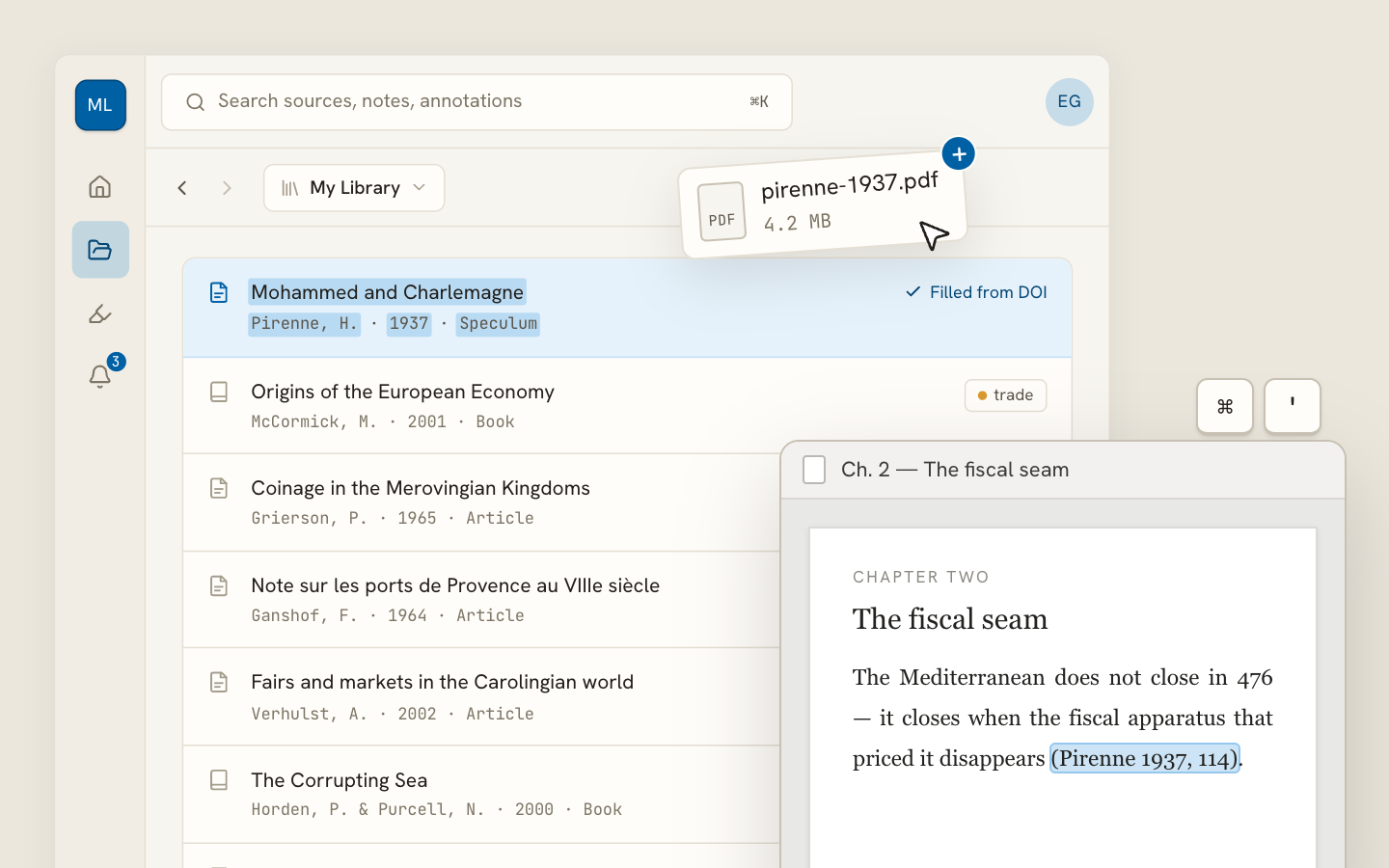
Archivero can extract metadata from video URLs — paste a YouTube link or streaming page into your library, and the Works Cited entry is generated automatically with the creator, title, platform, and date.