Archivero is in early access — your sources, PDFs and citations in one library.Request early access →
Archivero/guides/
APAMLAHarvardThesis writing
Subscribe
Archivero/guides/Request early access →

Guides

APA styleMLA styleHarvard referencingThesis writing

Compare

APA 6th vs 7thMLA 8th vs 9thHarvard vs APAThesis vs dissertation

Product

FeaturesEarly access

Resources

DocsCheat sheetsNewsletter

Company

ContactStatus ↗
© 2025–2026 Ernesto F. GonzálezGuidesDocsContactPrivacyTerms
Guides/How to Write a Thesis

Strong vs. Weak Thesis Statements

Learn to spot the difference between strong and weak thesis statements with side-by-side examples, common red flags, and a revision checklist.

7 min readThesis writing

Key Takeaways

  • A strong thesis is specific, arguable, and structured — it names concrete things, takes a debatable position, and previews the supporting points.
  • A weak thesis is typically too broad, states a fact, uses vague language, makes an announcement, or tries to cover multiple unrelated ideas.
  • The most common fix is adding a "because" clause that gives concrete reasons for the claim.
  • Red flags include: "is important," "is interesting," "in many ways," "In this paper I will…," and thesis statements with question marks.
  • Revision usually involves three moves: narrow the scope, sharpen the language, and take a clearer position.
  • A thesis should be one sentence that makes one main claim — not two or three arguments joined by semicolons.

On this page

1 of 16
Key TakeawaysWhat Makes a Thesis Statement Strong?What Makes a Thesis Statement Weak?Side-by-Side ComparisonsToo Broad → FocusedStatement of Fact → Arguable ClaimVague Language → Specific LanguageAnnouncement → ArgumentMultiple Ideas → Unified ClaimRed Flags ChecklistHow to Revise a Weak ThesisMove 1: Narrow the ScopeMove 2: Sharpen the LanguageMove 3: Take a Clearer PositionPutting All Three TogetherNext Steps
All Thesis writing guides →

The difference between a strong and a weak thesis statement often comes down to a single revision. A weak thesis isn't usually wrong — it's vague, too broad, or phrased in a way that doesn't give the reader anything to hold onto. Strengthening it means narrowing the claim, making it arguable, and adding the specific reasoning that tells the reader where the paper is going.

What Makes a Thesis Statement Strong?

A strong thesis statement does four things at once:

  1. Takes a clear position. It asserts something debatable — a claim that requires evidence to support, not a universally accepted truth.
  2. Is specific. It names concrete subjects, effects, mechanisms, or populations rather than relying on broad generalizations.
  3. Is arguable. A reasonable person could disagree with it. If no one could possibly object, it's likely a fact, not an argument.
  4. Previews the reasoning. It gives the reader a sense of how the paper will support the claim, often through a "because" clause or a list of supporting points.

Here's what all four look like in one sentence:

Instagram and TikTok contribute to anxiety among teenage girls by normalizing edited appearances, encouraging social comparison, and rewarding compulsive engagement.

That thesis names the platforms (specific), claims they cause anxiety (arguable position), identifies the affected group (teenage girls), and previews three mechanisms (structure). A reader knows exactly what this paper will argue.

What Makes a Thesis Statement Weak?

Weak thesis statements typically suffer from one or more of these problems:

  • Too broad — the claim could fill a book, not a paper
  • Too vague — the language is so general that the thesis could mean almost anything
  • Statement of fact — no one would argue with it, so there's nothing to prove
  • Announcement — it describes the writer's plan instead of stating a claim
  • Multiple claims — it tries to argue two or three unrelated things at once

A weak thesis isn't a dead end — it's a first draft. Almost every weak thesis can be strengthened with one or two targeted revisions.

Side-by-Side Comparisons

The most effective way to internalize the difference is to see weak and strong versions next to each other. Here are five common patterns.

Too Broad → Focused

Weak:Pollution is a serious problem.

Strong:Microplastic pollution in freshwater systems threatens aquatic biodiversity by disrupting endocrine function in fish and accumulating through the food chain.

What changed: "Pollution" became "microplastic pollution in freshwater systems." "A serious problem" became a specific threat (endocrine disruption, food chain accumulation) to a specific group (aquatic biodiversity). The thesis went from something anyone would agree with to a focused claim with clear supporting points.

Statement of Fact → Arguable Claim

Weak:The internet has changed how people communicate.

Strong:The shift from long-form email to short-form messaging has eroded the depth and nuance of written communication, contributing to a culture of misinterpretation and reactive discourse.

What changed: "Changed" is a neutral observation — no one would dispute that the internet changed communication. The strong version specifies what changed (long-form to short-form), takes a position on the direction of change (erosion), and identifies the consequences (misinterpretation, reactive discourse).

Vague Language → Specific Language

Weak:Schools should do more to help students with their mental health.

Strong:U.S. public high schools should hire mental health counselors at a 1:250 student ratio, as recommended by the American School Counselor Association, to address rising rates of adolescent anxiety and depression.

What changed: "Schools" became "U.S. public high schools." "Do more" became a specific action (hire counselors at a specific ratio). "Help students" became "address rising rates of adolescent anxiety and depression." The strong version gives the reader a concrete policy proposal with a measurable standard.

Announcement → Argument

Weak:In this paper, I will examine the effects of social media on political polarization.

Strong:Social media algorithms intensify political polarization by creating filter bubbles that reinforce existing beliefs, suppress exposure to opposing viewpoints, and reward emotionally charged content over factual reporting.

What changed: The weak version tells the reader what the writer plans to do — but not what they think. The strong version states an actual claim. "I will examine" is a plan; "algorithms intensify polarization" is an argument.

Multiple Ideas → Unified Claim

Weak:Climate change affects agriculture, and governments should invest in renewable energy; also, carbon taxes could be effective.

Strong:Carbon pricing mechanisms — including cap-and-trade systems and direct carbon taxes — are the most economically efficient tools for reducing greenhouse gas emissions because they internalize the environmental cost of fossil fuels and incentivize market-driven innovation.

What changed: The weak version juggles three separate ideas (agriculture, renewable energy, carbon taxes) without connecting them. The strong version picks one of those threads (carbon pricing) and builds a unified argument around it. A paper can't do three things well in 5–10 pages — it can do one thing thoroughly.

Red Flags Checklist

If your thesis statement contains any of the following, it almost certainly needs revision:

Red FlagExampleProblem
"is important" / "is interesting"Example"Climate change is an important issue."ProblemVague value judgment, not an argument
"in many ways" / "in several ways"Example"Technology has affected education in many ways."ProblemSignals vagueness — name the specific ways
"In this paper, I will…"Example"In this paper, I will explore…"ProblemAnnouncement, not a claim
A question markExample"Should the voting age be lowered?"ProblemResearch question, not a thesis statement
"I think" / "I believe" / "In my opinion"Example"I believe that…"ProblemWeakens the claim — state it as a position, not a personal feeling
Two independent clauses joined by a semicolonExample"X is true; also, Y is true."ProblemTwo separate arguments competing for attention
"There are many reasons why…"Example"There are many reasons why education matters."ProblemStalling instead of stating the reasons
No "because" or reasoningExample"Fast food is unhealthy."ProblemClaim without support — add the mechanism

If your draft thesis triggers one of these flags, that doesn't mean the idea is bad — it means the phrasing needs work.

How to Revise a Weak Thesis

Revision follows three predictable moves. You don't always need all three, but running through them in order catches most problems.

Move 1: Narrow the Scope

If your thesis is too broad, ask: Which specific aspect of this topic am I actually writing about?

Before:Social media affects mental health.

After:Instagram use is associated with increased body dissatisfaction among adolescent girls aged 13–17.

Narrow by specifying the platform, effect, population, time period, or geographic context.

Move 2: Sharpen the Language

Replace vague words with precise ones. Target these common offenders:

  • "affects" → name the specific effect (increases, reduces, disrupts, accelerates)
  • "many" → give a number or name the specific items
  • "things" → identify what things you mean
  • "society" → which society? Which part of it?
  • "important" → important to whom, and why?

Before:Technology has changed education in important ways.

After:The shift to asynchronous online learning during the 2020–2021 academic year widened the achievement gap between low-income and high-income students in U.S. public schools.

Move 3: Take a Clearer Position

If your thesis is a fact or a neutral observation, push it into arguable territory by asking: So what? What does this mean, and why does it matter?

Before:Many college students experience stress during finals.

After:Universities should restructure finals week by spreading exams across two weeks and capping each student at one exam per day, because compressed schedules produce sleep deprivation and diminish performance.

The "so what" question transforms an observation into a proposal, a critique, or a causal argument — something the paper can actually prove.

Putting All Three Together

Here's a thesis that goes through all three moves:

Original:Education is changing.

Narrow:Online education changed during the pandemic.

Sharpen:The pivot to asynchronous online learning during COVID-19 widened achievement gaps.

Position:The emergency pivot to asynchronous online learning during COVID-19 widened the achievement gap between low-income and high-income students because it assumed universal access to reliable internet, quiet study spaces, and parental support — resources that low-income households disproportionately lack.

Each move makes the thesis more focused, more precise, and more arguable.

Next Steps

Now that you can distinguish strong from weak thesis statements and know how to revise:

  • How to Write a Thesis Statement — the step-by-step process for writing a thesis from scratch
  • Thesis Statement Examples — 30+ examples across essay types and disciplines
  • Argumentative Thesis Statement — how to write a thesis that takes a debatable position

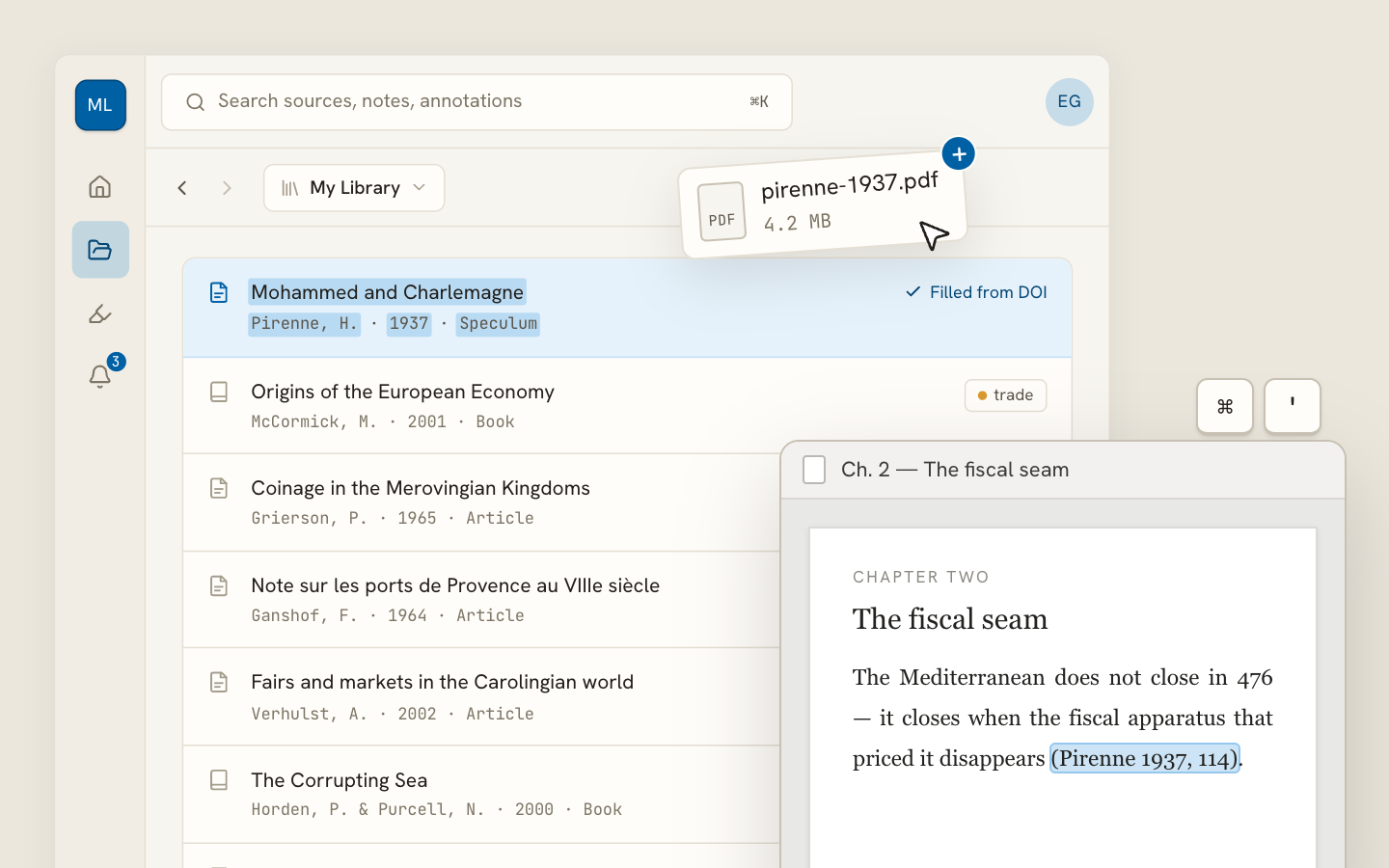
Archivero helps you organize your research so you can build a thesis grounded in evidence — collect sources, annotate key passages, and see the connections that sharpen your argument.
All Thesis writing guides →
← PreviousThesis Statement ExamplesNext →Argumentative Thesis Statement

More on Thesis writing

From crafting a thesis statement to structuring chapters, writing the proposal and preparing for the defence.

View all 19 guides →
7 sections·8 min readThesis writingArgumentative Thesis Statement7 sections·8 min readThesis writingAnalytical Thesis Statement7 sections·8 min readThesis writingExpository Thesis Statement9 sections·9 min readThesis writingResearch Question

Your sources, PDFs and citations in one library

  • Import a Zotero, Mendeley or EndNote library — or a folder of PDFs
  • Highlight and annotate without leaving the source
  • Cite in any CSL style as you write, with one shared library for your lab
Request early accessSee the product →
Archivero library view with a source list and an open PDF

Your weekly research workflow, in one email

One tested workflow, three links, no filler — every Tuesday.

Unsubscribe in one click. We never share your address.

Guides/How to Write a Thesis

Strong vs. Weak Thesis Statements

Learn to spot the difference between strong and weak thesis statements with side-by-side examples, common red flags, and a revision checklist.

7 min readThesis writing

Key Takeaways

  • A strong thesis is specific, arguable, and structured — it names concrete things, takes a debatable position, and previews the supporting points.
  • A weak thesis is typically too broad, states a fact, uses vague language, makes an announcement, or tries to cover multiple unrelated ideas.
  • The most common fix is adding a "because" clause that gives concrete reasons for the claim.
  • Red flags include: "is important," "is interesting," "in many ways," "In this paper I will…," and thesis statements with question marks.
  • Revision usually involves three moves: narrow the scope, sharpen the language, and take a clearer position.
  • A thesis should be one sentence that makes one main claim — not two or three arguments joined by semicolons.

On this page

1 of 16
Key TakeawaysWhat Makes a Thesis Statement Strong?What Makes a Thesis Statement Weak?Side-by-Side ComparisonsToo Broad → FocusedStatement of Fact → Arguable ClaimVague Language → Specific LanguageAnnouncement → ArgumentMultiple Ideas → Unified ClaimRed Flags ChecklistHow to Revise a Weak ThesisMove 1: Narrow the ScopeMove 2: Sharpen the LanguageMove 3: Take a Clearer PositionPutting All Three TogetherNext Steps
All Thesis writing guides →

The difference between a strong and a weak thesis statement often comes down to a single revision. A weak thesis isn't usually wrong — it's vague, too broad, or phrased in a way that doesn't give the reader anything to hold onto. Strengthening it means narrowing the claim, making it arguable, and adding the specific reasoning that tells the reader where the paper is going.

What Makes a Thesis Statement Strong?

A strong thesis statement does four things at once:

  1. Takes a clear position. It asserts something debatable — a claim that requires evidence to support, not a universally accepted truth.
  2. Is specific. It names concrete subjects, effects, mechanisms, or populations rather than relying on broad generalizations.
  3. Is arguable. A reasonable person could disagree with it. If no one could possibly object, it's likely a fact, not an argument.
  4. Previews the reasoning. It gives the reader a sense of how the paper will support the claim, often through a "because" clause or a list of supporting points.

Here's what all four look like in one sentence:

Instagram and TikTok contribute to anxiety among teenage girls by normalizing edited appearances, encouraging social comparison, and rewarding compulsive engagement.

That thesis names the platforms (specific), claims they cause anxiety (arguable position), identifies the affected group (teenage girls), and previews three mechanisms (structure). A reader knows exactly what this paper will argue.

What Makes a Thesis Statement Weak?

Weak thesis statements typically suffer from one or more of these problems:

  • Too broad — the claim could fill a book, not a paper
  • Too vague — the language is so general that the thesis could mean almost anything
  • Statement of fact — no one would argue with it, so there's nothing to prove
  • Announcement — it describes the writer's plan instead of stating a claim
  • Multiple claims — it tries to argue two or three unrelated things at once

A weak thesis isn't a dead end — it's a first draft. Almost every weak thesis can be strengthened with one or two targeted revisions.

Side-by-Side Comparisons

The most effective way to internalize the difference is to see weak and strong versions next to each other. Here are five common patterns.

Too Broad → Focused

Weak:Pollution is a serious problem.

Strong:Microplastic pollution in freshwater systems threatens aquatic biodiversity by disrupting endocrine function in fish and accumulating through the food chain.

What changed: "Pollution" became "microplastic pollution in freshwater systems." "A serious problem" became a specific threat (endocrine disruption, food chain accumulation) to a specific group (aquatic biodiversity). The thesis went from something anyone would agree with to a focused claim with clear supporting points.

Statement of Fact → Arguable Claim

Weak:The internet has changed how people communicate.

Strong:The shift from long-form email to short-form messaging has eroded the depth and nuance of written communication, contributing to a culture of misinterpretation and reactive discourse.

What changed: "Changed" is a neutral observation — no one would dispute that the internet changed communication. The strong version specifies what changed (long-form to short-form), takes a position on the direction of change (erosion), and identifies the consequences (misinterpretation, reactive discourse).

Vague Language → Specific Language

Weak:Schools should do more to help students with their mental health.

Strong:U.S. public high schools should hire mental health counselors at a 1:250 student ratio, as recommended by the American School Counselor Association, to address rising rates of adolescent anxiety and depression.

What changed: "Schools" became "U.S. public high schools." "Do more" became a specific action (hire counselors at a specific ratio). "Help students" became "address rising rates of adolescent anxiety and depression." The strong version gives the reader a concrete policy proposal with a measurable standard.

Announcement → Argument

Weak:In this paper, I will examine the effects of social media on political polarization.

Strong:Social media algorithms intensify political polarization by creating filter bubbles that reinforce existing beliefs, suppress exposure to opposing viewpoints, and reward emotionally charged content over factual reporting.

What changed: The weak version tells the reader what the writer plans to do — but not what they think. The strong version states an actual claim. "I will examine" is a plan; "algorithms intensify polarization" is an argument.

Multiple Ideas → Unified Claim

Weak:Climate change affects agriculture, and governments should invest in renewable energy; also, carbon taxes could be effective.

Strong:Carbon pricing mechanisms — including cap-and-trade systems and direct carbon taxes — are the most economically efficient tools for reducing greenhouse gas emissions because they internalize the environmental cost of fossil fuels and incentivize market-driven innovation.

What changed: The weak version juggles three separate ideas (agriculture, renewable energy, carbon taxes) without connecting them. The strong version picks one of those threads (carbon pricing) and builds a unified argument around it. A paper can't do three things well in 5–10 pages — it can do one thing thoroughly.

Red Flags Checklist

If your thesis statement contains any of the following, it almost certainly needs revision:

Red FlagExampleProblem
"is important" / "is interesting"Example"Climate change is an important issue."ProblemVague value judgment, not an argument
"in many ways" / "in several ways"Example"Technology has affected education in many ways."ProblemSignals vagueness — name the specific ways
"In this paper, I will…"Example"In this paper, I will explore…"ProblemAnnouncement, not a claim
A question markExample"Should the voting age be lowered?"ProblemResearch question, not a thesis statement
"I think" / "I believe" / "In my opinion"Example"I believe that…"ProblemWeakens the claim — state it as a position, not a personal feeling
Two independent clauses joined by a semicolonExample"X is true; also, Y is true."ProblemTwo separate arguments competing for attention
"There are many reasons why…"Example"There are many reasons why education matters."ProblemStalling instead of stating the reasons
No "because" or reasoningExample"Fast food is unhealthy."ProblemClaim without support — add the mechanism

If your draft thesis triggers one of these flags, that doesn't mean the idea is bad — it means the phrasing needs work.

How to Revise a Weak Thesis

Revision follows three predictable moves. You don't always need all three, but running through them in order catches most problems.

Move 1: Narrow the Scope

If your thesis is too broad, ask: Which specific aspect of this topic am I actually writing about?

Before:Social media affects mental health.

After:Instagram use is associated with increased body dissatisfaction among adolescent girls aged 13–17.

Narrow by specifying the platform, effect, population, time period, or geographic context.

Move 2: Sharpen the Language

Replace vague words with precise ones. Target these common offenders:

  • "affects" → name the specific effect (increases, reduces, disrupts, accelerates)
  • "many" → give a number or name the specific items
  • "things" → identify what things you mean
  • "society" → which society? Which part of it?
  • "important" → important to whom, and why?

Before:Technology has changed education in important ways.

After:The shift to asynchronous online learning during the 2020–2021 academic year widened the achievement gap between low-income and high-income students in U.S. public schools.

Move 3: Take a Clearer Position

If your thesis is a fact or a neutral observation, push it into arguable territory by asking: So what? What does this mean, and why does it matter?

Before:Many college students experience stress during finals.

After:Universities should restructure finals week by spreading exams across two weeks and capping each student at one exam per day, because compressed schedules produce sleep deprivation and diminish performance.

The "so what" question transforms an observation into a proposal, a critique, or a causal argument — something the paper can actually prove.

Putting All Three Together

Here's a thesis that goes through all three moves:

Original:Education is changing.

Narrow:Online education changed during the pandemic.

Sharpen:The pivot to asynchronous online learning during COVID-19 widened achievement gaps.

Position:The emergency pivot to asynchronous online learning during COVID-19 widened the achievement gap between low-income and high-income students because it assumed universal access to reliable internet, quiet study spaces, and parental support — resources that low-income households disproportionately lack.

Each move makes the thesis more focused, more precise, and more arguable.

Next Steps

Now that you can distinguish strong from weak thesis statements and know how to revise:

  • How to Write a Thesis Statement — the step-by-step process for writing a thesis from scratch
  • Thesis Statement Examples — 30+ examples across essay types and disciplines
  • Argumentative Thesis Statement — how to write a thesis that takes a debatable position

Archivero helps you organize your research so you can build a thesis grounded in evidence — collect sources, annotate key passages, and see the connections that sharpen your argument.

All Thesis writing guides →
← PreviousThesis Statement ExamplesNext →Argumentative Thesis Statement

More on Thesis writing

From crafting a thesis statement to structuring chapters, writing the proposal and preparing for the defence.

View all 19 guides →
7 sections·8 min readThesis writingArgumentative Thesis Statement7 sections·8 min readThesis writingAnalytical Thesis Statement7 sections·8 min readThesis writingExpository Thesis Statement9 sections·9 min readThesis writingResearch Question

Your sources, PDFs and citations in one library

  • Import a Zotero, Mendeley or EndNote library — or a folder of PDFs
  • Highlight and annotate without leaving the source
  • Cite in any CSL style as you write, with one shared library for your lab
Request early accessSee the product →
Archivero library view with a source list and an open PDF

Your weekly research workflow, in one email

One tested workflow, three links, no filler — every Tuesday.

Unsubscribe in one click. We never share your address.