Archivero is in early access — your sources, PDFs and citations in one library.Request early access →
Archivero/guides/
APAMLAHarvardThesis writing
Subscribe
Archivero/guides/Request early access →

Guides

APA styleMLA styleHarvard referencingThesis writing

Compare

APA 6th vs 7thMLA 8th vs 9thHarvard vs APAThesis vs dissertation

Product

FeaturesEarly access

Resources

DocsCheat sheetsNewsletter

Company

ContactStatus ↗
© 2025–2026 Ernesto F. GonzálezGuidesDocsContactPrivacyTerms
Guides/How to Write a Thesis

Thesis Statement Examples

30+ thesis statement examples for argumentative, analytical, and expository essays across subjects like literature, history, science, and social issues.

9 min readThesis writing

Key Takeaways

  • Argumentative thesis statements take a debatable position and defend it with reasons:
    • "Public universities should abolish legacy admissions because…"
  • Analytical thesis statements break a topic into parts and examine how they work:
    • "In 1984, Orwell uses surveillance, language, and revisionism to show how…"
  • Expository thesis statements explain or inform without taking sides:
    • "The water cycle consists of four stages…"
  • Compare-and-contrast and cause-and-effect thesis statements are variations that work across essay types.
  • Every strong thesis is specific (names concrete things), arguable (someone could disagree), and structured (previews the supporting points).
  • A weak thesis can almost always be fixed by narrowing the scope and adding a "because" clause.
  • Adapt examples to your own paper by swapping the subject, adjusting the scope, and matching the claim to your evidence.

On this page

1 of 24
Key TakeawaysArgumentative Thesis Statement ExamplesSocial IssuesEducationTechnologyHealthAnalytical Thesis Statement ExamplesLiteratureHistoryFilm & MediaExpository Thesis Statement ExamplesScienceProcess / How-ToDefinitionCompare-and-Contrast Thesis Statement ExamplesCause-and-Effect Thesis Statement ExamplesWeak vs. Strong: Side-by-Side ComparisonsToo Broad → FocusedStatement of Fact → Arguable ClaimVague Language → Specific LanguageAnnouncement → ArgumentMultiple Ideas → Unified ClaimHow to Adapt These Examples for Your PaperNext Steps
All Thesis writing guides →

A thesis statement takes different forms depending on the type of essay and the discipline. An argumentative thesis in a political science paper looks nothing like an analytical thesis in a literary analysis — but both follow the same principles: they're specific, they take a clear position or angle, and they preview what the paper will demonstrate.

The examples below are organized by essay type and subject area. Each one is a standalone thesis statement you can use as a model — not to copy, but to see the structure at work. For every example, notice what makes it specific and what it promises the paper will deliver.

Argumentative Thesis Statement Examples

An argumentative thesis takes a side on a debatable issue and provides reasons for that position. These are the most common thesis statements in persuasive essays, position papers, and op-ed-style assignments.

Social Issues

Mandatory minimum sentencing laws should be repealed because they disproportionately affect minority communities, remove judicial discretion, and have not been shown to reduce crime rates.

Universal basic income would reduce poverty more effectively than existing welfare programs because it eliminates bureaucratic overhead, removes benefit cliffs, and gives recipients greater autonomy in spending decisions.

Prisoners should have access to higher education programs because postsecondary education reduces recidivism rates, improves post-release employment outcomes, and costs less than re-incarceration.

Education

Public universities should eliminate legacy admissions because the practice perpetuates socioeconomic inequality, undermines meritocracy, and disproportionately benefits white applicants.

Standardized testing should be removed from college admissions because it measures test preparation more than academic ability, disadvantages low-income students, and correlates poorly with college success.

Financial literacy should be a required course in all U.S. high schools because graduates consistently demonstrate poor understanding of debt, budgeting, and compound interest — skills that directly affect long-term economic stability.

Technology

Governments should regulate facial recognition technology in public spaces because it enables mass surveillance, produces racially biased results, and lacks sufficient legal safeguards against misuse.

Social media companies should be required to verify the age of their users because minors are disproportionately exposed to harmful content, data collection practices violate children's privacy, and self-regulation has proven ineffective.

Health

Mandatory nutrition labeling on restaurant menus reduces calorie consumption by an average of 10–15% and should be expanded to all food-service establishments to address rising obesity rates.

Mental health screenings should be integrated into routine primary care visits because early detection of anxiety and depression improves treatment outcomes and reduces long-term healthcare costs.

Analytical Thesis Statement Examples

An analytical thesis doesn't argue for or against something — it breaks a subject into components and examines how or why those components work. These are common in literary analysis, historical analysis, and scientific inquiry.

Literature

Through the unreliable narration of Stevens in The Remains of the Day, Ishiguro explores how emotional repression functions as both a coping mechanism and a source of profound regret.

In Beloved, Morrison uses the haunting presence of Beloved as a metaphor for the collective trauma of slavery, showing how unprocessed grief disrupts identity, memory, and familial bonds.

Shakespeare's use of the play-within-a-play in Hamlet serves not only as a plot device to expose Claudius's guilt but also as a meditation on the relationship between performance and authenticity.

History

The success of the Civil Rights Movement in the 1960s depended not only on charismatic leadership but on decades of legal groundwork by the NAACP, grassroots organizing by local communities, and strategic media coverage of Southern violence.

The fall of the Berlin Wall was precipitated less by Western pressure than by internal economic stagnation, the reform policies of Gorbachev, and the cumulative effect of East German citizens' peaceful protests.

Film & Media

Jordan Peele's Get Out uses the conventions of the horror genre — the isolated setting, the false sense of safety, and the monstrous reveal — to critique liberal racism and the commodification of Black bodies.

The rise of true-crime podcasts reflects a cultural fascination with systemic failure in the justice system, as listeners are drawn not to the crimes themselves but to the institutional breakdowns that allowed them to go unsolved.

Expository Thesis Statement Examples

An expository thesis explains a topic, process, or concept without taking a position. It's informational — the paper that follows provides facts, definitions, or step-by-step explanations.

Science

The water cycle consists of four main stages — evaporation, condensation, precipitation, and collection — each driven by solar energy and gravity.

CRISPR-Cas9 gene editing works by using a guide RNA to direct the Cas9 enzyme to a specific DNA sequence, where it makes a precise cut that allows scientists to delete, replace, or insert genetic material.

Photosynthesis converts carbon dioxide and water into glucose and oxygen through two sets of reactions — the light-dependent reactions in the thylakoid membranes and the Calvin cycle in the stroma.

Process / How-To

The process of peer review in academic publishing involves three main stages: editorial screening, blind evaluation by subject-matter experts, and revision based on reviewer feedback.

A clinical trial progresses through four phases — safety testing, efficacy testing, large-scale comparison, and post-market surveillance — each designed to answer a different question about the treatment's viability.

Definition

Cognitive dissonance is the psychological discomfort people experience when they hold two contradictory beliefs simultaneously, and it often leads to rationalization, attitude change, or avoidance of the conflicting information.

Herd immunity occurs when a sufficient proportion of a population is immune to an infectious disease — through vaccination or prior infection — so that the disease can no longer spread effectively to those who are not immune.

Compare-and-Contrast Thesis Statement Examples

Compare-and-contrast thesis statements identify key similarities or differences between two subjects and explain what those comparisons reveal.

While both classical conditioning and operant conditioning involve learned associations, they differ fundamentally in mechanism: classical conditioning pairs a stimulus with an involuntary response, whereas operant conditioning uses reinforcement or punishment to shape voluntary behavior.

Although online and in-person therapy both provide access to evidence-based treatments, online therapy offers greater accessibility and affordability while in-person therapy provides nonverbal cues and a structured therapeutic environment that some patients need.

The American and French Revolutions both sought to overthrow aristocratic power, but while the American Revolution resulted in a stable constitutional republic, the French Revolution descended into a cycle of radicalism, terror, and authoritarian rule — largely because of differences in pre-revolutionary social structure.

Renewable energy and nuclear energy both reduce carbon emissions, but they differ in scalability, public perception, and waste management in ways that make nuclear a necessary complement to, rather than a replacement for, renewables.

Cause-and-Effect Thesis Statement Examples

Cause-and-effect thesis statements explain why something happens or what results from a particular phenomenon.

The surge in remote work during the COVID-19 pandemic caused a measurable decline in commercial real estate demand, an acceleration of suburban migration, and a permanent shift in employer expectations around office attendance.

Sleep deprivation among college students leads to impaired memory consolidation, reduced attention span, and increased anxiety — all of which contribute to lower academic performance and higher dropout rates.

The introduction of the printing press in the 15th century accelerated the Protestant Reformation by making religious texts accessible to ordinary people, reducing the Catholic Church's monopoly on biblical interpretation.

Deforestation in the Amazon basin causes a feedback loop: fewer trees mean less moisture is released into the atmosphere, which reduces rainfall, which causes further tree death and accelerates desertification.

Weak vs. Strong: Side-by-Side Comparisons

Sometimes the best way to understand a strong thesis is to see what it's replacing. Here are five common patterns of weakness and how to fix them.

Too Broad → Focused

Weak:Pollution is a serious problem.

Strong:Microplastic pollution in freshwater systems threatens aquatic biodiversity by disrupting endocrine function in fish and accumulating in the food chain.

Statement of Fact → Arguable Claim

Weak:The internet has changed how people communicate.

Strong:The shift from long-form email to short-form messaging has eroded the depth and nuance of written communication, contributing to a culture of misinterpretation and reactive discourse.

Vague Language → Specific Language

Weak:Schools should do more to help students.

Strong:U.S. public high schools should integrate mental health counselors into every building at a 1:250 student ratio, as recommended by the American School Counselor Association, to address the adolescent mental health crisis.

Announcement → Argument

Weak:This paper will examine the effects of social media on political polarization.

Strong:Social media algorithms intensify political polarization by creating filter bubbles that reinforce existing beliefs, suppress exposure to opposing viewpoints, and reward emotionally charged content over factual reporting.

Multiple Ideas → Unified Claim

Weak:Climate change affects agriculture, and governments should invest in renewable energy, and carbon taxes could help.

Strong:Carbon pricing mechanisms, including cap-and-trade systems and direct carbon taxes, are the most economically efficient policy tools for reducing greenhouse gas emissions because they internalize the environmental cost of fossil fuels and incentivize market-driven innovation.

For a deeper dive into what separates strong from weak thesis statements, see Strong vs. Weak Thesis Statements.

How to Adapt These Examples for Your Paper

These examples are models, not templates. To adapt one for your own paper:

  1. Swap the subject. If an example argues about social media and you're writing about AI, replace the subject while keeping the structure.
  2. Adjust the scope. If the example is too broad for your 5-page essay, narrow the population, time period, or geographic context.
  3. Match the claim to your evidence. Don't adopt a thesis you can't support. If your sources point in a different direction, let the thesis follow the evidence.
  4. Change the essay type if needed. A topic can support an argumentative, analytical, or expository thesis — the thesis type depends on what the assignment asks you to do, not on the topic itself.
  5. Add your "because" clause. If your adapted thesis states a claim without reasons, add a "because" followed by your two or three key supporting points.

Next Steps

Now that you've seen what strong thesis statements look like across types and subjects:

  • How to Write a Thesis Statement — the step-by-step process behind these examples
  • Strong vs. Weak Thesis Statements — more side-by-side comparisons and a revision checklist
  • What Is a Thesis Statement? — the fundamentals if you want to review the basics

Archivero helps you organize your sources and annotations as you research — so when it's time to write your thesis statement, your evidence is already at hand.
All Thesis writing guides →
← PreviousHow to Write a Thesis StatementNext →Strong vs. Weak Thesis Statements

More on Thesis writing

From crafting a thesis statement to structuring chapters, writing the proposal and preparing for the defence.

View all 19 guides →
6 sections·7 min readThesis writingStrong vs. Weak Thesis Statements7 sections·8 min readThesis writingArgumentative Thesis Statement7 sections·8 min readThesis writingAnalytical Thesis Statement7 sections·8 min readThesis writingExpository Thesis Statement

Your sources, PDFs and citations in one library

  • Import a Zotero, Mendeley or EndNote library — or a folder of PDFs
  • Highlight and annotate without leaving the source
  • Cite in any CSL style as you write, with one shared library for your lab
Request early accessSee the product →
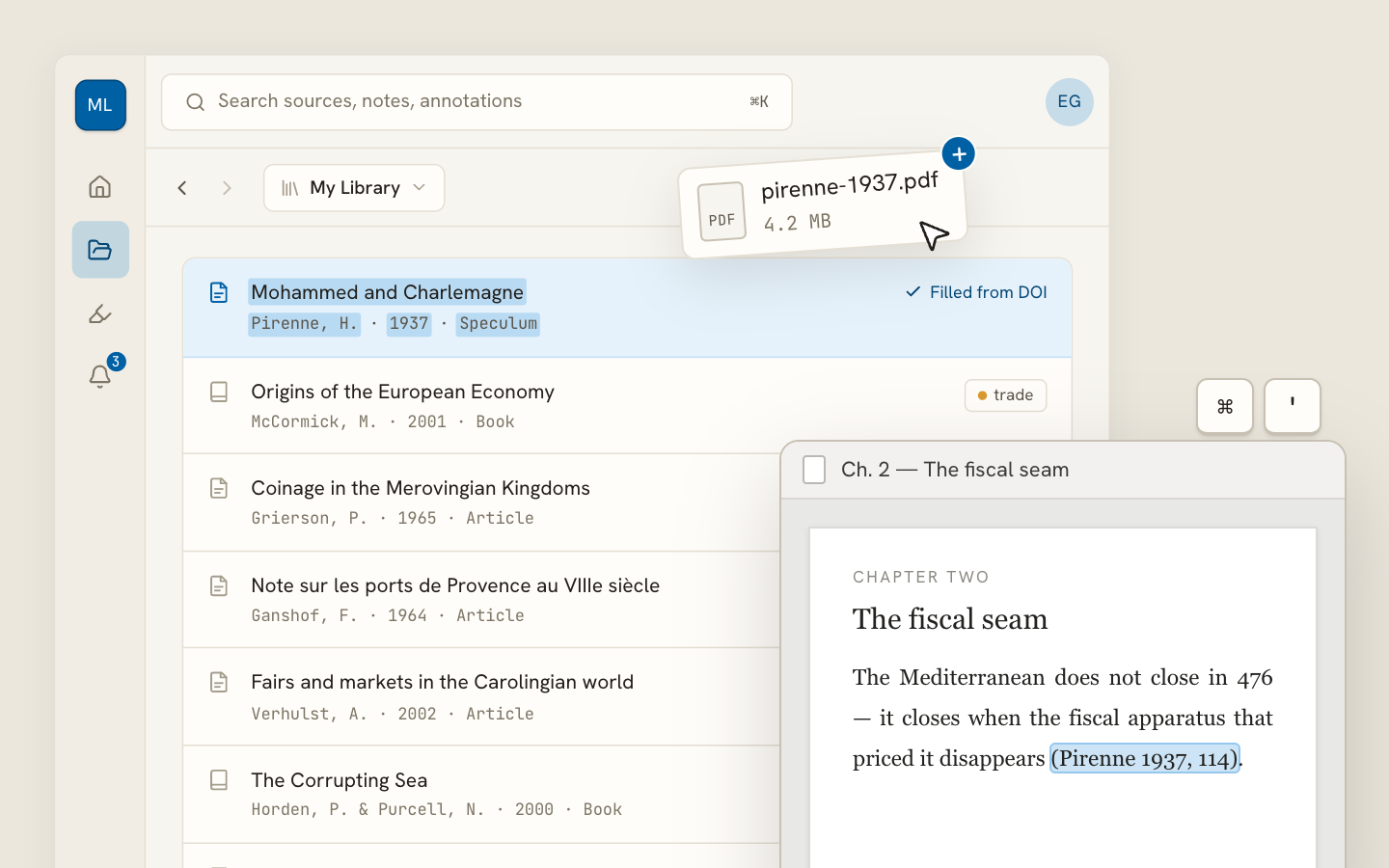
Archivero library view with a source list and an open PDF

Your weekly research workflow, in one email

One tested workflow, three links, no filler — every Tuesday.

Unsubscribe in one click. We never share your address.

Guides/How to Write a Thesis

Thesis Statement Examples

30+ thesis statement examples for argumentative, analytical, and expository essays across subjects like literature, history, science, and social issues.

9 min readThesis writing

Key Takeaways

  • Argumentative thesis statements take a debatable position and defend it with reasons:
    • "Public universities should abolish legacy admissions because…"
  • Analytical thesis statements break a topic into parts and examine how they work:
    • "In 1984, Orwell uses surveillance, language, and revisionism to show how…"
  • Expository thesis statements explain or inform without taking sides:
    • "The water cycle consists of four stages…"
  • Compare-and-contrast and cause-and-effect thesis statements are variations that work across essay types.
  • Every strong thesis is specific (names concrete things), arguable (someone could disagree), and structured (previews the supporting points).
  • A weak thesis can almost always be fixed by narrowing the scope and adding a "because" clause.
  • Adapt examples to your own paper by swapping the subject, adjusting the scope, and matching the claim to your evidence.

On this page

1 of 24
Key TakeawaysArgumentative Thesis Statement ExamplesSocial IssuesEducationTechnologyHealthAnalytical Thesis Statement ExamplesLiteratureHistoryFilm & MediaExpository Thesis Statement ExamplesScienceProcess / How-ToDefinitionCompare-and-Contrast Thesis Statement ExamplesCause-and-Effect Thesis Statement ExamplesWeak vs. Strong: Side-by-Side ComparisonsToo Broad → FocusedStatement of Fact → Arguable ClaimVague Language → Specific LanguageAnnouncement → ArgumentMultiple Ideas → Unified ClaimHow to Adapt These Examples for Your PaperNext Steps
All Thesis writing guides →

A thesis statement takes different forms depending on the type of essay and the discipline. An argumentative thesis in a political science paper looks nothing like an analytical thesis in a literary analysis — but both follow the same principles: they're specific, they take a clear position or angle, and they preview what the paper will demonstrate.

The examples below are organized by essay type and subject area. Each one is a standalone thesis statement you can use as a model — not to copy, but to see the structure at work. For every example, notice what makes it specific and what it promises the paper will deliver.

Argumentative Thesis Statement Examples

An argumentative thesis takes a side on a debatable issue and provides reasons for that position. These are the most common thesis statements in persuasive essays, position papers, and op-ed-style assignments.

Social Issues

Mandatory minimum sentencing laws should be repealed because they disproportionately affect minority communities, remove judicial discretion, and have not been shown to reduce crime rates.

Universal basic income would reduce poverty more effectively than existing welfare programs because it eliminates bureaucratic overhead, removes benefit cliffs, and gives recipients greater autonomy in spending decisions.

Prisoners should have access to higher education programs because postsecondary education reduces recidivism rates, improves post-release employment outcomes, and costs less than re-incarceration.

Education

Public universities should eliminate legacy admissions because the practice perpetuates socioeconomic inequality, undermines meritocracy, and disproportionately benefits white applicants.

Standardized testing should be removed from college admissions because it measures test preparation more than academic ability, disadvantages low-income students, and correlates poorly with college success.

Financial literacy should be a required course in all U.S. high schools because graduates consistently demonstrate poor understanding of debt, budgeting, and compound interest — skills that directly affect long-term economic stability.

Technology

Governments should regulate facial recognition technology in public spaces because it enables mass surveillance, produces racially biased results, and lacks sufficient legal safeguards against misuse.

Social media companies should be required to verify the age of their users because minors are disproportionately exposed to harmful content, data collection practices violate children's privacy, and self-regulation has proven ineffective.

Health

Mandatory nutrition labeling on restaurant menus reduces calorie consumption by an average of 10–15% and should be expanded to all food-service establishments to address rising obesity rates.

Mental health screenings should be integrated into routine primary care visits because early detection of anxiety and depression improves treatment outcomes and reduces long-term healthcare costs.

Analytical Thesis Statement Examples

An analytical thesis doesn't argue for or against something — it breaks a subject into components and examines how or why those components work. These are common in literary analysis, historical analysis, and scientific inquiry.

Literature

Through the unreliable narration of Stevens in The Remains of the Day, Ishiguro explores how emotional repression functions as both a coping mechanism and a source of profound regret.

In Beloved, Morrison uses the haunting presence of Beloved as a metaphor for the collective trauma of slavery, showing how unprocessed grief disrupts identity, memory, and familial bonds.

Shakespeare's use of the play-within-a-play in Hamlet serves not only as a plot device to expose Claudius's guilt but also as a meditation on the relationship between performance and authenticity.

History

The success of the Civil Rights Movement in the 1960s depended not only on charismatic leadership but on decades of legal groundwork by the NAACP, grassroots organizing by local communities, and strategic media coverage of Southern violence.

The fall of the Berlin Wall was precipitated less by Western pressure than by internal economic stagnation, the reform policies of Gorbachev, and the cumulative effect of East German citizens' peaceful protests.

Film & Media

Jordan Peele's Get Out uses the conventions of the horror genre — the isolated setting, the false sense of safety, and the monstrous reveal — to critique liberal racism and the commodification of Black bodies.

The rise of true-crime podcasts reflects a cultural fascination with systemic failure in the justice system, as listeners are drawn not to the crimes themselves but to the institutional breakdowns that allowed them to go unsolved.

Expository Thesis Statement Examples

An expository thesis explains a topic, process, or concept without taking a position. It's informational — the paper that follows provides facts, definitions, or step-by-step explanations.

Science

The water cycle consists of four main stages — evaporation, condensation, precipitation, and collection — each driven by solar energy and gravity.

CRISPR-Cas9 gene editing works by using a guide RNA to direct the Cas9 enzyme to a specific DNA sequence, where it makes a precise cut that allows scientists to delete, replace, or insert genetic material.

Photosynthesis converts carbon dioxide and water into glucose and oxygen through two sets of reactions — the light-dependent reactions in the thylakoid membranes and the Calvin cycle in the stroma.

Process / How-To

The process of peer review in academic publishing involves three main stages: editorial screening, blind evaluation by subject-matter experts, and revision based on reviewer feedback.

A clinical trial progresses through four phases — safety testing, efficacy testing, large-scale comparison, and post-market surveillance — each designed to answer a different question about the treatment's viability.

Definition

Cognitive dissonance is the psychological discomfort people experience when they hold two contradictory beliefs simultaneously, and it often leads to rationalization, attitude change, or avoidance of the conflicting information.

Herd immunity occurs when a sufficient proportion of a population is immune to an infectious disease — through vaccination or prior infection — so that the disease can no longer spread effectively to those who are not immune.

Compare-and-Contrast Thesis Statement Examples

Compare-and-contrast thesis statements identify key similarities or differences between two subjects and explain what those comparisons reveal.

While both classical conditioning and operant conditioning involve learned associations, they differ fundamentally in mechanism: classical conditioning pairs a stimulus with an involuntary response, whereas operant conditioning uses reinforcement or punishment to shape voluntary behavior.

Although online and in-person therapy both provide access to evidence-based treatments, online therapy offers greater accessibility and affordability while in-person therapy provides nonverbal cues and a structured therapeutic environment that some patients need.

The American and French Revolutions both sought to overthrow aristocratic power, but while the American Revolution resulted in a stable constitutional republic, the French Revolution descended into a cycle of radicalism, terror, and authoritarian rule — largely because of differences in pre-revolutionary social structure.

Renewable energy and nuclear energy both reduce carbon emissions, but they differ in scalability, public perception, and waste management in ways that make nuclear a necessary complement to, rather than a replacement for, renewables.

Cause-and-Effect Thesis Statement Examples

Cause-and-effect thesis statements explain why something happens or what results from a particular phenomenon.

The surge in remote work during the COVID-19 pandemic caused a measurable decline in commercial real estate demand, an acceleration of suburban migration, and a permanent shift in employer expectations around office attendance.

Sleep deprivation among college students leads to impaired memory consolidation, reduced attention span, and increased anxiety — all of which contribute to lower academic performance and higher dropout rates.

The introduction of the printing press in the 15th century accelerated the Protestant Reformation by making religious texts accessible to ordinary people, reducing the Catholic Church's monopoly on biblical interpretation.

Deforestation in the Amazon basin causes a feedback loop: fewer trees mean less moisture is released into the atmosphere, which reduces rainfall, which causes further tree death and accelerates desertification.

Weak vs. Strong: Side-by-Side Comparisons

Sometimes the best way to understand a strong thesis is to see what it's replacing. Here are five common patterns of weakness and how to fix them.

Too Broad → Focused

Weak:Pollution is a serious problem.

Strong:Microplastic pollution in freshwater systems threatens aquatic biodiversity by disrupting endocrine function in fish and accumulating in the food chain.

Statement of Fact → Arguable Claim

Weak:The internet has changed how people communicate.

Strong:The shift from long-form email to short-form messaging has eroded the depth and nuance of written communication, contributing to a culture of misinterpretation and reactive discourse.

Vague Language → Specific Language

Weak:Schools should do more to help students.

Strong:U.S. public high schools should integrate mental health counselors into every building at a 1:250 student ratio, as recommended by the American School Counselor Association, to address the adolescent mental health crisis.

Announcement → Argument

Weak:This paper will examine the effects of social media on political polarization.

Strong:Social media algorithms intensify political polarization by creating filter bubbles that reinforce existing beliefs, suppress exposure to opposing viewpoints, and reward emotionally charged content over factual reporting.

Multiple Ideas → Unified Claim

Weak:Climate change affects agriculture, and governments should invest in renewable energy, and carbon taxes could help.

Strong:Carbon pricing mechanisms, including cap-and-trade systems and direct carbon taxes, are the most economically efficient policy tools for reducing greenhouse gas emissions because they internalize the environmental cost of fossil fuels and incentivize market-driven innovation.

For a deeper dive into what separates strong from weak thesis statements, see Strong vs. Weak Thesis Statements.

How to Adapt These Examples for Your Paper

These examples are models, not templates. To adapt one for your own paper:

  1. Swap the subject. If an example argues about social media and you're writing about AI, replace the subject while keeping the structure.
  2. Adjust the scope. If the example is too broad for your 5-page essay, narrow the population, time period, or geographic context.
  3. Match the claim to your evidence. Don't adopt a thesis you can't support. If your sources point in a different direction, let the thesis follow the evidence.
  4. Change the essay type if needed. A topic can support an argumentative, analytical, or expository thesis — the thesis type depends on what the assignment asks you to do, not on the topic itself.
  5. Add your "because" clause. If your adapted thesis states a claim without reasons, add a "because" followed by your two or three key supporting points.

Next Steps

Now that you've seen what strong thesis statements look like across types and subjects:

  • How to Write a Thesis Statement — the step-by-step process behind these examples
  • Strong vs. Weak Thesis Statements — more side-by-side comparisons and a revision checklist
  • What Is a Thesis Statement? — the fundamentals if you want to review the basics

Archivero helps you organize your sources and annotations as you research — so when it's time to write your thesis statement, your evidence is already at hand.

All Thesis writing guides →
← PreviousHow to Write a Thesis StatementNext →Strong vs. Weak Thesis Statements

More on Thesis writing

From crafting a thesis statement to structuring chapters, writing the proposal and preparing for the defence.

View all 19 guides →
6 sections·7 min readThesis writingStrong vs. Weak Thesis Statements7 sections·8 min readThesis writingArgumentative Thesis Statement7 sections·8 min readThesis writingAnalytical Thesis Statement7 sections·8 min readThesis writingExpository Thesis Statement

Your sources, PDFs and citations in one library

  • Import a Zotero, Mendeley or EndNote library — or a folder of PDFs
  • Highlight and annotate without leaving the source
  • Cite in any CSL style as you write, with one shared library for your lab
Request early accessSee the product →
Archivero library view with a source list and an open PDF

Your weekly research workflow, in one email

One tested workflow, three links, no filler — every Tuesday.

Unsubscribe in one click. We never share your address.