Archivero is in early access — your sources, PDFs and citations in one library.Request early access →
Archivero/guides/
APAMLAHarvardThesis writing
Subscribe
Archivero/guides/Request early access →

Guides

APA styleMLA styleHarvard referencingThesis writing

Compare

APA 6th vs 7thMLA 8th vs 9thHarvard vs APAThesis vs dissertation

Product

FeaturesEarly access

Resources

DocsCheat sheetsNewsletter

Company

ContactStatus ↗
© 2025–2026 Ernesto F. GonzálezGuidesDocsContactPrivacyTerms
Guides/Citations/APA Citation Style

How to Cite a Personal Communication in APA Format

In APA, a personal communication is cited in text only — (J. Rivera, personal communication, March 4, 2026) — with no reference entry. Emails, interviews.

15 Nov 2026·9 min readAPA

Key Takeaways

  • The format: (F. M. Lastname, personal communication, Month Day, Year)
  • A complete example: (J. Rivera, personal communication, March 4, 2026), or in a sentence, J. Rivera (personal communication, March 4, 2026) confirmed that…
  • There is no reference list entry, ever, because the reader cannot retrieve it.
  • What counts: emails, texts and direct messages, phone calls, interviews you conducted, unrecorded lectures and speeches, letters and memos, private social media messages, posts in a forum that is not archived.
  • An interview that was published or recorded is cited as whatever it is — an article, a podcast, a video — and does get a reference entry.
  • Use the person's initials and surname, and the most exact date you have.
  • Traditional Knowledge or an oral tradition shared by an Indigenous person adds their nation or community and location to the same citation.

On this page

1 of 20
Key TakeawaysThe In-Text FormatWhat Counts as a Personal CommunicationEmails, Text Messages and Direct MessagesInterviews You ConductedInterviews With Research ParticipantsLectures, Classes and Live SpeechesLetters, Memos and Archival MaterialTraditional Knowledge and Oral Traditions of Indigenous PeoplesWhat Is Not a Personal CommunicationQuick-Reference TableCommon MistakesFrequently Asked QuestionsHow do you cite a personal communication in APA 7th edition?How do I cite an interview I conducted in APA?Do personal communications go in the APA reference list?How do I cite an email in APA format?Can I use an interview as a source in an APA paper?How do I cite a class lecture in APA?What's Next
More on APA ↓26 of 38

An email, a text message, a conversation or an interview you conducted yourself is something your reader cannot look up, so APA cites it in the text and leaves it out of the reference list. This guide covers every kind of personal communication, and the cases that look like one but are cited some other way.

The In-Text Format

Give the person's initials and surname, the words "personal communication", and the date:

Parenthetical:

The screener was dropped before the study began (J. Rivera, personal communication, March 4, 2026).

Narrative:

J. Rivera (personal communication, March 4, 2026) confirmed that the screener was dropped before the study began.

What to notice: initials come before the surname, the opposite of a reference list entry; the date is as exact as you can make it; and the citation lives in your sentence, because there is no entry for it to point to. It can also sit in a footnote. The in-text citations guide covers the parenthetical and narrative rules in general.

What Counts as a Personal Communication

APA's list is anything the reader cannot recover:

  • Emails, text messages, online chats and direct messages
  • Telephone calls and voicemail
  • Interviews you conducted
  • Live speeches and unrecorded classroom lectures
  • Letters and memos you hold yourself
  • Private messages and posts visible only to friends on social media
  • Posts in a discussion group or forum that keeps no archive
  • Internal documents that are not published, such as a company intranet page or training material

The test underneath all of it: could your reader find this if they tried? If the answer is no, it is a personal communication. If the answer is yes, cite the thing they would find.

Emails, Text Messages and Direct Messages

The commonest case, and the simplest:

The grant covered only the first two cohorts (L. Haddad, personal communication, November 2, 2025).

The date is the day the message was sent, not the day you read it. If a thread ran over several days, cite the message you are actually using. Nothing changes between email, SMS, WhatsApp or a direct message — all four are the same kind of source.

One thing that is good practice rather than an APA rule: ask the person before you quote them. A private message was not written for publication, and a sentence lifted out of a conversation is easy to misread.

Interviews You Conducted

An interview you conducted yourself — in person, by phone or over email — is a personal communication. There is no reference entry, and the quotation carries the citation:

"We stopped using the screener because it was adding a week to every intake," said one district coordinator (A. Osei, personal communication, January 19, 2026).

That holds whether or not you recorded it. A recording in your own files is still not something your reader can open, so it changes nothing. For quoting at length, the direct quotes guide covers block quotation and ellipses.

What changes the answer is where the interview ended up. Once your reader can reach it, cite the form it took:

Where the interview isHow to cite it
Only in your notes or your recorderPersonal communication, in text only
Printed in a newspaper or magazineAs an article, author and date
In a podcast episode or a videoAs a video or audio work, host and date
In a published collection of interviewsAs a book or a book chapter
As a transcript in an archive or repositoryAs archival material, named so the reader can request it

Interviews With Research Participants

Participants in your own study are not cited as personal communications. Their words are reported in the text of your Method and Results sections, and confidentiality usually means a pseudonym or a participant code rather than a name — "Participant 7 described…", not "(M. Lopez, personal communication…)". Say in the Method where the transcripts are and under what conditions they can be seen; in a thesis they often sit in an appendix, which the dissertations guide covers.

Lectures, Classes and Live Speeches

A lecture you attended that was not recorded is a personal communication, cited with the speaker's initials, surname and the date of the class.

If your reader can open the material, cite the material: slides and handouts posted on the course site are cited as the documents they are, a public recording as a video, and a course page behind a login as a web page with a note that access is restricted.

Letters, Memos and Archival Material

A letter in your own hands is a personal communication. The same letter in a library archive is recoverable, and is cited as archival material: the writer, the date, the item's description, and the collection and repository that hold it. The difference is not the letter — it is whether a reader can ask for it.

Traditional Knowledge and Oral Traditions of Indigenous Peoples

APA 7 treats Traditional Knowledge and oral traditions shared by an Indigenous person as a personal communication when they have not been recorded, with more detail than an ordinary one:

(F. M. Lastname, Nation or specific Indigenous group, lives in Place, personal communication, Month Day, Year)

The elements, in order: the person's full name as they give it, the nation or specific Indigenous group they belong to, where they live if it is relevant, any other detail that matters to what they shared, then "personal communication" and the date. Confirm with them that you have described them the way they wish to be described, and that they are willing to be cited at all.

When the knowledge has been recorded and your reader can reach the recording — a published oral history, a community archive, a film — cite that recording and give it a reference entry.

Not an APA rule, but worth knowing: some programs and institutions ask for a reference list entry for Elders and Knowledge Keepers as a matter of respect, which APA's own guidance does not. Where your program's guidance goes further than APA, follow your program.

What Is Not a Personal Communication

A published interview, a recorded lecture on a public site, an archived letter and a public social media post are all recoverable, so each is cited as itself, with a reference entry.

The exception is AI-generated content. A chatbot reply cannot be retrieved either — the same prompt returns a different answer — but APA still gives it a reference entry, because the tool and its version can be named when the conversation cannot.

Quick-Reference Table

SourceReference entry?In-text form
Email, text, direct message, phone callReference entry?NoIn-text form(L. Haddad, personal communication, date)
Interview you conductedReference entry?NoIn-text form(A. Osei, personal communication, date)
Unrecorded lecture or speechReference entry?NoIn-text form(T. Vance, personal communication, date)
Letter you holdReference entry?NoIn-text form(M. Ferris, personal communication, date)
Unrecorded Traditional KnowledgeReference entry?NoIn-text formName, nation, place, personal communication, date
Research participant in your studyReference entry?NoIn-text formDescribed in the Method, usually by code
Published interview, podcast, archived letterReference entry?YesIn-text formThe author–date citation for that source type
AI chatbot replyReference entry?YesIn-text form(OpenAI, 2026)

Common Mistakes

  1. Putting it in the reference list. A personal communication has no entry. If you want one, you need a recoverable version of the source.
  2. Writing "personal interview" or "email" in the citation. The words APA uses are "personal communication", whatever the medium was.
  3. The surname without initials. Initials first, then the surname: (A. Osei, personal communication, …).
  4. A year where you know the day. Give the exact date; that is what makes the citation specific.
  5. Citing a published interview as a personal communication. If your reader can read or watch it, cite the article, podcast or video.
  6. Quoting a private message without asking. Not a formatting error, but the one that can cost you more than a mark.

Frequently Asked Questions

How do you cite a personal communication in APA 7th edition?

In the text only, with the person's initials, surname, the words "personal communication" and the date: (J. Rivera, personal communication, March 4, 2026). It gets no reference list entry.

How do I cite an interview I conducted in APA?

As a personal communication, in text only: (A. Osei, personal communication, January 19, 2026). Recording it makes no difference, because your reader cannot reach the recording. An interview published in a newspaper, podcast or book is cited as that source instead.

Do personal communications go in the APA reference list?

No. The reference list is a set of directions to sources the reader can find; a personal communication is not one, so the in-text citation carries everything.

How do I cite an email in APA format?

(L. Haddad, personal communication, November 2, 2025), using the date the message was sent. Email, SMS and direct messages are all handled the same way.

Can I use an interview as a source in an APA paper?

Yes. Interviews you conducted are legitimate evidence, cited in the text as personal communications. If the interview was part of a formal study, report it in the Method and Results sections rather than citing individual participants.

How do I cite a class lecture in APA?

If the lecture was not recorded and the slides are not available to your reader, cite it as a personal communication with the lecturer's initials, surname and the date. If slides or a recording are posted where your reader can open them, cite those instead.

What's Next

  • APA in-text citations, the parenthetical and narrative rules in full.
  • How to quote in APA format, for quoting what someone told you.
  • How to cite a video in APA format and how to cite social media, for the recorded and public versions of these sources.
  • How to cite AI-generated content in APA, the one non-recoverable source with a reference entry.
  • APA footnotes, if you would rather put the citation in a note.

When a conversation turns into a source, Archivero can keep your note about it beside the published sources it supports, and export the reference list in APA.

All APA guides →
← PreviousHow to Cite a Dissertation or Thesis in APA FormatNext →How to Cite ChatGPT & AI-Generated Content in APA

Publication Manual of the American Psychological Association, 7th edition (2020), sections 8.9 and 8.7; APA Style, Personal communications
More on APA

38 guides, in the order the section reads them. This is 26 of 38.

APA overview →
  1. 1General Format
  2. 2Title Page
  3. 3Heading Levels
  4. 4Abstract
  5. 5Running Head
  6. 6Footnotes
  7. 7Example Paper
  8. 8In-Text Citations
  9. 9Direct Quotes
  10. 10Multiple Authors
  11. 11Paraphrasing
  12. 12No Author
  13. 13Secondary Sources
  14. 14Narrative vs. Parenthetical
  15. 15Reference List
  16. 16Books
  17. 17Book Chapters
  18. 18Dictionaries & Encyclopedias
  19. 19Journal Articles
  20. 20Websites
  21. 21Videos
  22. 22Social Media
  23. 23Government Reports
  24. 24Conference Papers
  25. 25Dissertations & Theses
  26. 26Personal CommunicationsYou are here
  27. 27AI-Generated Content
  28. 28Annotated Bibliography
  29. 296th vs. 7th Edition
  30. 30Common Mistakes
  31. 31How to Cite a Chart or Graph in APA Format
  32. 32How to Cite a Drawing or Illustration in APA Format
  33. 33How to Format Figures in APA
  34. 34How to Cite an Image in APA Format
  35. 35How to Cite a Map in APA Format
  36. 36How to Cite a Painting in APA Format
  37. 37How to Cite a Photograph in APA Format
  38. 38How to Format Tables in APA
APA overview →

Your sources, PDFs and citations in one library

  • Import a Zotero, Mendeley or EndNote library — or a folder of PDFs
  • Highlight and annotate without leaving the source
  • Cite in any CSL style as you write, with one shared library for your lab
Request early accessSee the product →
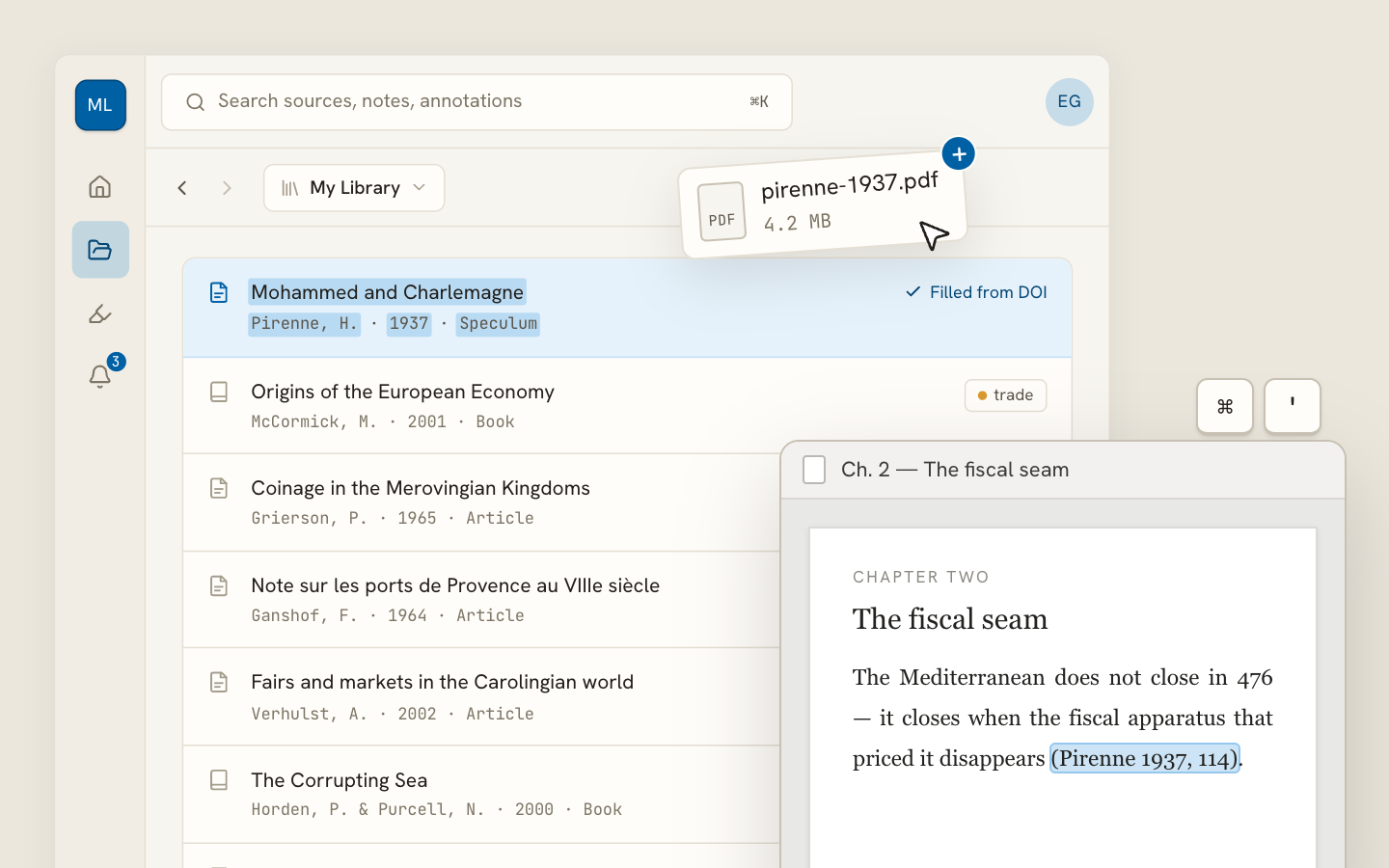
Archivero library view with a source list and an open PDF

Your weekly research workflow, in one email

One tested workflow, three links, no filler — every Tuesday.

Unsubscribe in one click. We never share your address.

Guides/Citations/APA Citation Style

How to Cite a Personal Communication in APA Format

In APA, a personal communication is cited in text only — (J. Rivera, personal communication, March 4, 2026) — with no reference entry. Emails, interviews.

15 Nov 2026·9 min readAPA

Key Takeaways

  • The format: (F. M. Lastname, personal communication, Month Day, Year)
  • A complete example: (J. Rivera, personal communication, March 4, 2026), or in a sentence, J. Rivera (personal communication, March 4, 2026) confirmed that…
  • There is no reference list entry, ever, because the reader cannot retrieve it.
  • What counts: emails, texts and direct messages, phone calls, interviews you conducted, unrecorded lectures and speeches, letters and memos, private social media messages, posts in a forum that is not archived.
  • An interview that was published or recorded is cited as whatever it is — an article, a podcast, a video — and does get a reference entry.
  • Use the person's initials and surname, and the most exact date you have.
  • Traditional Knowledge or an oral tradition shared by an Indigenous person adds their nation or community and location to the same citation.

On this page

1 of 20
Key TakeawaysThe In-Text FormatWhat Counts as a Personal CommunicationEmails, Text Messages and Direct MessagesInterviews You ConductedInterviews With Research ParticipantsLectures, Classes and Live SpeechesLetters, Memos and Archival MaterialTraditional Knowledge and Oral Traditions of Indigenous PeoplesWhat Is Not a Personal CommunicationQuick-Reference TableCommon MistakesFrequently Asked QuestionsHow do you cite a personal communication in APA 7th edition?How do I cite an interview I conducted in APA?Do personal communications go in the APA reference list?How do I cite an email in APA format?Can I use an interview as a source in an APA paper?How do I cite a class lecture in APA?What's Next
More on APA ↓26 of 38

An email, a text message, a conversation or an interview you conducted yourself is something your reader cannot look up, so APA cites it in the text and leaves it out of the reference list. This guide covers every kind of personal communication, and the cases that look like one but are cited some other way.

The In-Text Format

Give the person's initials and surname, the words "personal communication", and the date:

Parenthetical:

The screener was dropped before the study began (J. Rivera, personal communication, March 4, 2026).

Narrative:

J. Rivera (personal communication, March 4, 2026) confirmed that the screener was dropped before the study began.

What to notice: initials come before the surname, the opposite of a reference list entry; the date is as exact as you can make it; and the citation lives in your sentence, because there is no entry for it to point to. It can also sit in a footnote. The in-text citations guide covers the parenthetical and narrative rules in general.

What Counts as a Personal Communication

APA's list is anything the reader cannot recover:

  • Emails, text messages, online chats and direct messages
  • Telephone calls and voicemail
  • Interviews you conducted
  • Live speeches and unrecorded classroom lectures
  • Letters and memos you hold yourself
  • Private messages and posts visible only to friends on social media
  • Posts in a discussion group or forum that keeps no archive
  • Internal documents that are not published, such as a company intranet page or training material

The test underneath all of it: could your reader find this if they tried? If the answer is no, it is a personal communication. If the answer is yes, cite the thing they would find.

Emails, Text Messages and Direct Messages

The commonest case, and the simplest:

The grant covered only the first two cohorts (L. Haddad, personal communication, November 2, 2025).

The date is the day the message was sent, not the day you read it. If a thread ran over several days, cite the message you are actually using. Nothing changes between email, SMS, WhatsApp or a direct message — all four are the same kind of source.

One thing that is good practice rather than an APA rule: ask the person before you quote them. A private message was not written for publication, and a sentence lifted out of a conversation is easy to misread.

Interviews You Conducted

An interview you conducted yourself — in person, by phone or over email — is a personal communication. There is no reference entry, and the quotation carries the citation:

"We stopped using the screener because it was adding a week to every intake," said one district coordinator (A. Osei, personal communication, January 19, 2026).

That holds whether or not you recorded it. A recording in your own files is still not something your reader can open, so it changes nothing. For quoting at length, the direct quotes guide covers block quotation and ellipses.

What changes the answer is where the interview ended up. Once your reader can reach it, cite the form it took:

Where the interview isHow to cite it
Only in your notes or your recorderPersonal communication, in text only
Printed in a newspaper or magazineAs an article, author and date
In a podcast episode or a videoAs a video or audio work, host and date
In a published collection of interviewsAs a book or a book chapter
As a transcript in an archive or repositoryAs archival material, named so the reader can request it

Interviews With Research Participants

Participants in your own study are not cited as personal communications. Their words are reported in the text of your Method and Results sections, and confidentiality usually means a pseudonym or a participant code rather than a name — "Participant 7 described…", not "(M. Lopez, personal communication…)". Say in the Method where the transcripts are and under what conditions they can be seen; in a thesis they often sit in an appendix, which the dissertations guide covers.

Lectures, Classes and Live Speeches

A lecture you attended that was not recorded is a personal communication, cited with the speaker's initials, surname and the date of the class.

If your reader can open the material, cite the material: slides and handouts posted on the course site are cited as the documents they are, a public recording as a video, and a course page behind a login as a web page with a note that access is restricted.

Letters, Memos and Archival Material

A letter in your own hands is a personal communication. The same letter in a library archive is recoverable, and is cited as archival material: the writer, the date, the item's description, and the collection and repository that hold it. The difference is not the letter — it is whether a reader can ask for it.

Traditional Knowledge and Oral Traditions of Indigenous Peoples

APA 7 treats Traditional Knowledge and oral traditions shared by an Indigenous person as a personal communication when they have not been recorded, with more detail than an ordinary one:

(F. M. Lastname, Nation or specific Indigenous group, lives in Place, personal communication, Month Day, Year)

The elements, in order: the person's full name as they give it, the nation or specific Indigenous group they belong to, where they live if it is relevant, any other detail that matters to what they shared, then "personal communication" and the date. Confirm with them that you have described them the way they wish to be described, and that they are willing to be cited at all.

When the knowledge has been recorded and your reader can reach the recording — a published oral history, a community archive, a film — cite that recording and give it a reference entry.

Not an APA rule, but worth knowing: some programs and institutions ask for a reference list entry for Elders and Knowledge Keepers as a matter of respect, which APA's own guidance does not. Where your program's guidance goes further than APA, follow your program.

What Is Not a Personal Communication

A published interview, a recorded lecture on a public site, an archived letter and a public social media post are all recoverable, so each is cited as itself, with a reference entry.

The exception is AI-generated content. A chatbot reply cannot be retrieved either — the same prompt returns a different answer — but APA still gives it a reference entry, because the tool and its version can be named when the conversation cannot.

Quick-Reference Table

SourceReference entry?In-text form
Email, text, direct message, phone callReference entry?NoIn-text form(L. Haddad, personal communication, date)
Interview you conductedReference entry?NoIn-text form(A. Osei, personal communication, date)
Unrecorded lecture or speechReference entry?NoIn-text form(T. Vance, personal communication, date)
Letter you holdReference entry?NoIn-text form(M. Ferris, personal communication, date)
Unrecorded Traditional KnowledgeReference entry?NoIn-text formName, nation, place, personal communication, date
Research participant in your studyReference entry?NoIn-text formDescribed in the Method, usually by code
Published interview, podcast, archived letterReference entry?YesIn-text formThe author–date citation for that source type
AI chatbot replyReference entry?YesIn-text form(OpenAI, 2026)

Common Mistakes

  1. Putting it in the reference list. A personal communication has no entry. If you want one, you need a recoverable version of the source.
  2. Writing "personal interview" or "email" in the citation. The words APA uses are "personal communication", whatever the medium was.
  3. The surname without initials. Initials first, then the surname: (A. Osei, personal communication, …).
  4. A year where you know the day. Give the exact date; that is what makes the citation specific.
  5. Citing a published interview as a personal communication. If your reader can read or watch it, cite the article, podcast or video.
  6. Quoting a private message without asking. Not a formatting error, but the one that can cost you more than a mark.

Frequently Asked Questions

How do you cite a personal communication in APA 7th edition?

In the text only, with the person's initials, surname, the words "personal communication" and the date: (J. Rivera, personal communication, March 4, 2026). It gets no reference list entry.

How do I cite an interview I conducted in APA?

As a personal communication, in text only: (A. Osei, personal communication, January 19, 2026). Recording it makes no difference, because your reader cannot reach the recording. An interview published in a newspaper, podcast or book is cited as that source instead.

Do personal communications go in the APA reference list?

No. The reference list is a set of directions to sources the reader can find; a personal communication is not one, so the in-text citation carries everything.

How do I cite an email in APA format?

(L. Haddad, personal communication, November 2, 2025), using the date the message was sent. Email, SMS and direct messages are all handled the same way.

Can I use an interview as a source in an APA paper?

Yes. Interviews you conducted are legitimate evidence, cited in the text as personal communications. If the interview was part of a formal study, report it in the Method and Results sections rather than citing individual participants.

How do I cite a class lecture in APA?

If the lecture was not recorded and the slides are not available to your reader, cite it as a personal communication with the lecturer's initials, surname and the date. If slides or a recording are posted where your reader can open them, cite those instead.

What's Next

  • APA in-text citations, the parenthetical and narrative rules in full.
  • How to quote in APA format, for quoting what someone told you.
  • How to cite a video in APA format and how to cite social media, for the recorded and public versions of these sources.
  • How to cite AI-generated content in APA, the one non-recoverable source with a reference entry.
  • APA footnotes, if you would rather put the citation in a note.

When a conversation turns into a source, Archivero can keep your note about it beside the published sources it supports, and export the reference list in APA.

All APA guides →
← PreviousHow to Cite a Dissertation or Thesis in APA FormatNext →How to Cite ChatGPT & AI-Generated Content in APA

Publication Manual of the American Psychological Association, 7th edition (2020), sections 8.9 and 8.7; APA Style, Personal communications

More on APA

38 guides, in the order the section reads them. This is 26 of 38.

APA overview →
  1. 1General Format
  2. 2Title Page
  3. 3Heading Levels
  4. 4Abstract
  5. 5Running Head
  6. 6Footnotes
  7. 7Example Paper
  8. 8In-Text Citations
  9. 9Direct Quotes
  10. 10Multiple Authors
  11. 11Paraphrasing
  12. 12No Author
  13. 13Secondary Sources
  14. 14Narrative vs. Parenthetical
  15. 15Reference List
  16. 16Books
  17. 17Book Chapters
  18. 18Dictionaries & Encyclopedias
  19. 19Journal Articles
  20. 20Websites
  21. 21Videos
  22. 22Social Media
  23. 23Government Reports
  24. 24Conference Papers
  25. 25Dissertations & Theses
  26. 26Personal CommunicationsYou are here
  27. 27AI-Generated Content
  28. 28Annotated Bibliography
  29. 296th vs. 7th Edition
  30. 30Common Mistakes
  31. 31How to Cite a Chart or Graph in APA Format
  32. 32How to Cite a Drawing or Illustration in APA Format
  33. 33How to Format Figures in APA
  34. 34How to Cite an Image in APA Format
  35. 35How to Cite a Map in APA Format
  36. 36How to Cite a Painting in APA Format
  37. 37How to Cite a Photograph in APA Format
  38. 38How to Format Tables in APA
APA overview →

Your sources, PDFs and citations in one library

  • Import a Zotero, Mendeley or EndNote library — or a folder of PDFs
  • Highlight and annotate without leaving the source
  • Cite in any CSL style as you write, with one shared library for your lab
Request early accessSee the product →
Archivero library view with a source list and an open PDF

Your weekly research workflow, in one email

One tested workflow, three links, no filler — every Tuesday.

Unsubscribe in one click. We never share your address.